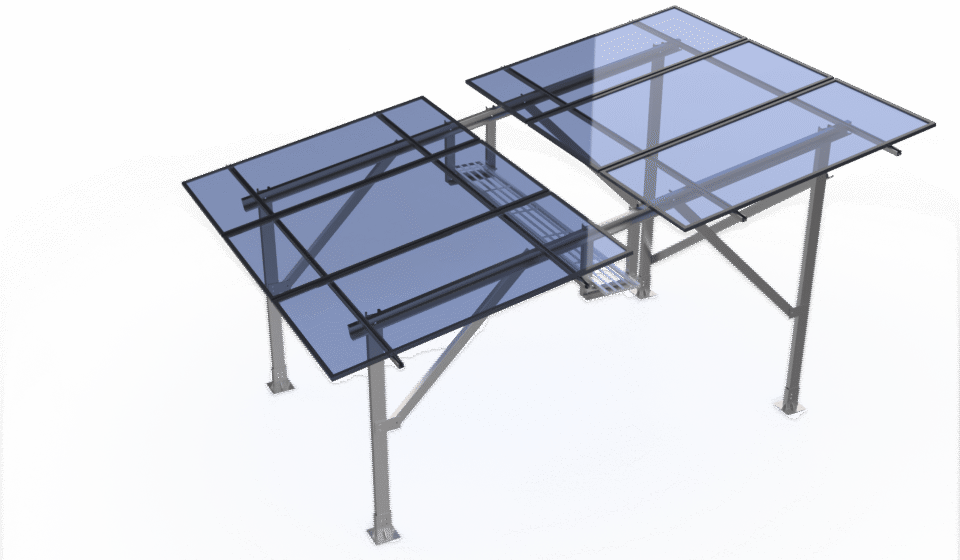
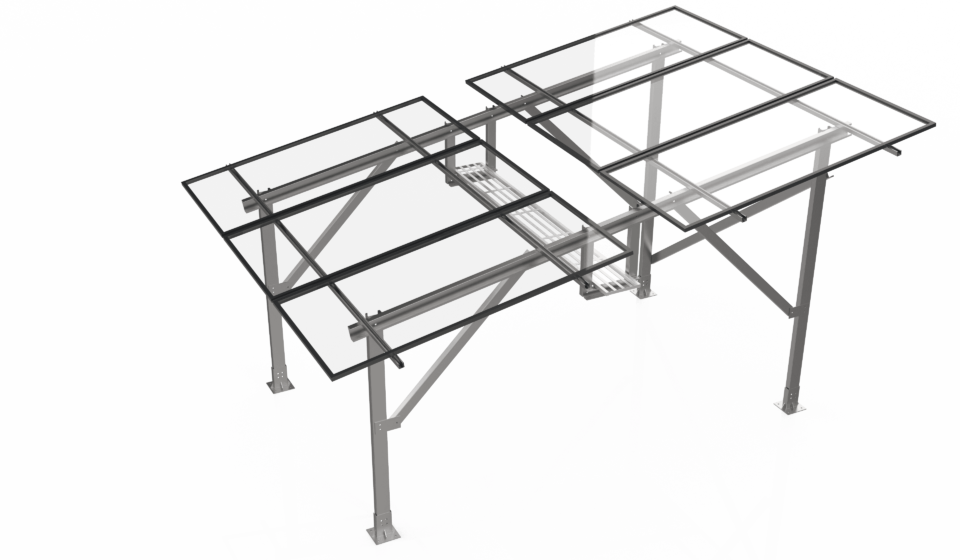
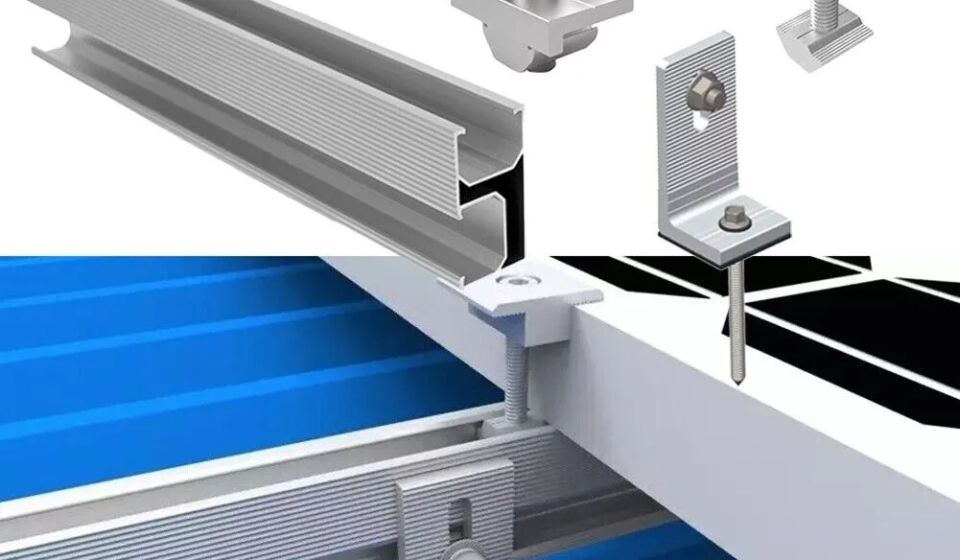
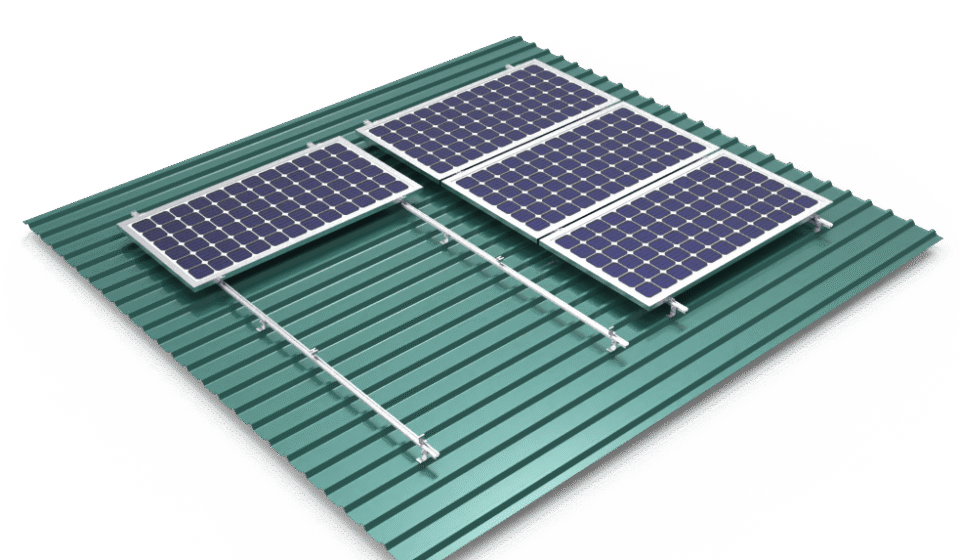
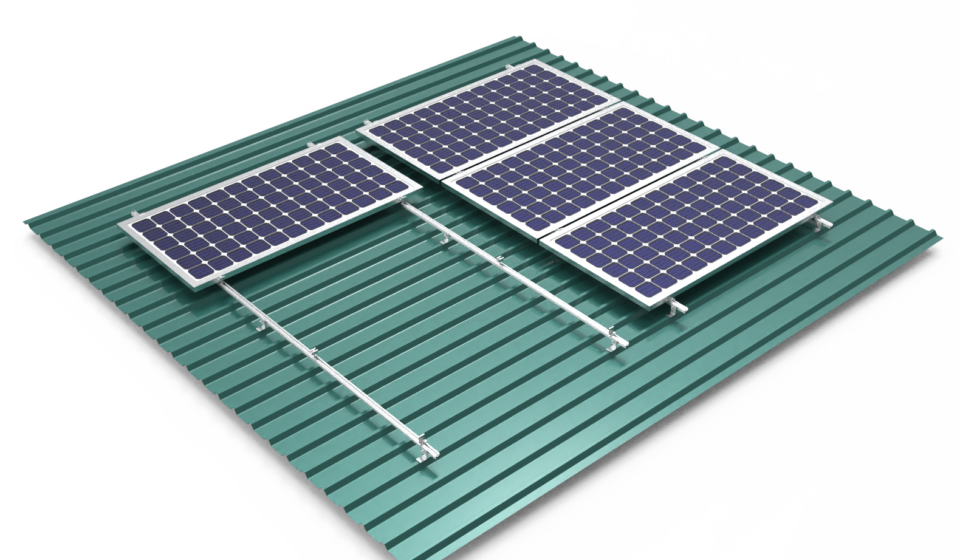
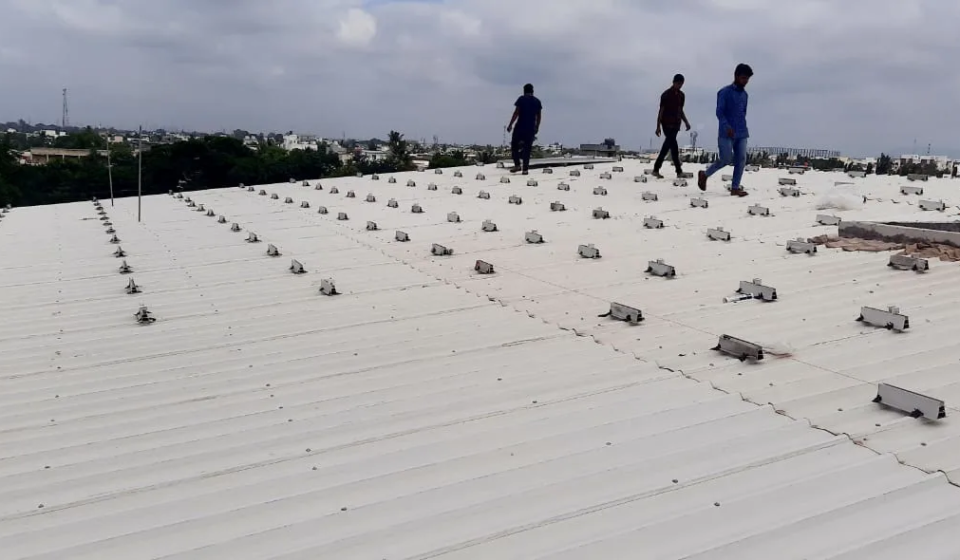
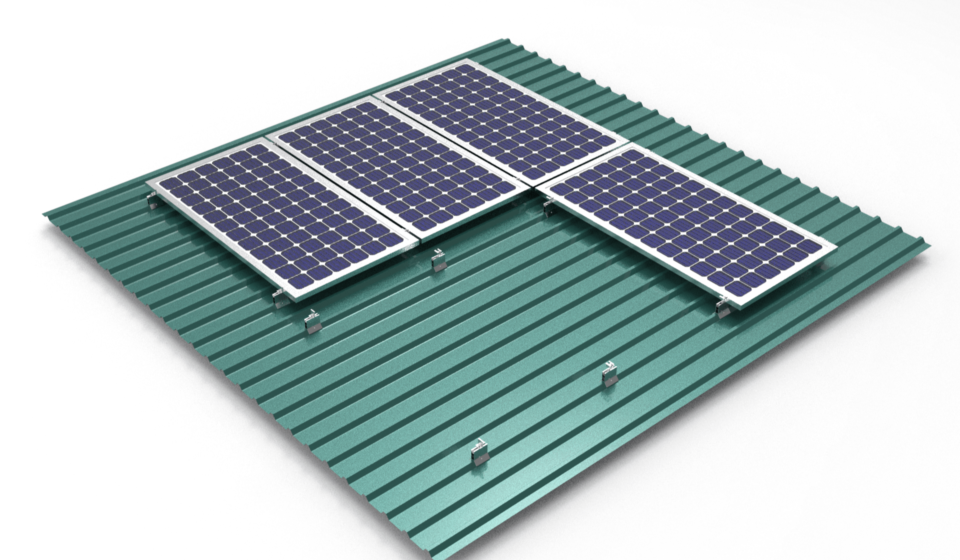
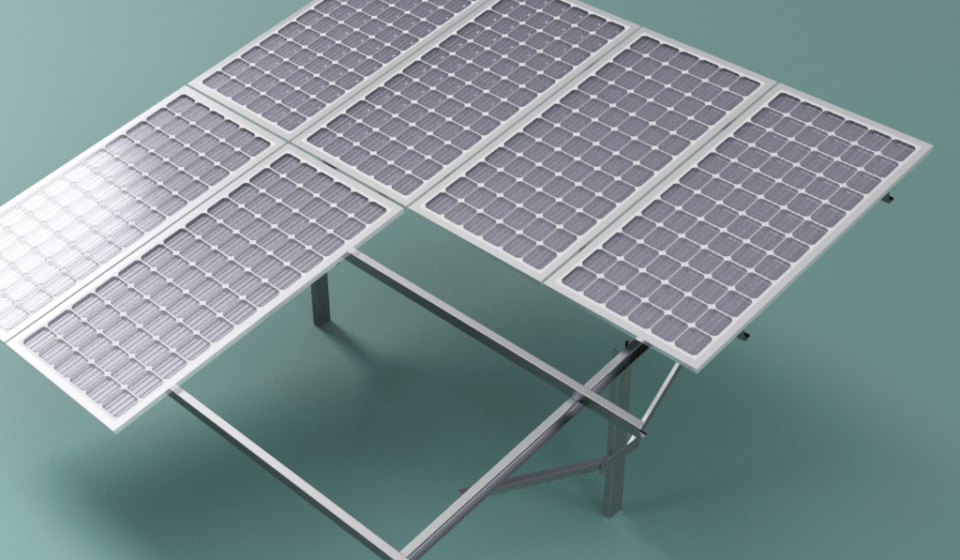
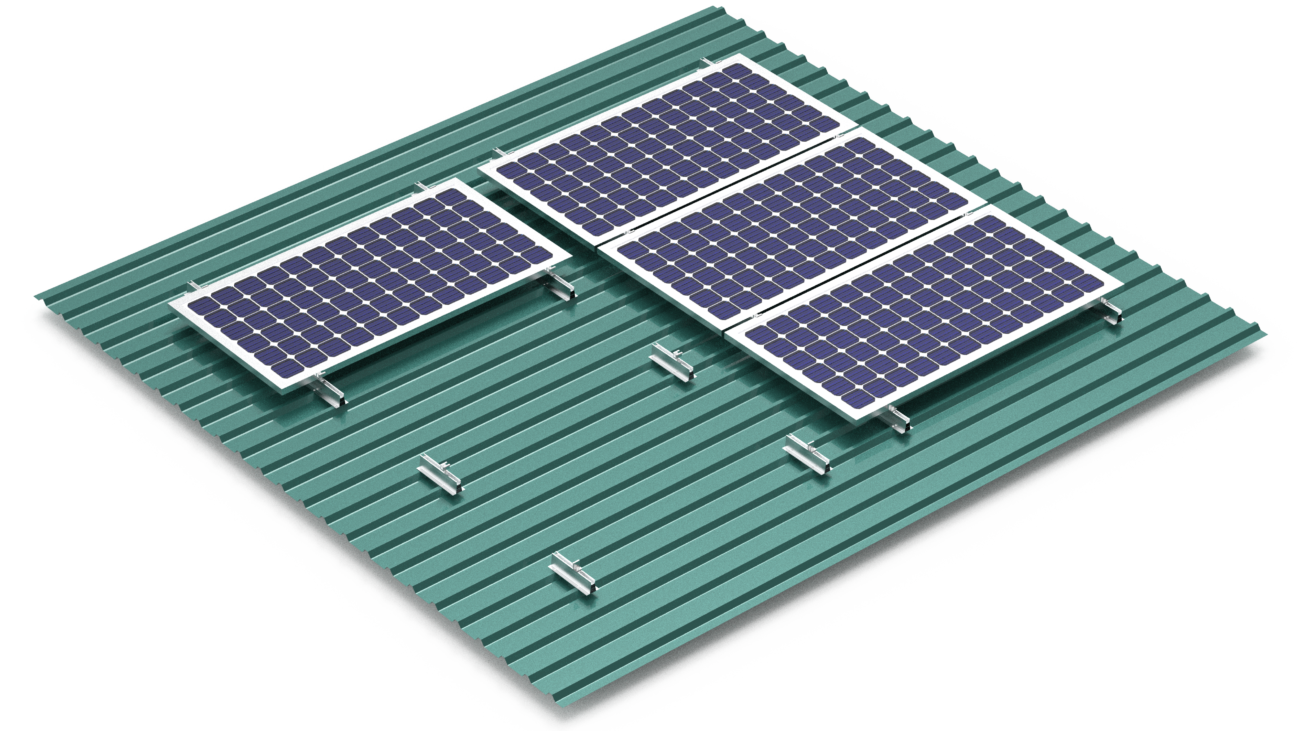
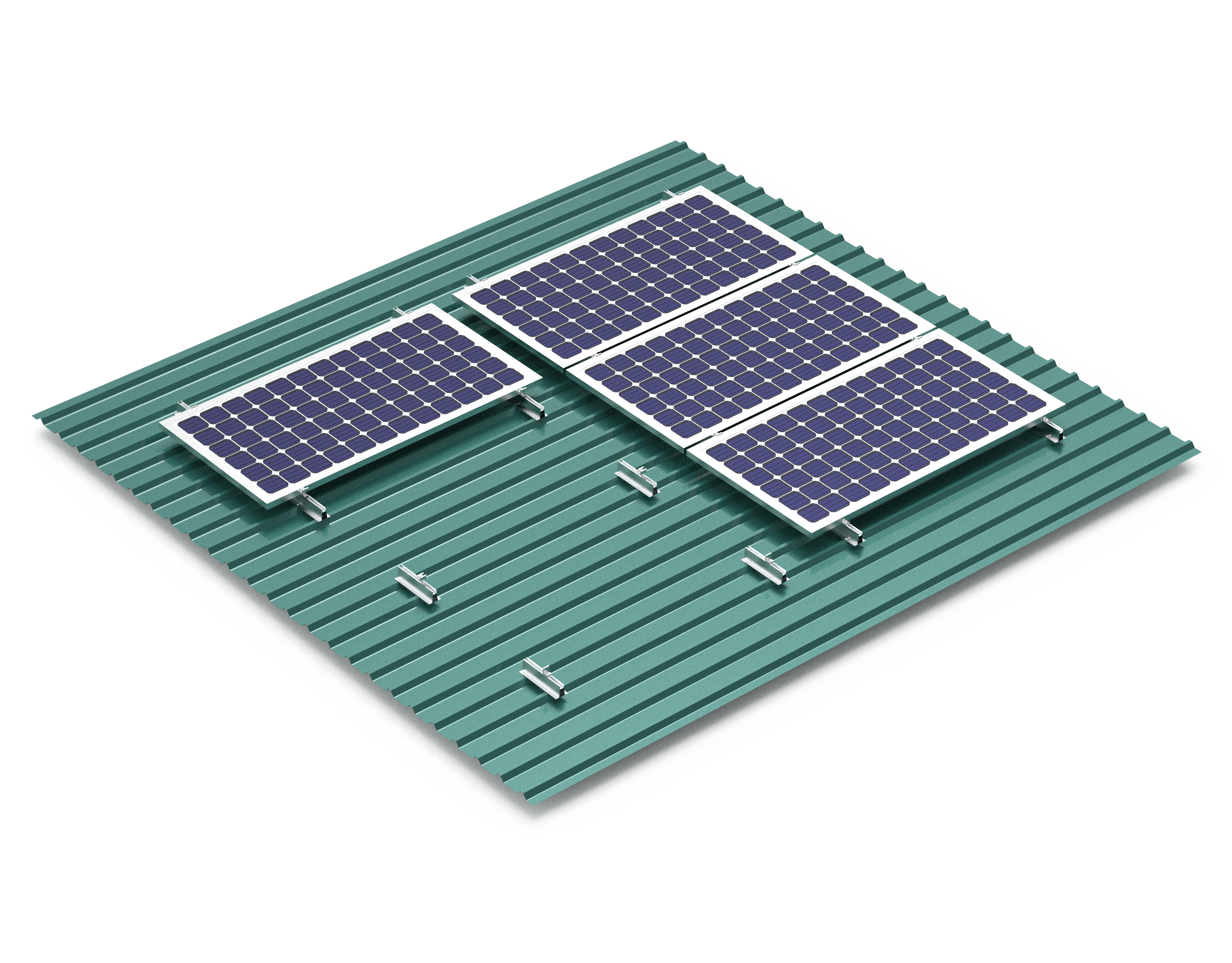
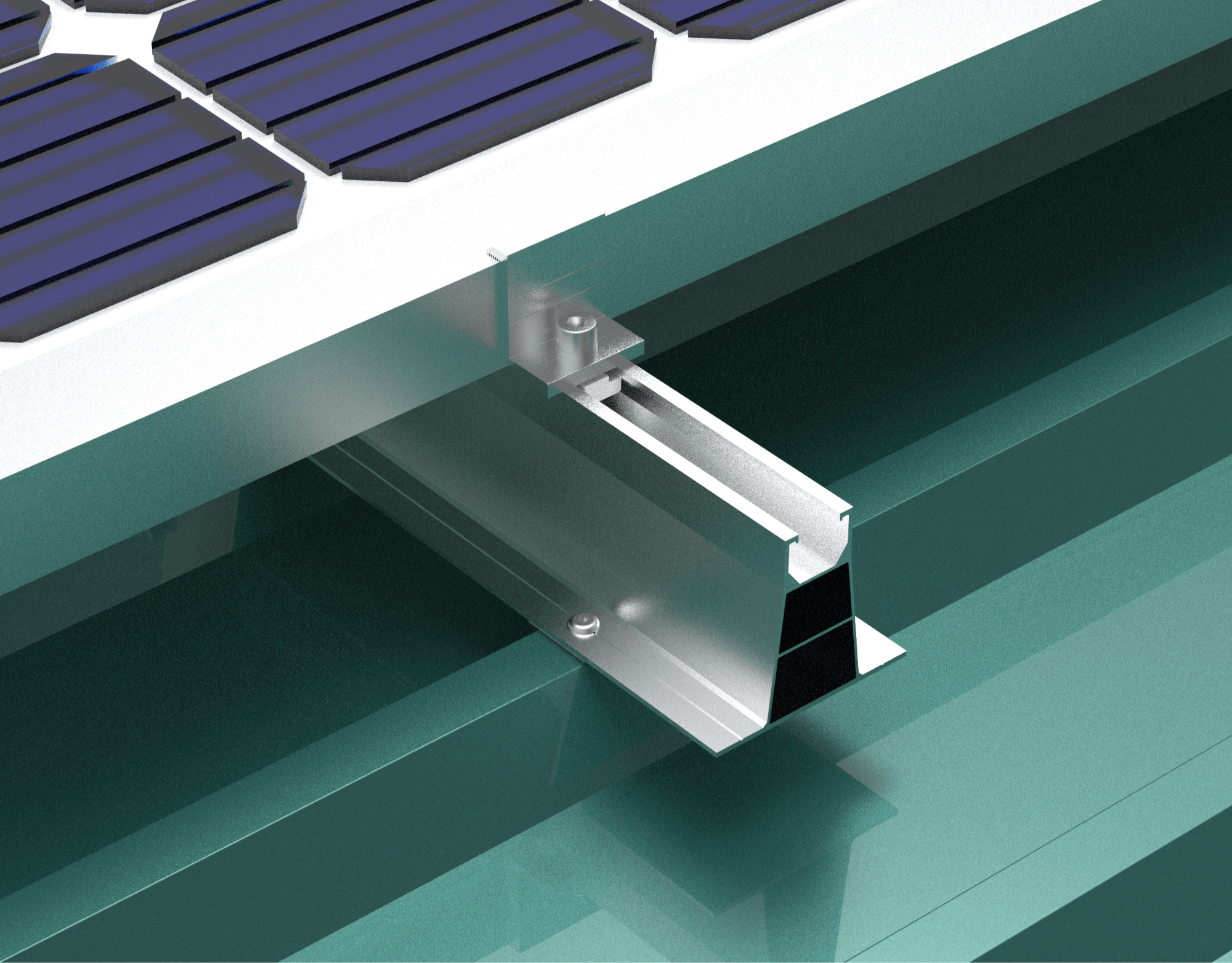
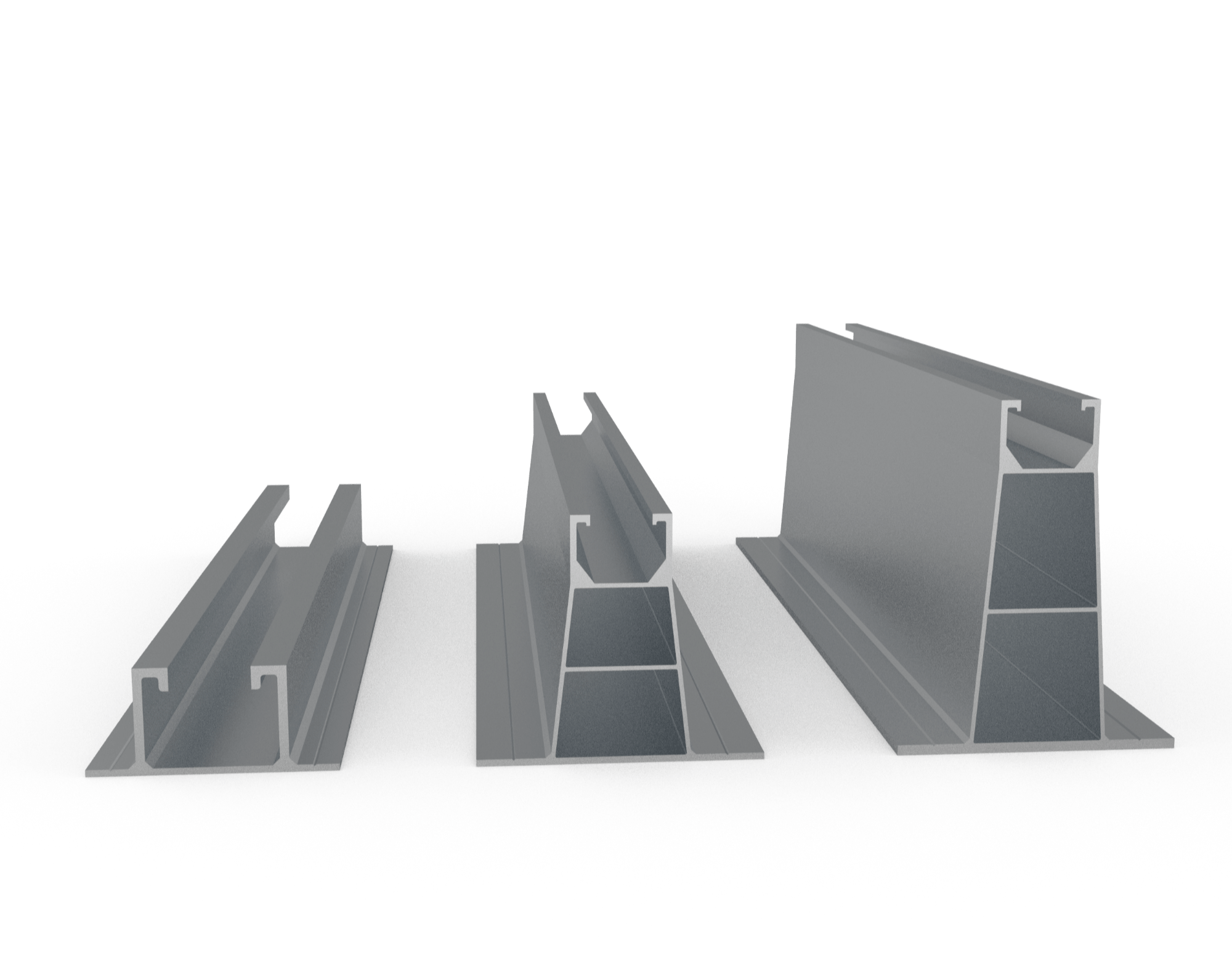
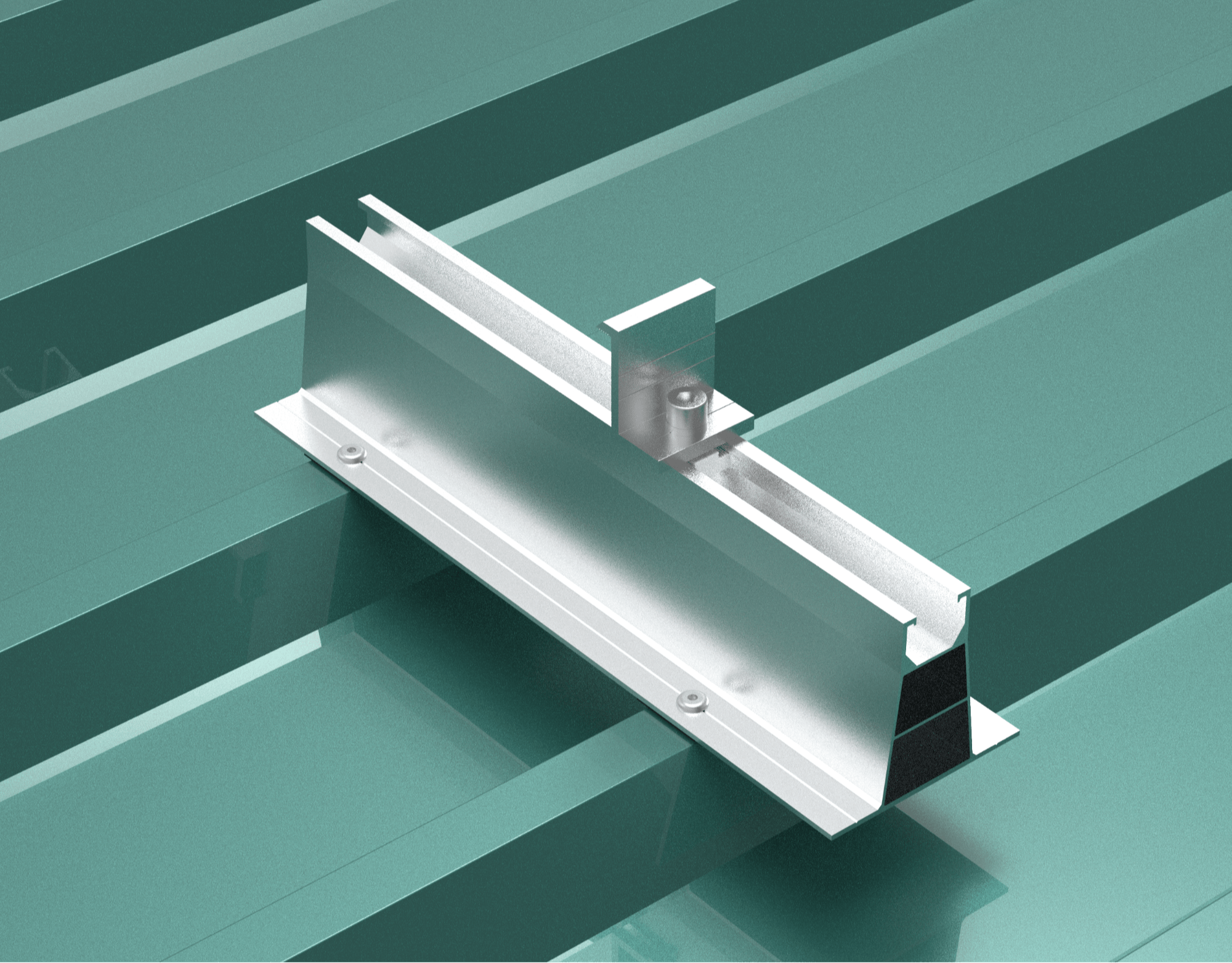
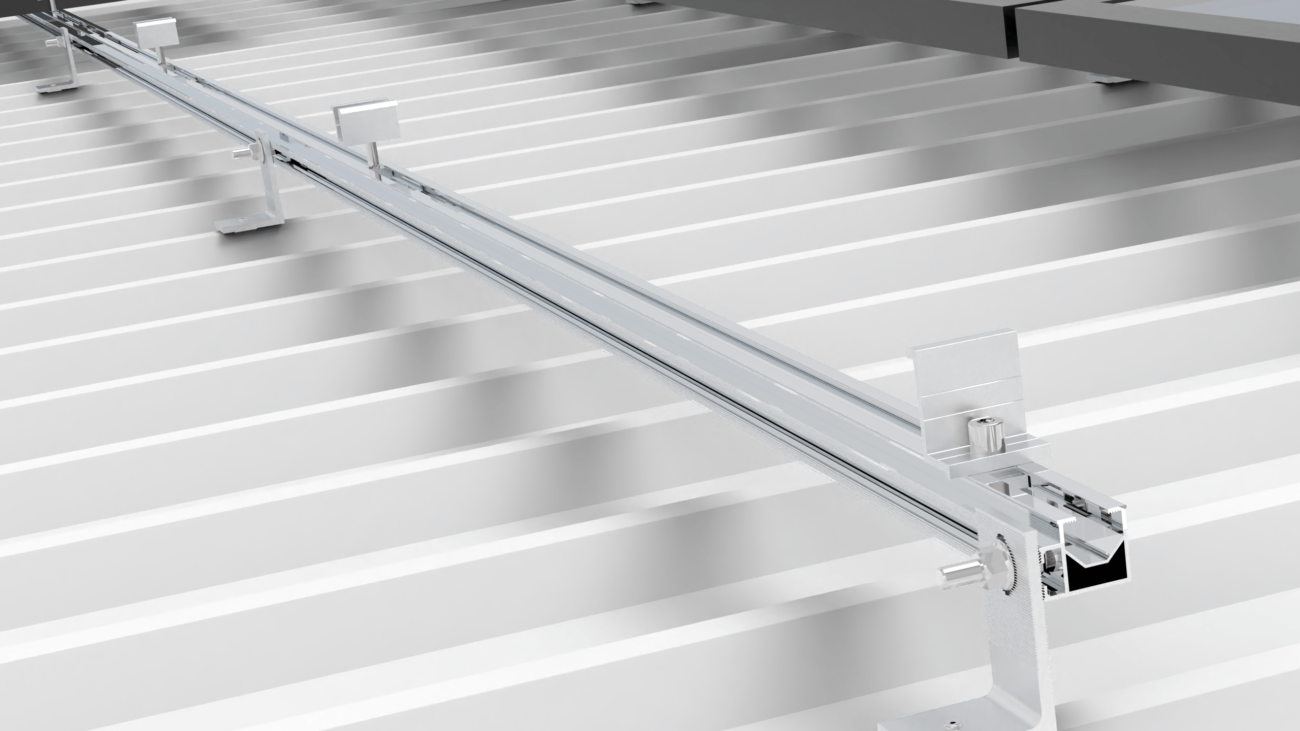
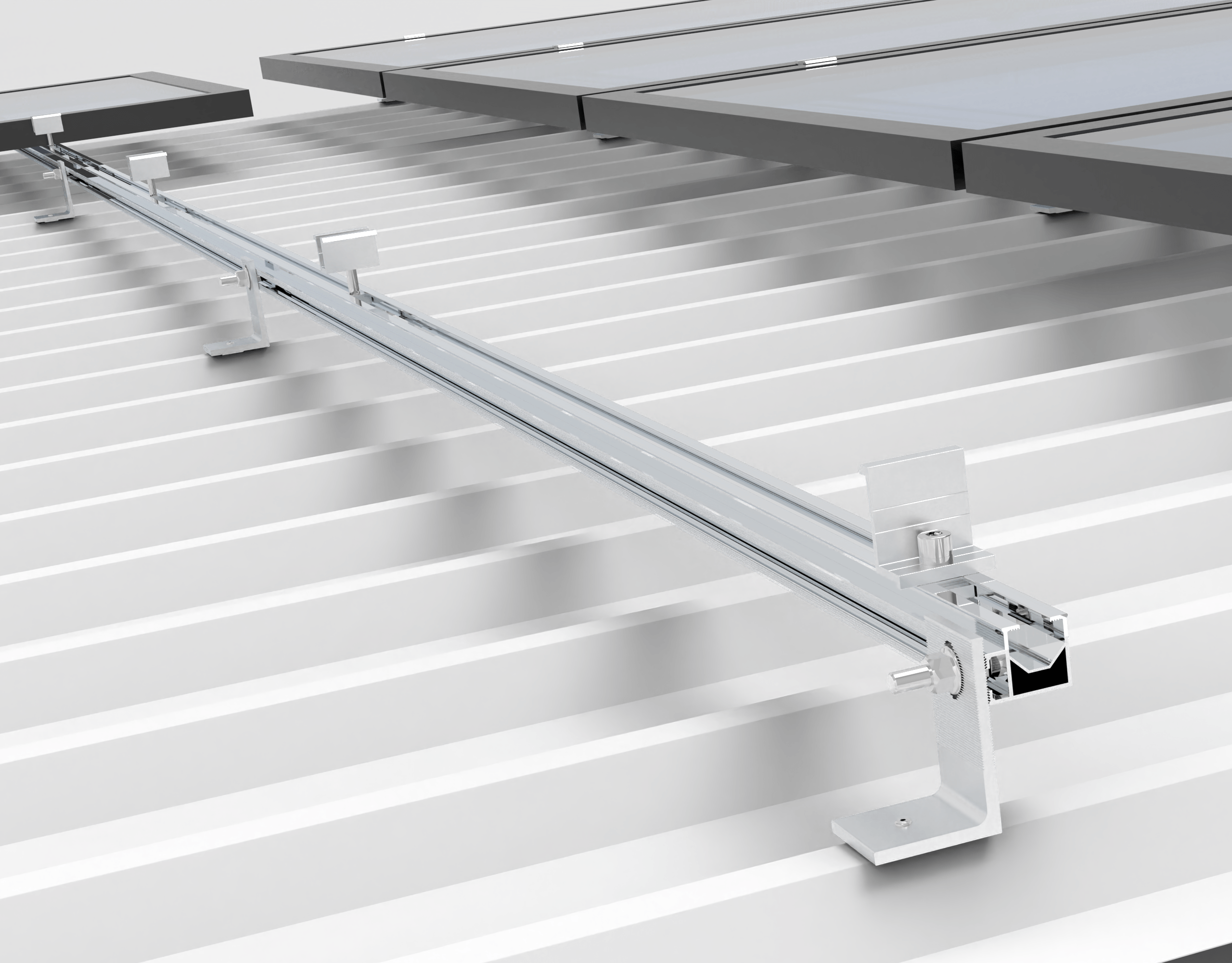
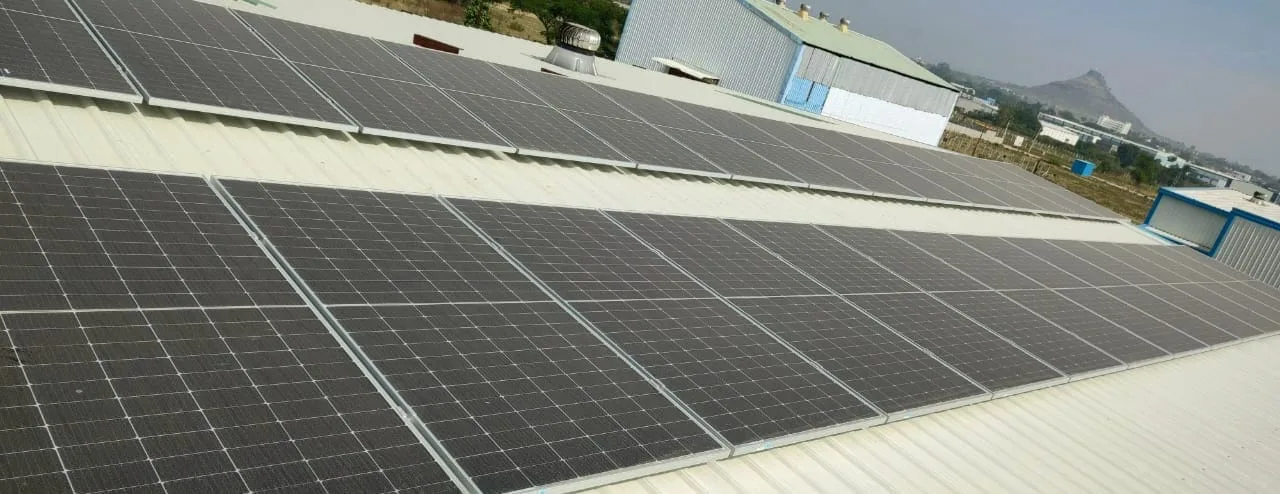
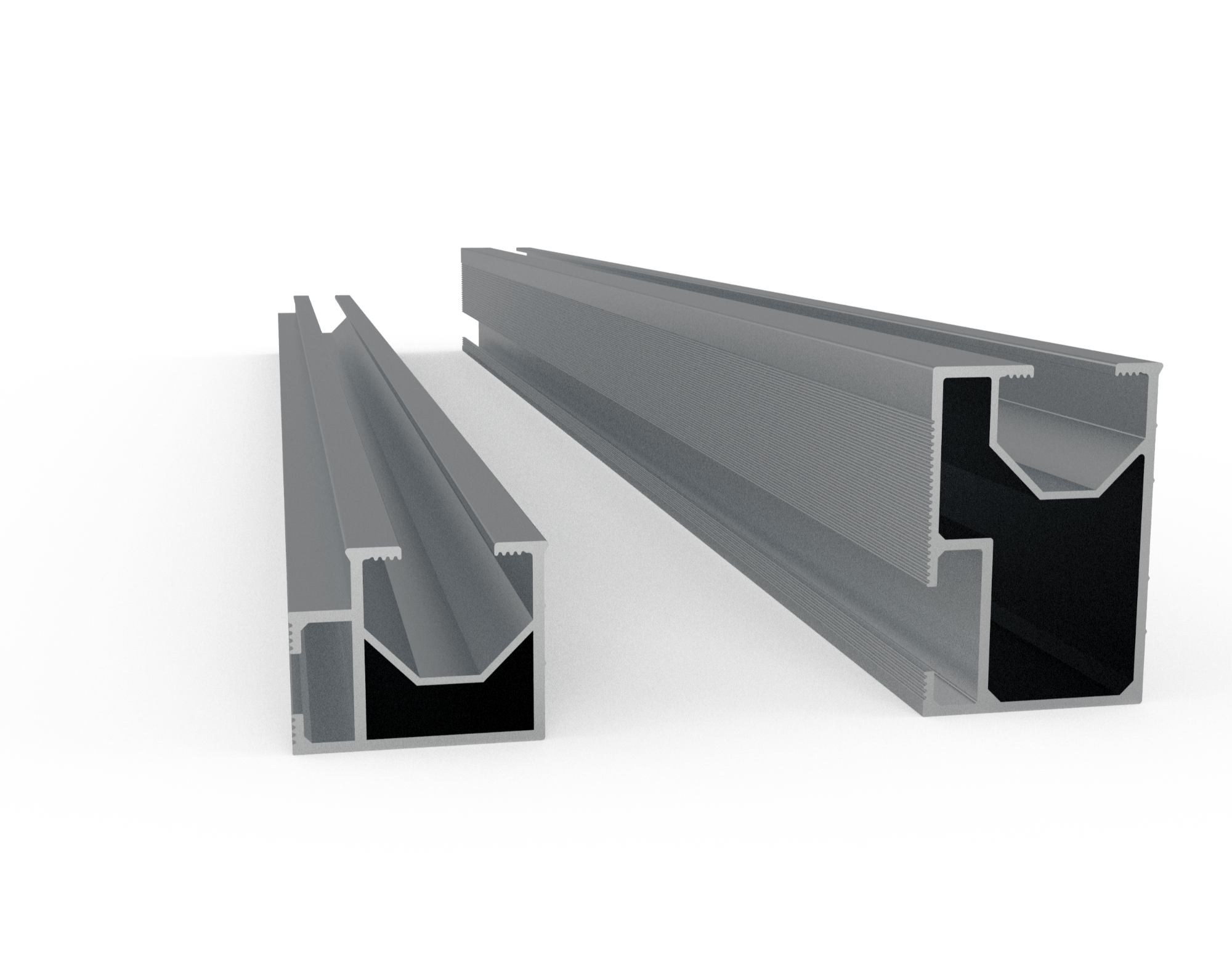
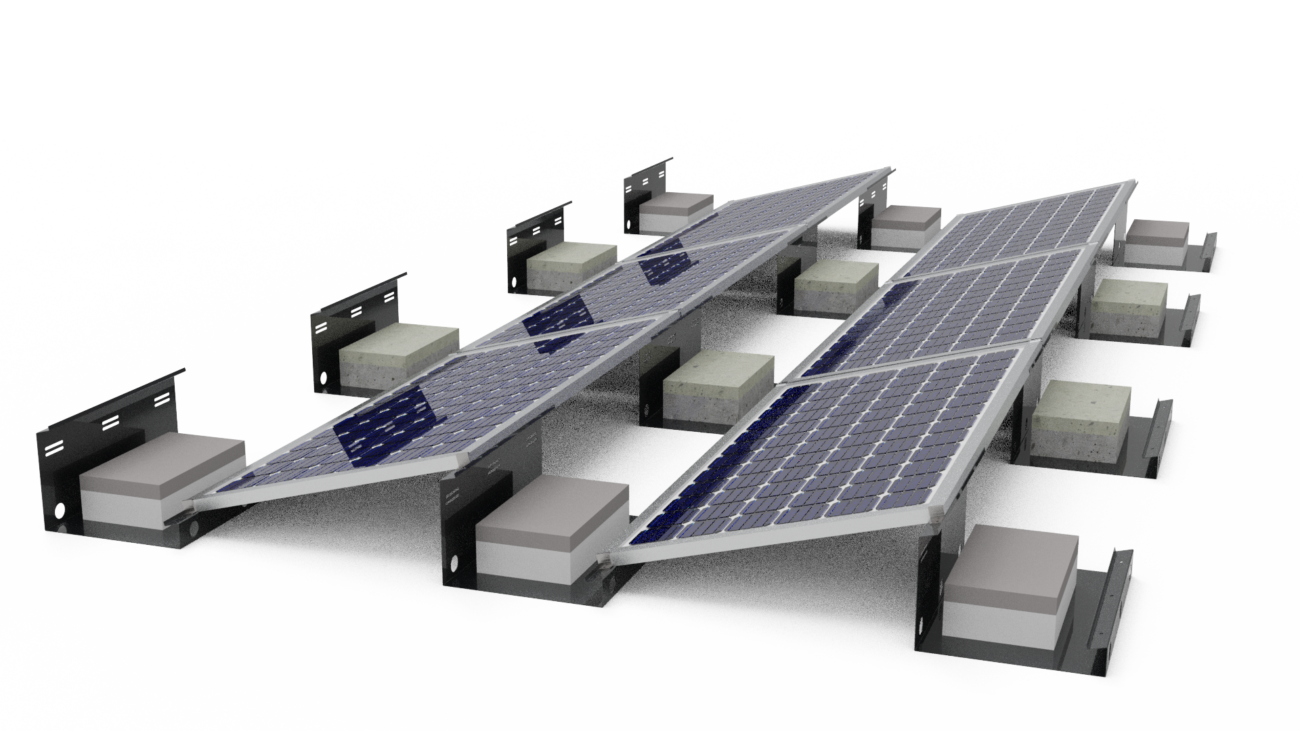
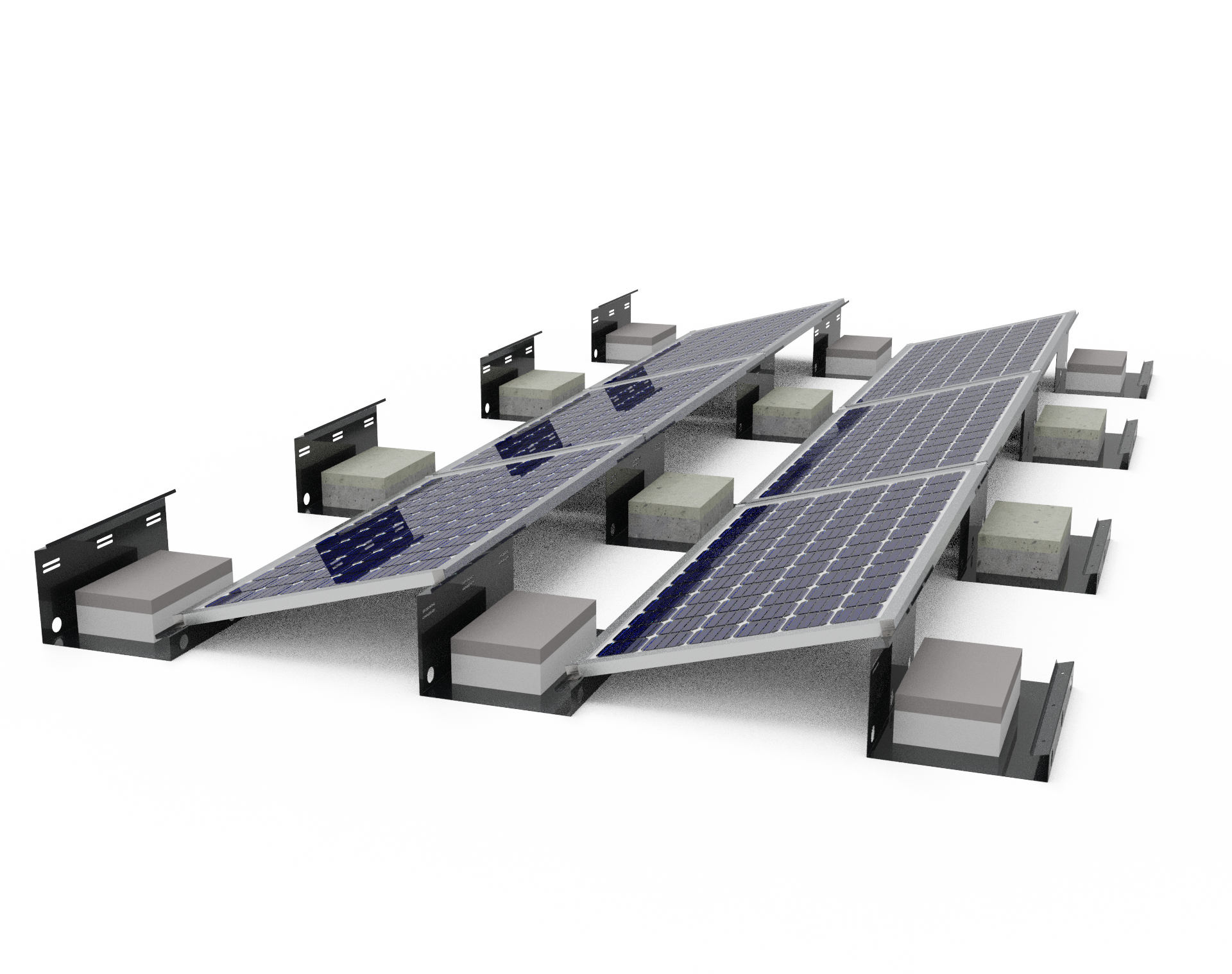
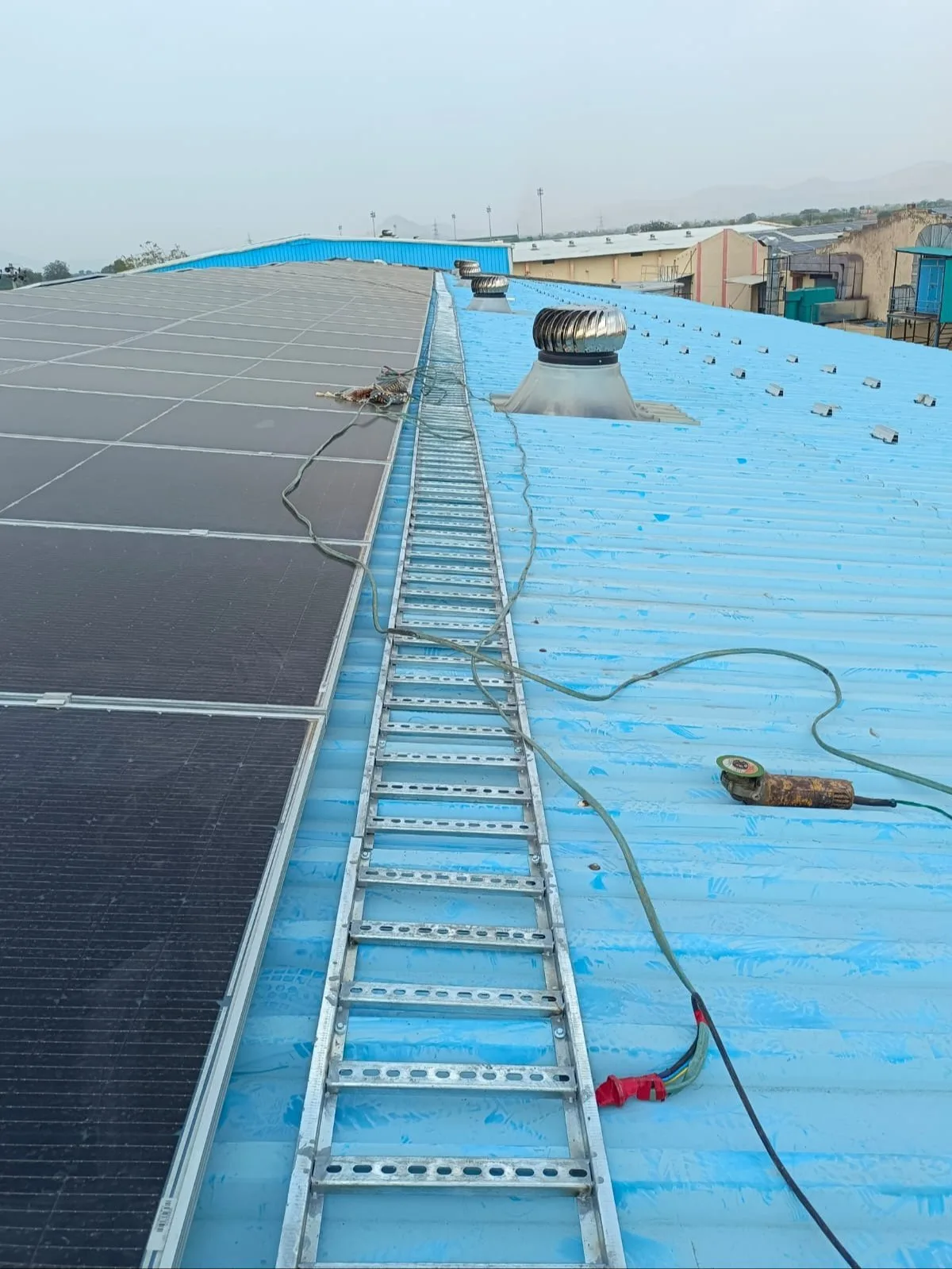
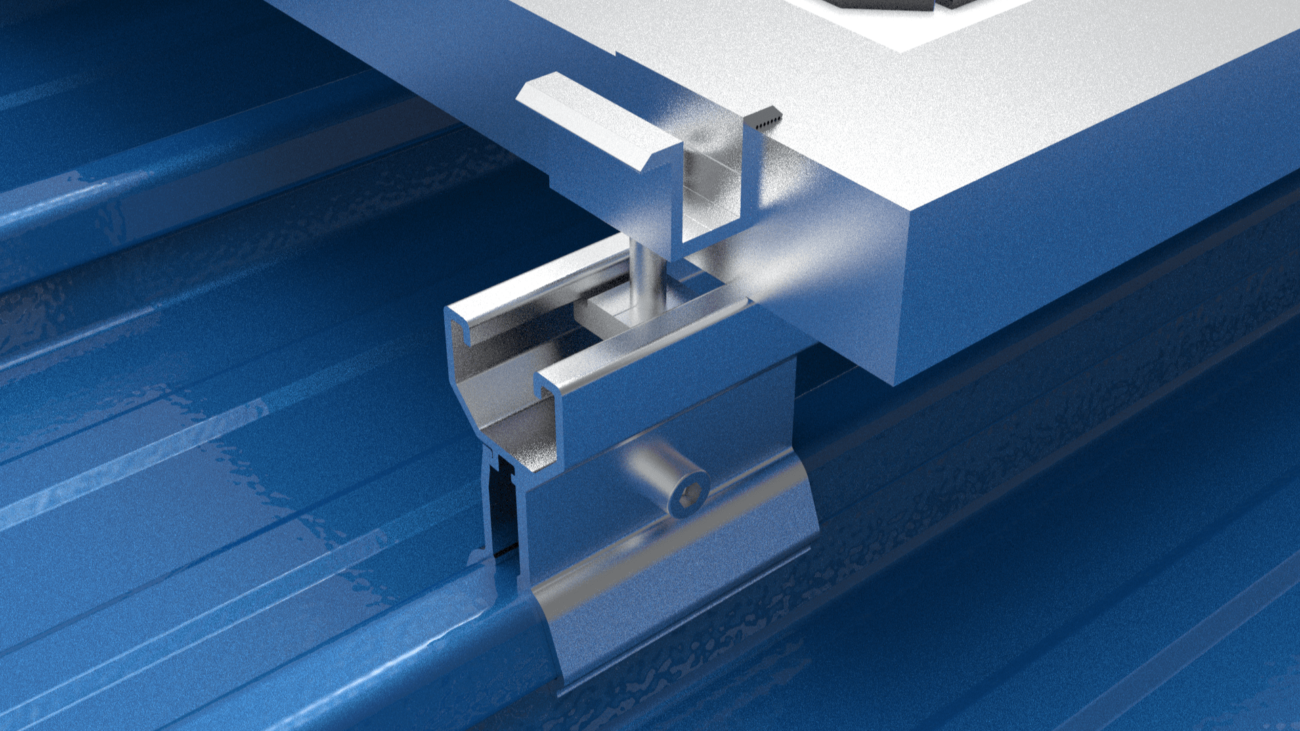
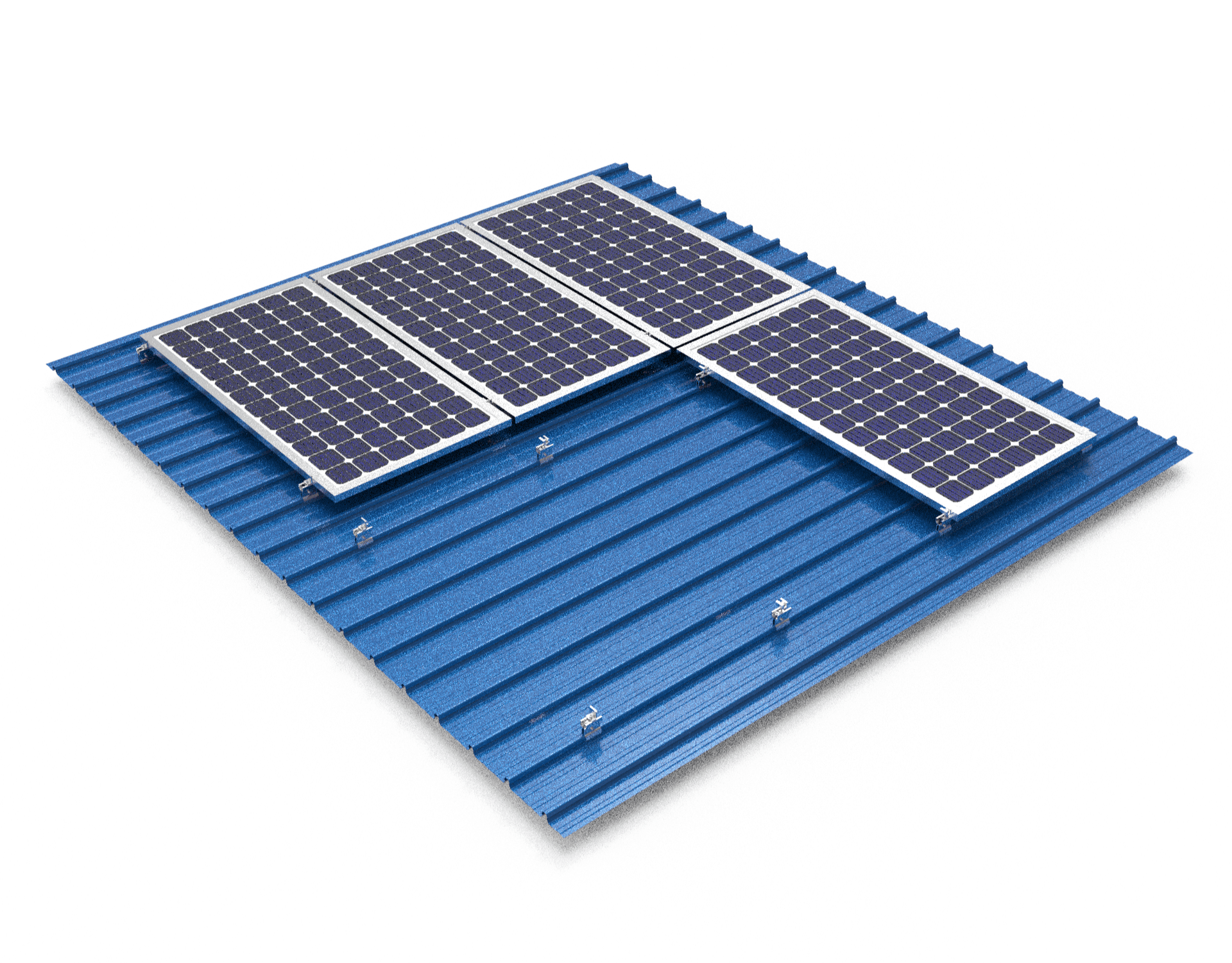
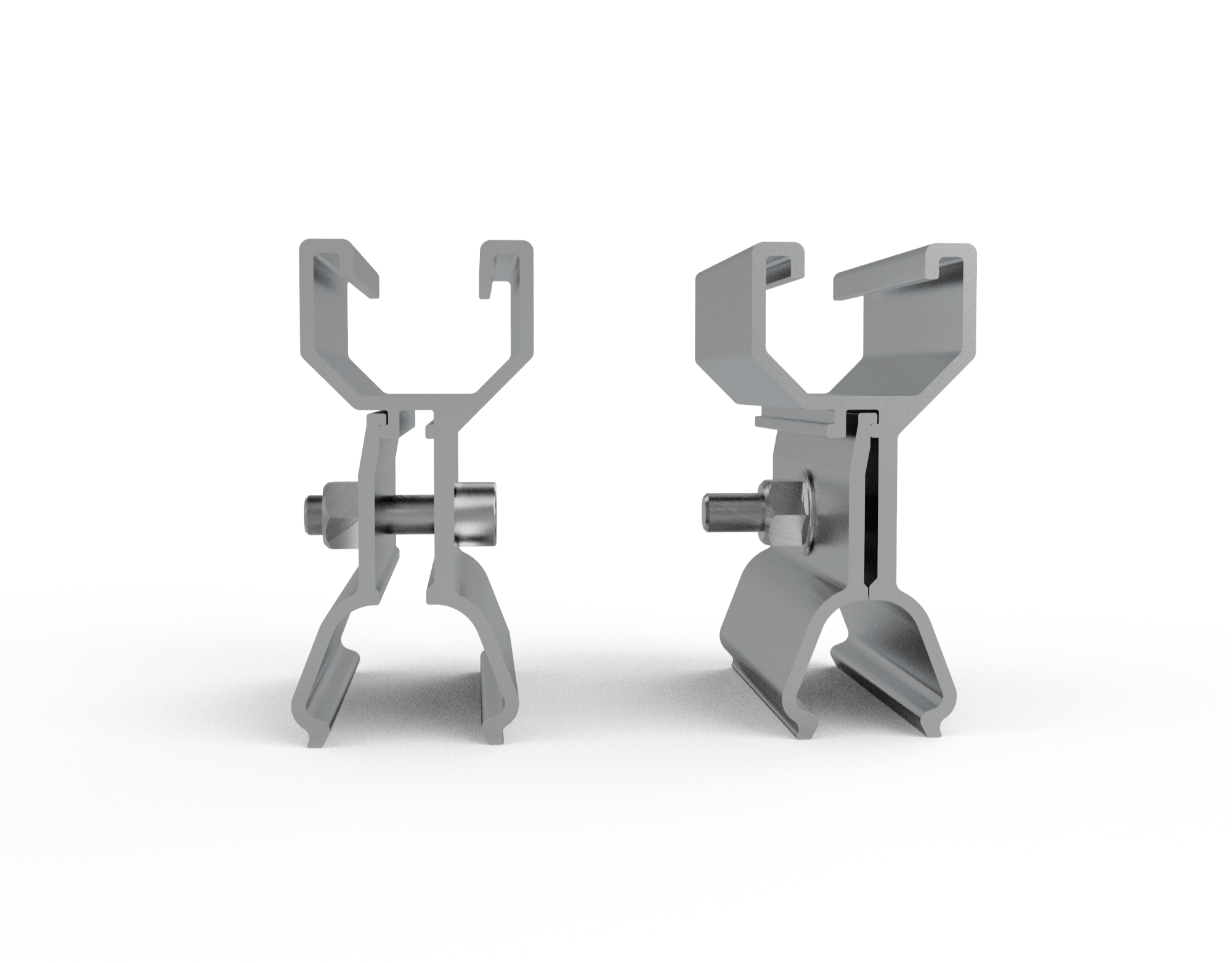
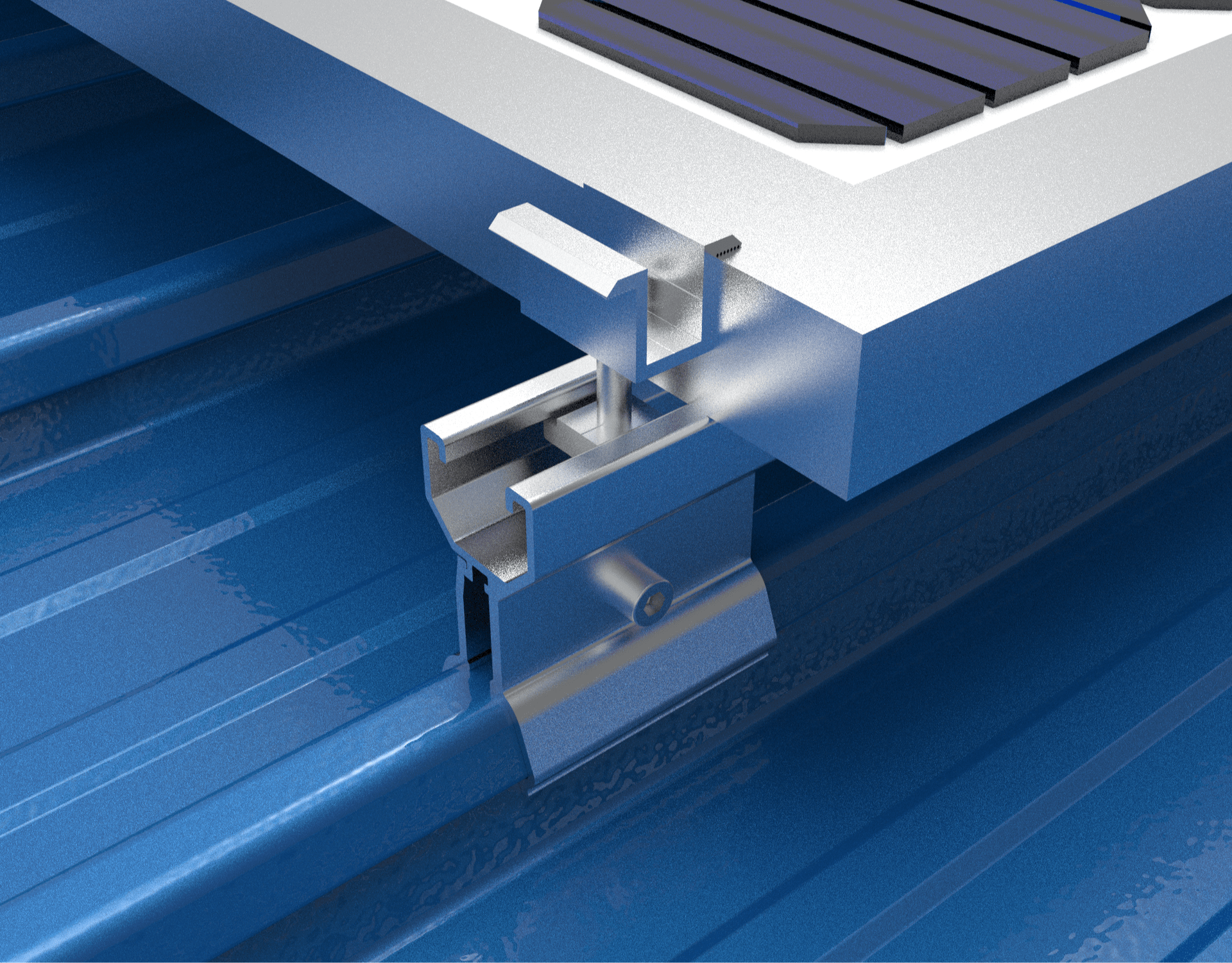
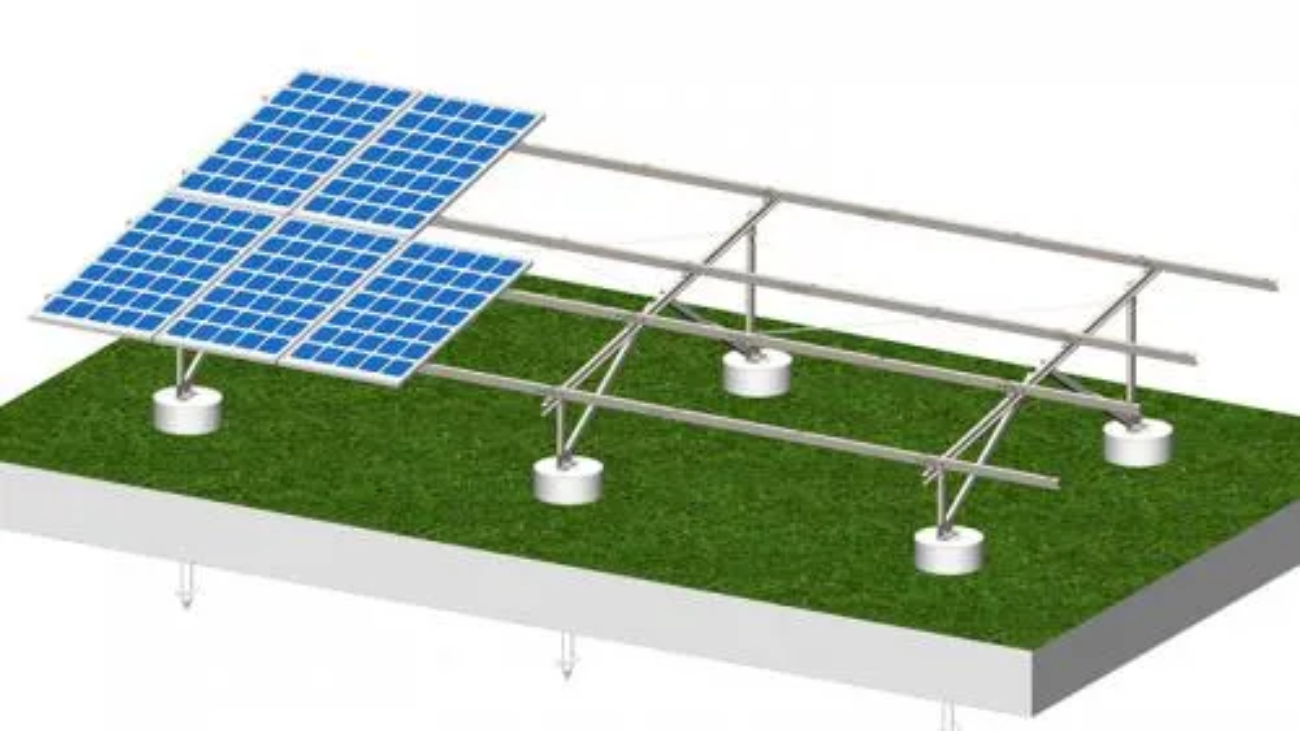
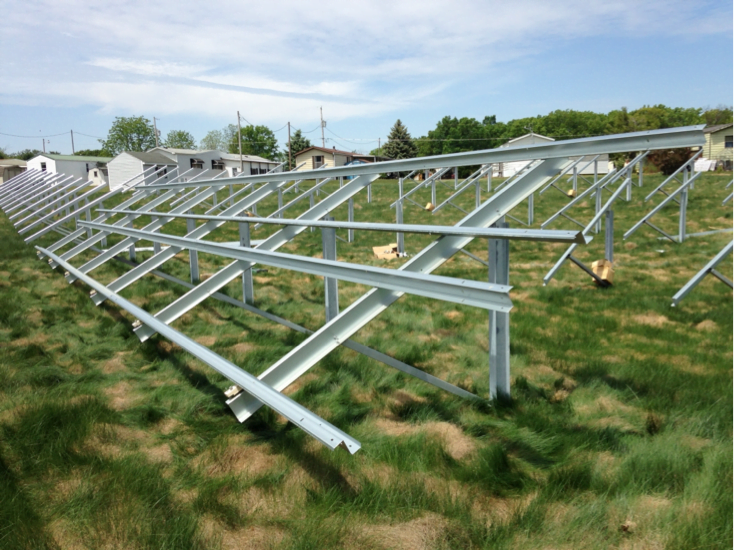
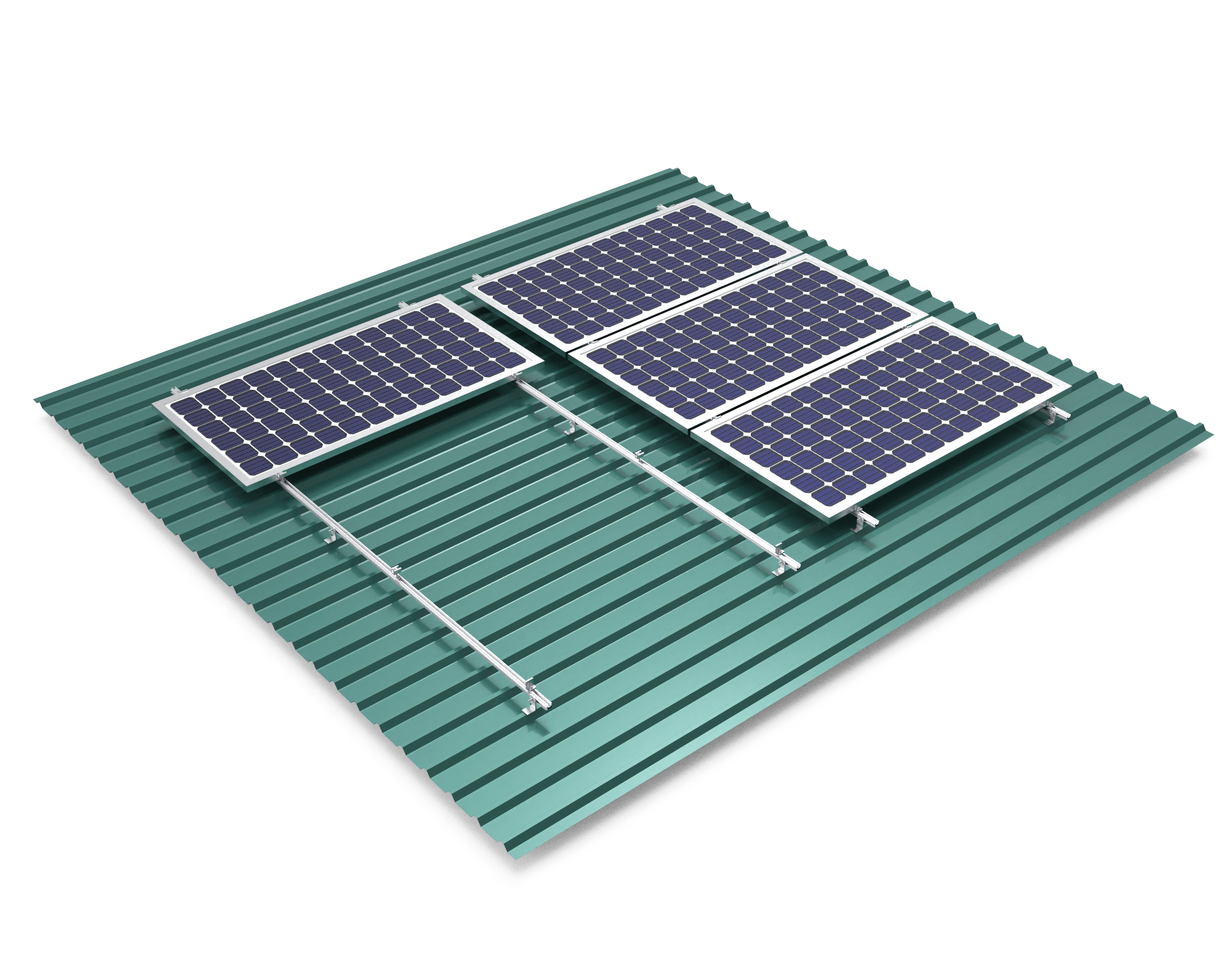
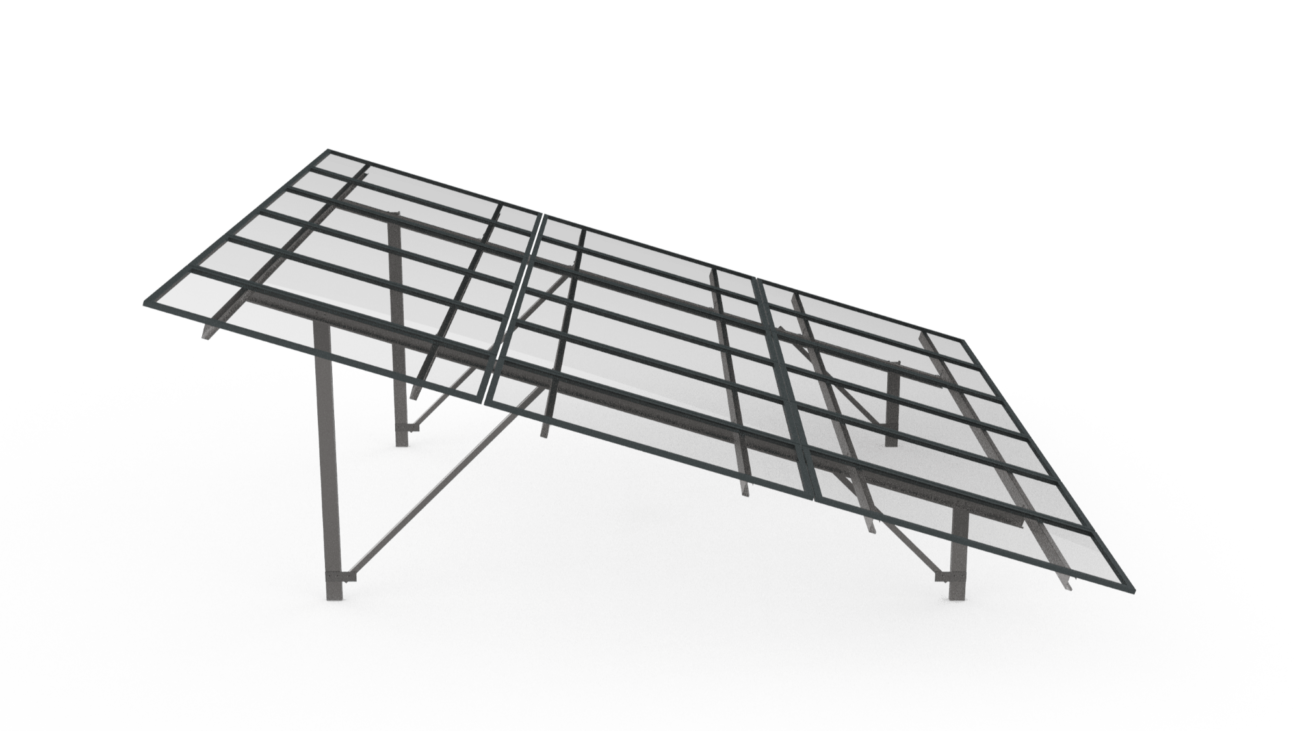
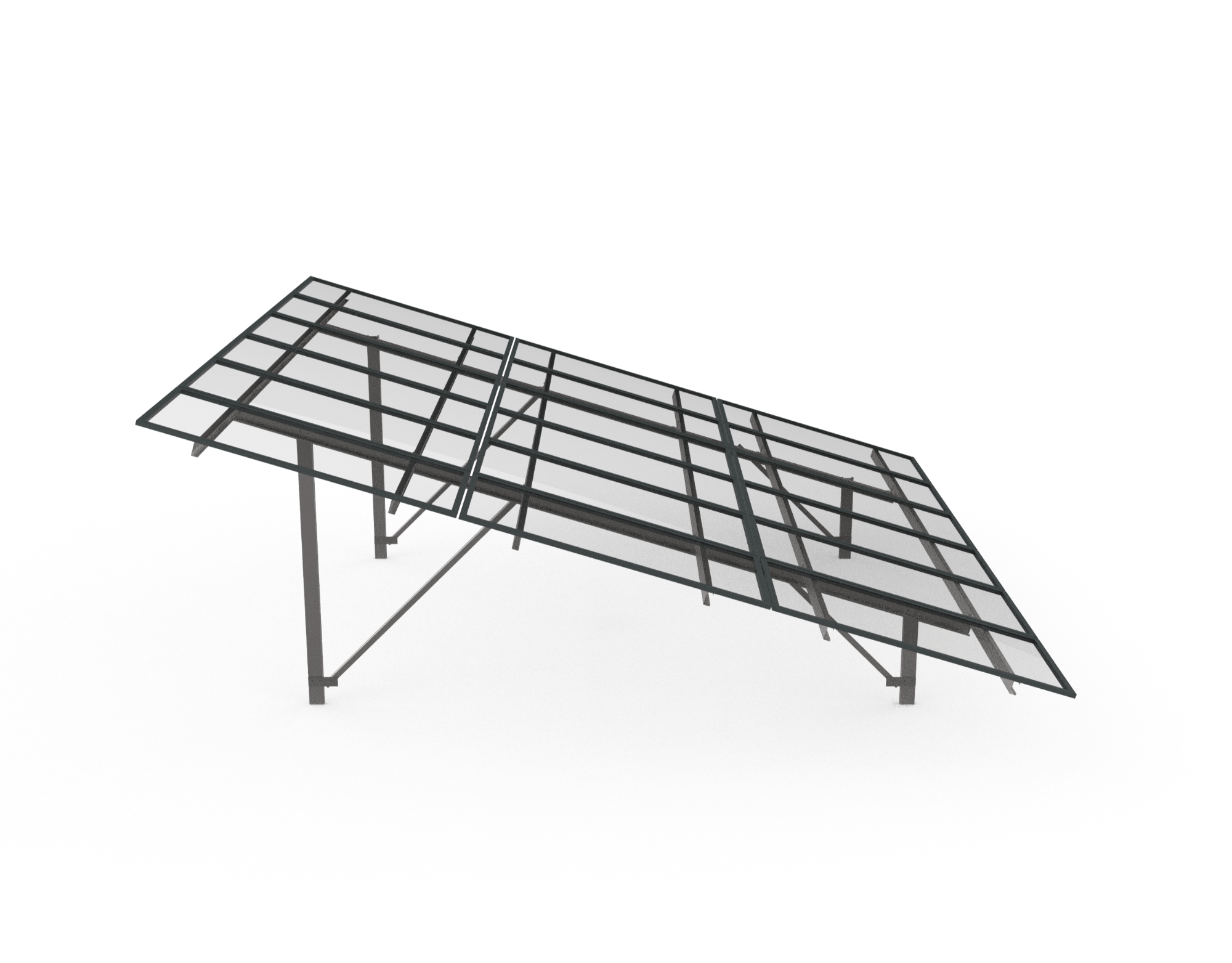
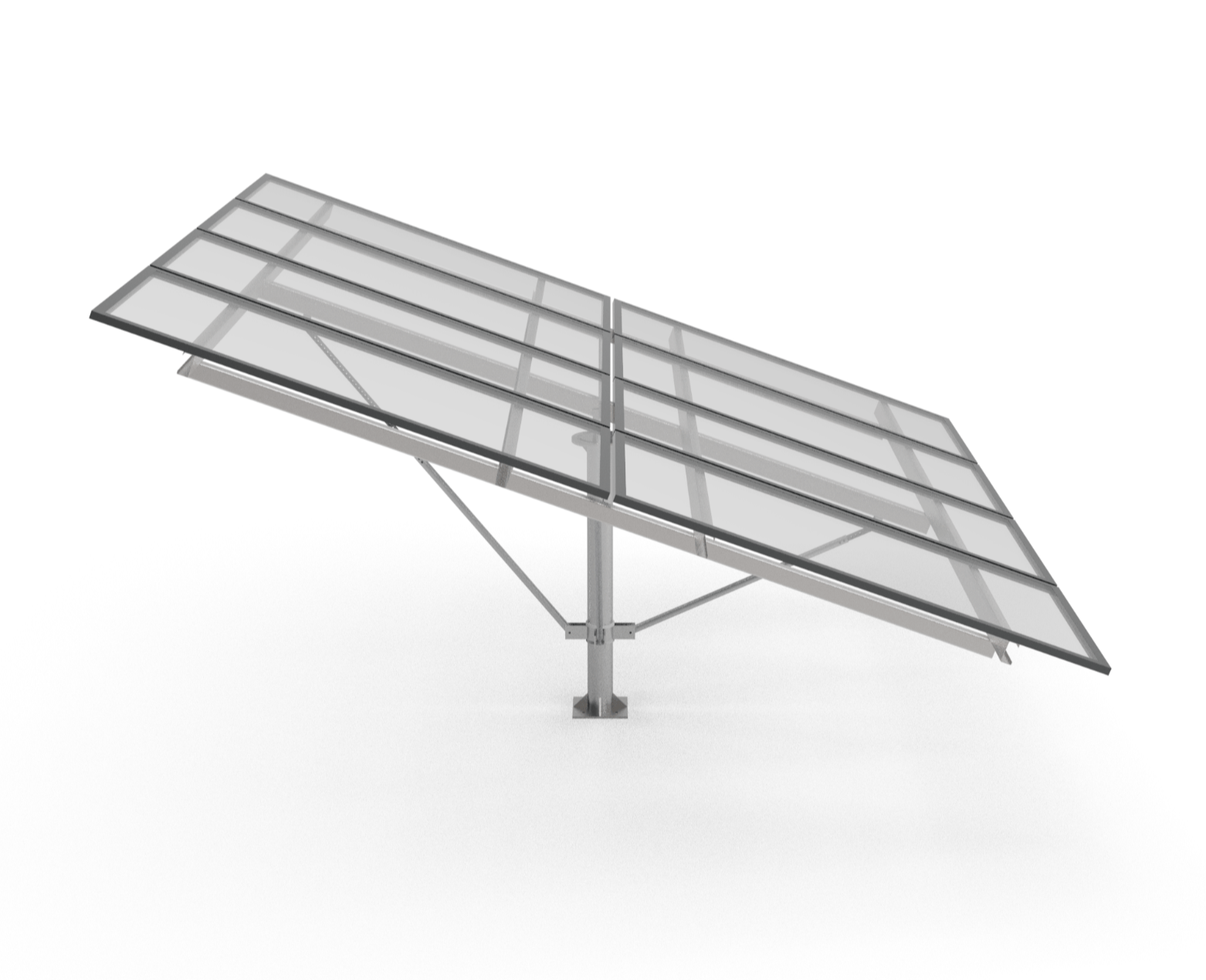
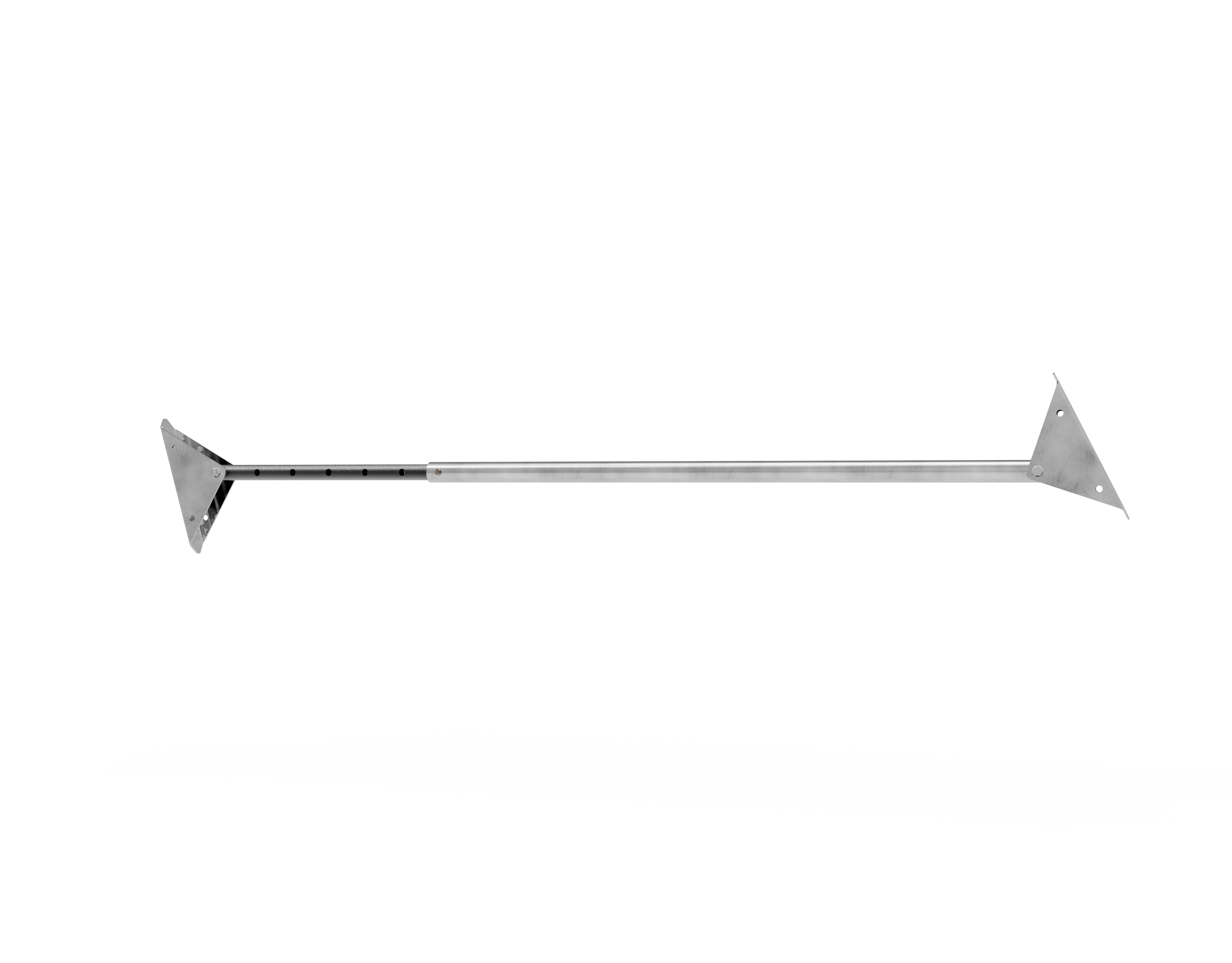
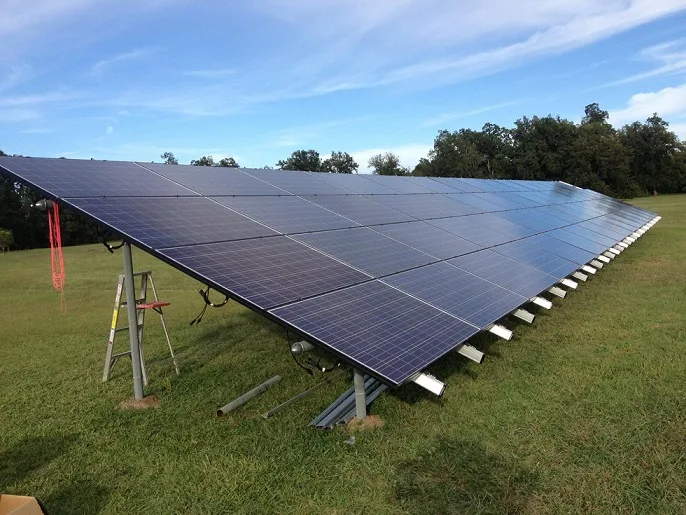
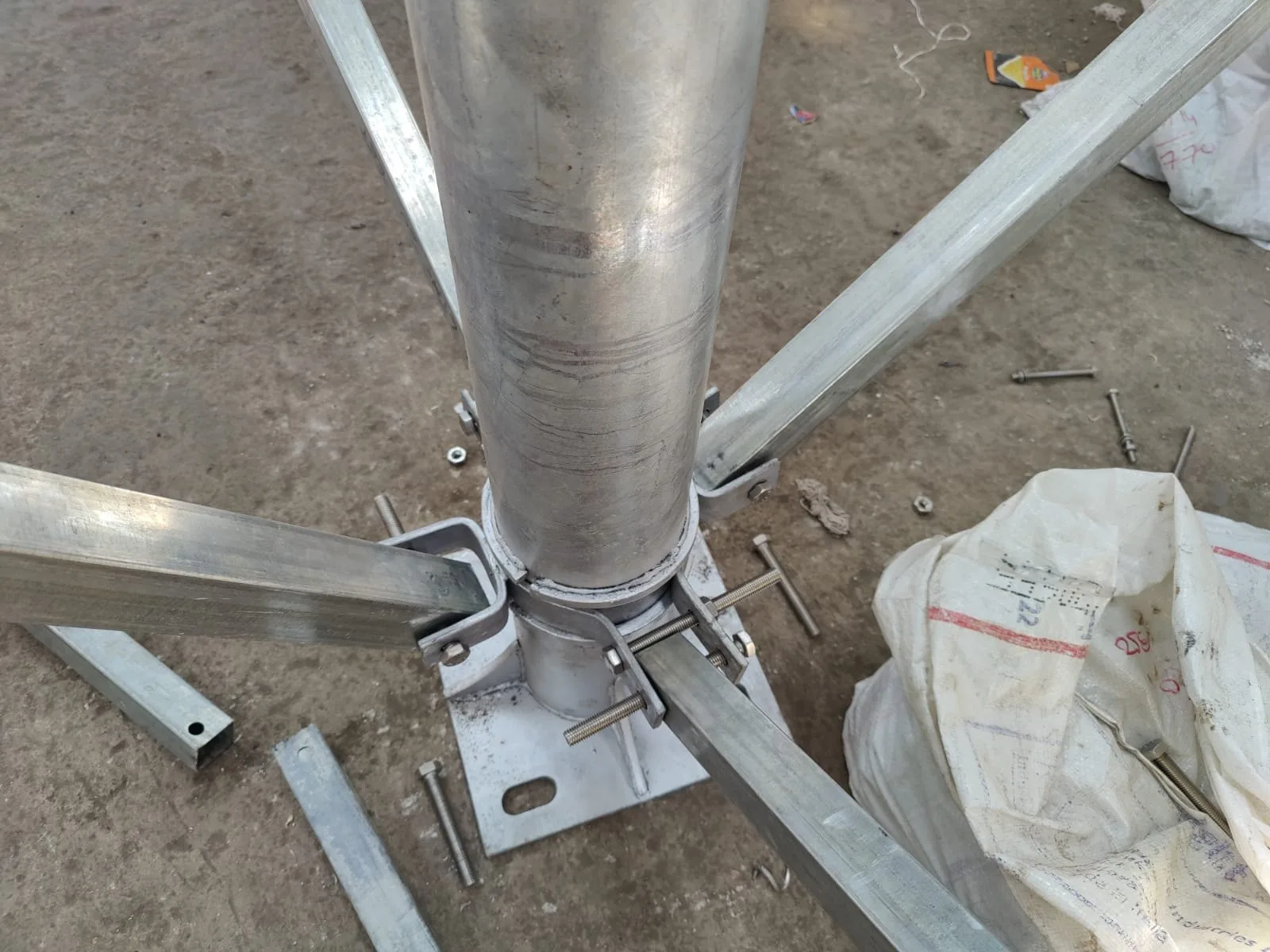
The Mono Rail System is an optimized mounting structure designed for easy installation of solar panels on metal roofing. Some key highlights include:
Lightweight frame made using aluminium and SS 304 materials.
Optimized low-profile shape with the minimal wind resistance.
Allows high capacity installation of solar panels.
Easy installation and maintenance.
Panels arranged in portrait orientation.
Properties
Attribute
Description
Orientation
Portrait
Crest Width Compatibility
Fits any trapezoidal sheet
Panel Compatibility
Works with all PV module brands
Wind Speed Durability
Up to 200 kmph
Finish
Anodized or non-anodized
The streamlined mono rail dimensions make it a cost-effective solution:
Height: 70mm
Length: Customizable based on crest-to-crest distance
Easy Installation
The mono rail system is designed for rapid mounting
Rivet and tape attachments between rail and roof
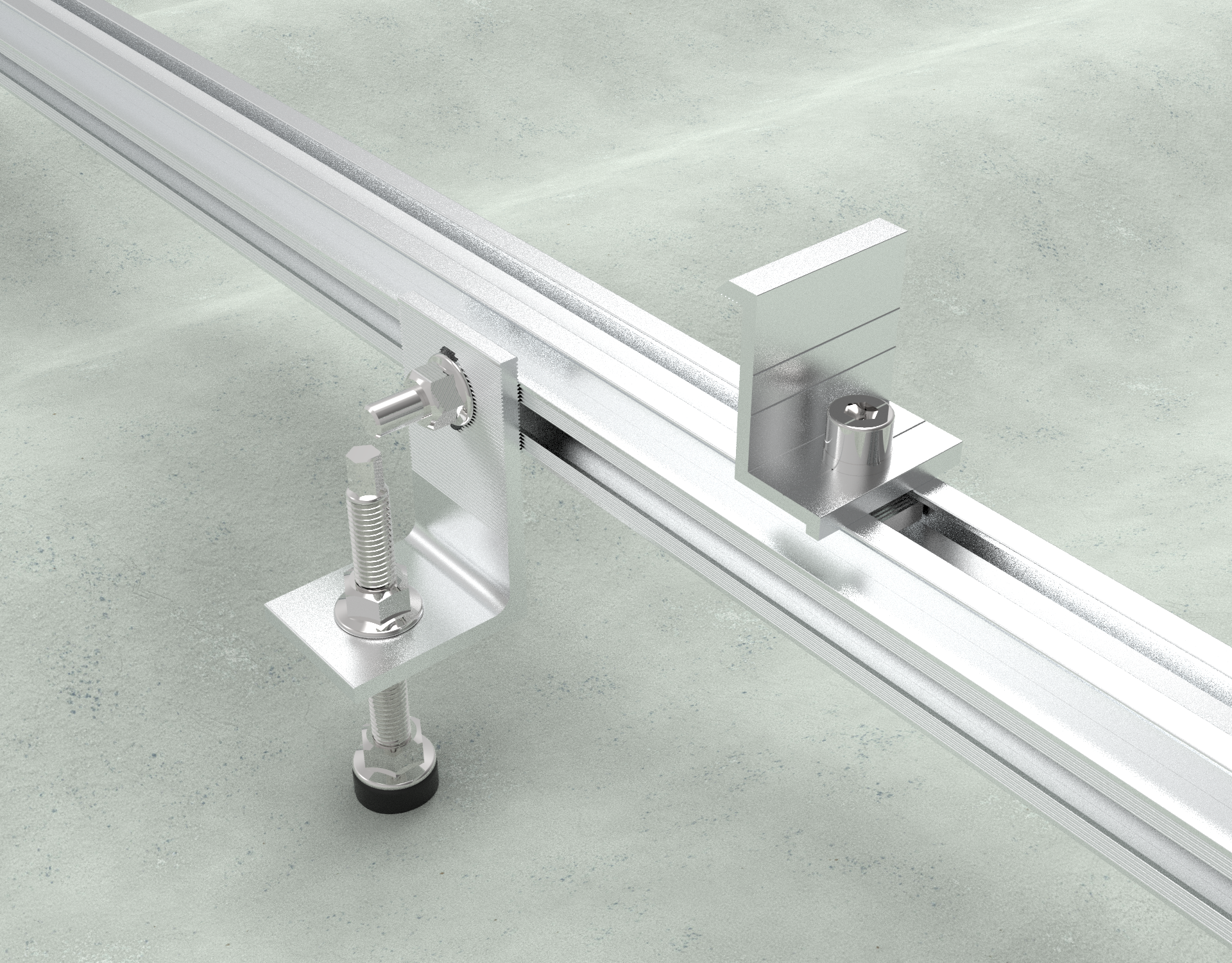
U-clamps and mid-clamps to secure panels to rail
Non-penetrative adhesive options available
Adjustable layout to accommodate high capacity
With lightweight aluminium parts, customizable dimensions, and easy installation, the Mono Rail System enables high solar panel capacity on metal rooftops while minimizing costs and labour.
II. Design Properties
Structura Metalprovides a Mono Rail System has an optimized structure to effectively mount solar panels in a portrait orientation on trapezoidal metal roofs. Some key design properties include:
Compatibility with any crest width.
Suitable for a wide range of solar panel thickness:
30mm
35mm
40mm
Cost-effective while maintaining quality
Durable performance in high wind speeds
Material Properties
Constructed using highly weather-resistant materials:
Aluminium alloy 6063 T6
Lightweight
Corrosion-resistant
Structurally rigid
SS 304 Stainless Steel
Strong and hard-wearing
Excels in tough environments
EPDM rubber tape
Flexible
Waterproof
Excellent adhesion
Structural Specifications
Attribute
Dimension
Height
70mm
Length
Matches crest-to-crest length
Mounting Components
U-clamps and mid-clamps attach panels.
Z clamps connect rail ends.
Durable rail nuts and bolts interface parts.
Rivets anchor rail to roof.
With robust materials and structural data validation, installers can have confidence in the mono rail’s resilient mounting capacity and cost-effective roof integration.
III. Mono Rail Fixations
The mono rail securely mounts to the roof and panels through specially designed fixations.
Rail to Roof
The rail attaches directly to the metal roofing using:
Rivets – Drill and anchor rail to roof.
EPDM tape – Create waterproof seal.
Adhesive – Bond rail for non-penetrative option.
This allows a tight fit to match the trapezoidal sheet while sealing against the elements.
Rail to Panel
Solar panels interface with the rail via:
U-clamps – Grip frame edges.
Mid-clamps – Attach to centres of frame.
These clamps cradle the panel to account for thermal expansion and contraction while providing:
Strength
Support
Adjustability
Fitting Range
The mono rail’s module clamps accommodate various panel thicknesses:
Thickness
Panel Compatibility
30mm
Most frame types
35mm
Many frame types
40mm
Many frame types
This flexibility allows installers to mount a wide range of solar panel brands and models to achieve high capacity.
The innovative mono rail fixations provide versatile, cost-effective mounting on any metal roofingthrough secure anchoring and adjustable panel support.
IV. Dimensions & Materials
The mono rail is constructed using durable metals and rubbers to exact structural specifications.
Dimensions
Height: 70mm
Length: Customizable
Matches trapezoidal sheet crest-to-crest distance
Allows installation along entire metal roof
Metals
Aluminium Alloy 6063 T6
Lightweight
Corrosion-resistant
Easy fabrication
Stainless Steel 304
High strength
Hard-wearing
Excellent weather ability
Rubber
EPDM Tape
Flexible
Waterproof
UV/ozone/heat-resistant
Other Materials
U-clamps
Mid-clamps
Rivets
Rail nuts
Spring washers
Technical Specifications
Attribute
Rating
Wind Speed
Up to 200 kmph
Roof Clearance
100mm spacing
With strategically designed dimensions and durable construction materials, in Structura Metal the mono rail provides reliable mounting and weather resistance to safely install solar panels in demanding environments.
Structura Metal specializes in affordable mono rail systems while delivering quality products and timely order fulfillment.
Offerings
As an established manufacturer, Structura Metal provides the full range of mono rail mounting components:
Aluminium base rails
Stainless steel bolts
End clamps and mid clamps
Rivets and rail nuts
EPDM tape
Spring washers
Commitments
Structura Metal focuses on providing:
Cost-effective solutions
Low-cost
High-value
Customized systems
Fits project requirements
Accommodates metal roofing
Ready stock
No shortages
Quick shipping
Rapid delivery
High order capacity
Large project expertise
Production & Testing
In-house manufacturing
Tight quality control
Efficient processing
Dimensions matched to crest width
Material integrity testing
Pre-dispatch inspections
As an established mono rail specialist, Structura Metal delivers reliable, ready-to-install systems at affordable pricing to meet large project demands.
VI. Why Choose Mono Rail
The mono rail system simplifies solar panel installation with its intelligent mounting design. Here are key reasons to select mono rail:
Durability
Wind resistance up to 200 kmph.
Durable metals and rubber.
Corrosion and weather-resistant.
Long-lasting performance.
Adaptability
Fits all metal roof crest widths.
Compatible with any solar panel thickness.
Customizable length as per the project.
Securely anchors roof and panels.
Reliability
Rigorously tested.
Verified structural integrity.
Pre-dispatch quality checks.
Proven in tough environments.
Support
Ready-to-install system.
Complete mounting components.
Easy installation process.
Large order expertise.
Value
Cost-effective, affordable systems.
High capacity installation.
Comprehensive warranties.
Maximizes project ROI.
With intelligent design and rigorous verification, mono rail simplifies secure and reliable solar panel mounting to reduce project costs and risks.
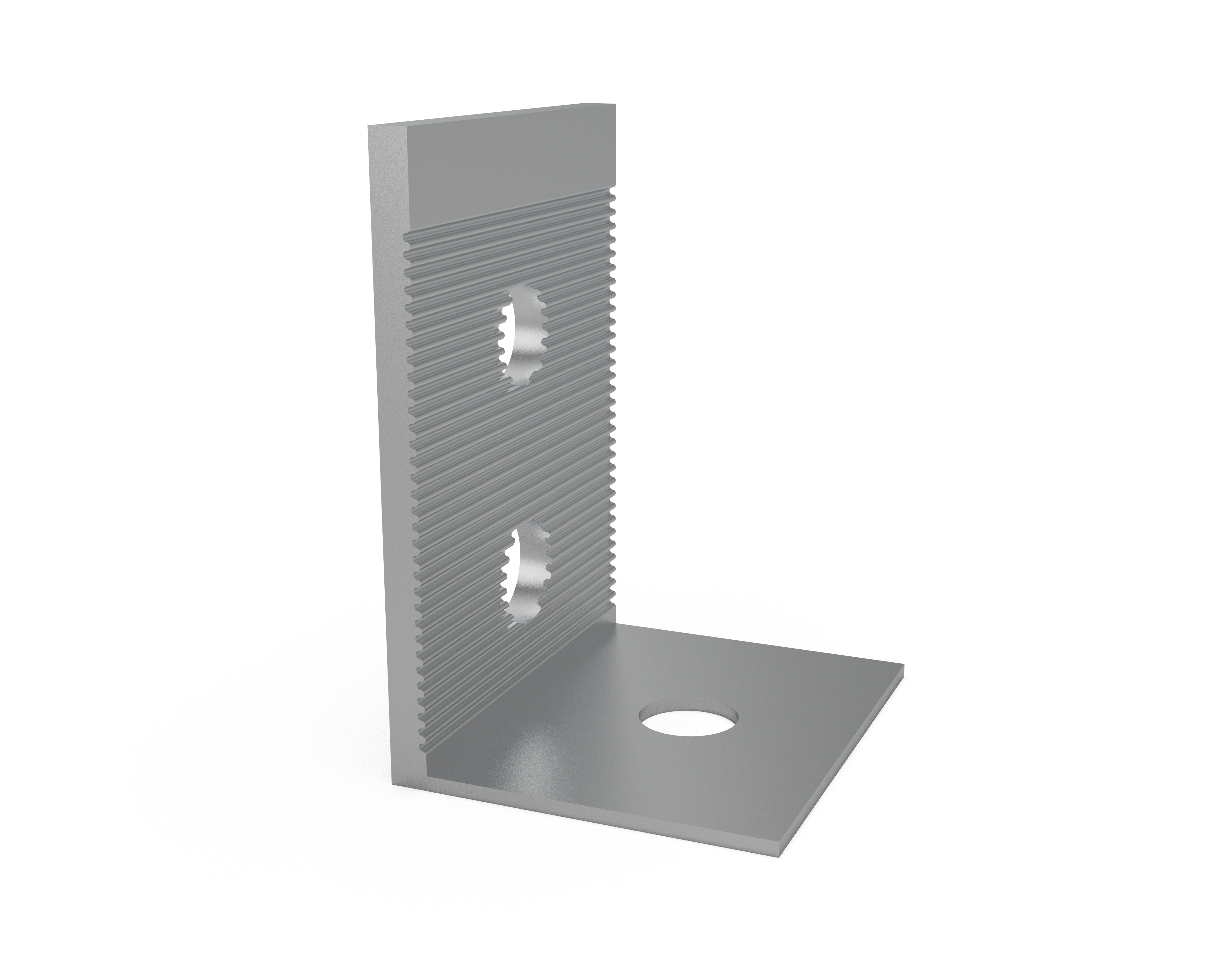
At “Structura Metal “ solar racking system allows the metal roof to install in solar panels using a simple and effective L feet mounting solution. This system is designed for seamless integration with all common metal roof profiles.
A. L Feet Component Design
The L feet brackets are made from durable aluminium 6063, with an anodized anti-corrosion surface treatment. Key features include:
Waterproof rubber pads
Tilt angle range from 5-25 degrees
Corrosion-resistant material
Suitable for framed and unframed solar panels
The table below summarizes the key L feet specifications:
Spec
Details
Material
Anodized aluminium 6063
Dimensions
Custom
Angle Range
5-25 degrees tilt
B. Mounting System Parts
The complete of solar racking system kit consists of the following aluminium components:
L feet brackets
Mid clamps
End clamps
Aluminium rails
Rail splices
These sturdy parts allow rapid mounting with all necessary nuts, bolts, and screws included.
C. Roof Installation Capability
The mounting system and L feet solution works seamlessly on all standard of metal roof styles:
Trapezoidal
Corrugated
Standing seam
II. L Feet Solution Specifications
The L feet mounting brackets are precisely engineered using high grade aluminium and the specialty treatments for the optimal solar panel support.
Can withstand temperature extremes, moisture, and sun exposure
Qualifies for 10 year warranty based on material integrity
B. Dimensions
Custom brackets available to match specific panel dimensions
Tabulated example dimensions:
Style
Length
Height
Thickness
L Profile
38 mm
38 mm
2.5 mm
C Profile
50 mm
C25 mm
2.5 mm
C. Tilt Angle Range
Suitable for full range of tilt orientations:
Low tilt 5-25 degrees
Medium tilt 25-45 degrees
High tilt 45-60 degrees
Allows solar panels to be optimally positioned for maximum sun exposure
The precise aluminium alloy composition and structural properties allow very durable long term mounting suitable for the full range of photovoltaic metal roof installations.
The L feet solution for metal roof solar racking provides unique benefits:
A. Cost-Effective
Simple installation process
Requires only screwdrivers and basic tools
Labour costs minimized
B. Quick and Simple Setup
Pre-assembled brackets, rails, and components
Allows rapid on-site mounts assembly
Installation guide included for straightforward process
C. Durable and Long-Lasting
20 year expected lifespan with minimal maintenance
Can withstand:
High wind speeds
Heavy snow loads
Temperature extremes
Qualifies for 10 year warranty
D. Universal Compatibility
Works for all major metal roof types:
Corrugated
Trapezoidal
Standing seam
Proper installation is critical for a securely mounted and weatherproofsolar panel metal roof system.
IV. Installation Guide and Components
The kit includes a step-by-step installation guide covering:
Layout planning for panels and mounting locations
L feet attachment with provided screws
Ensuring proper waterproof seals
Connecting and securing rails using splices and clamps
Mounting solar panels onto final assembly
Proper usage of all fittings, torque specs, safety guidelines are also provided.
Key parts provided in the complete L feet solution kit:
L feet brackets
Mid clamps
End clamps
Aluminium rails
Rail splices
Rubber pads
Bolts, nuts, screws
Site Considerations
Accounting for wind speed and snow load ratings
Following local building codes and regs
V. Applicable Metal Roof Types
The L feet solution mounting system is designed for versatile compatibility across all the major metal roof profiles:
A. Standing Seam
For roofs with vertical seams
L feet attach at seam edges
Allows linear panel arrays
B. Corrugated Metal Roofs
Ideal for roofs with sinusoidal wave pattern
Mount along the high ridges for optimal waterproof sealing
C. Trapezoidal
For metal sheet roofing with zigzag raised sections
Mounts lay across parallel ridges
The “Structura Metal” gives strong but malleable base and adjustable height range of the aluminium L bracket design allows fitting to the diverse seam arrangements.
Custom mounting options available if your roof pattern or the modules require specialized attachments.
VI. Weather Resistance
The racking system of “Structura Metal” is built to withstand extreme outdoor conditions for 20+ year durability.
A. Wind Speed Ratings
Tested under wind tunnel simulated conditions
Qualified for the following max speeds:
Category (80 kmph speeds)
Exceeds typical building code requirements
B. Snow Load Capacity
Structural capacity for max snow mass per unit area:
3,000 Pa (630 psf) snow load
5,000 Pa (1,050 psf) snow load available
Allows installation in heavy winter climates
Proper site analysis must be conducted to select the right hardware ratings based on regional weather data and conditions.
VII. Warranties and Certification
In “Structura Metal” all racking system components and the L feet solution come with manufacturer warranties and compliance certifications.
A. Product Warranty
10 year limited warranty against material/engineering defects
Covers cost of component replacements
Applies under normal installation and operating conditions
B. Quality Certification
International standards organization accredited
Complies with standards
Confirms:
Structural reliability
Safety
Long-term durability
C. Project Specific Certification
Third party engineering assessment reports can be commissioned to certify:
Site specific wind speed capacity
Expected snow load resistance
Local climate suitability
Building code compliance
Submit your project details for personalized mounting layout drawings and hardware specifications required for permitting approvals.
In “Structura Metal” the standardized mounting kits, fully customized racking system designs are available based on your solar panel specs and metal roof parameters.
A. Customization Options
L feet brackets tailored to match panel dimensions
Varied orientation configurations
Adjustable tilt angles
Landscape vs portrait
Access pathways
Site analysis to maximize sun exposure
Optimal components selection
B. Design Services
Our engineering team provides:
Scaled mounting layout plans
3D renders of proposed setup
Customized parts CAD models
Structural simulations verifying:
Wind speed rating
Snow load capacity
Seismic rating
As per the design request for the project dimensions and details for personalized solar racking system plan to simplify your metal roof mounting process.
IX. Project References and Images
“Structura Metal” gives extensive installations demonstrating real-world applications of the metal roof solar racking system using our L feet and hardware components.
A. Installation Showcases
Check out the following sample projects:
10 kW panels on commercial standing seam metal roof
Residential home array across split-level corrugated metal roofing
Industrial array with customized trapezoidal brackets
B. Mounting Layouts
Browse our image galleries showing:
Hardware mounting steps
Finished site layouts
Wiring and connections
Environmental weatherproofing
These visuals illustrate best practice installation for a professional high quality racking system assembly.
As per the project requirement our team can provide relevant imagery and diagrams tailor for your building specs and regional weather conditions!
X. Information Needed for Custom Solution
At “Structura Metal” our engineer give an optimal solar panel metal roof mounting solution for your site, we need key details:
I. Introduction to Aluminium Extrusions and the Solar Industry
The solar industry has seen immense growth in the recent years as both companies and individuals look to harness renewable solar energy for the electricity needs in an eco-friendly manner. Solar panels play a crucial role in converting sunlight into usable electrical energy. The efficiency and longevity of these panels depend significantly on the quality of materials used to manufacture them.
Aluminium extrusions have emerged as an important material choice for the components in solar panels including framing structures and the mounting systems. Extruded aluminium refers to aluminium that has been formed with a fixed cross-sectional profile by forcing heated aluminium billets through a shaped die via an extrusion process.
Benefits of Extruded Aluminium:
Extremely lightweight yet strong metal with excellent conductivity
Resistant to corrosion and harsh weather conditions
Easy to fabricate into customized profiles and aluminium sheets
More affordable option compared to metals like stainless steel
Fully recyclable and sustainable material
As per the result the versatility and the durability of extruded aluminium make it worthwhile for the following the solar applications:
Lightweight frames and casing for the solar panels
Mounting systems to securely the fasten panels
Heat sinks and devices to dissipate heat
Reflective surfaces to maximize light absorption
The unique properties of aluminium extrusions cater efficiently to the needs of a rapidly evolving renewable energy domain like solar power. As demand grows for scaled solar implementations, aluminum alloy profiles offer an optimal and ecologically responsible solution. Specialist manufacturers of extruded profiles also enable customized solar-specific designs.
With enhanced collaboration across stakeholders spanning suppliers, engineers, architects, and sustainability experts – aluminium promises to be integral to the building of an efficient and circular solar industry.
II. Role of Aluminium in Solar Panel Components
Aluminium plays a vital role in the multiple components that make up the solar panels including:
Frames and Structures
Provide rigid frames to encase and protect solar cells
Enable installation onto rooftops, vehicles and infrastructure
Custom extruded profiles for specific load requirements
Anodized for weather resistance and desired visual finishes
Energy Conduction
Excellent conductivity for electrons generated in cells
Transfers current to be available for external use
Reflective surface improves light capture to boost efficiency
Comparable conductor to materials like copper and silver
Mounting Systems
Essential for securing panels in outdoor environments
Anchor to various foundations – rails, poles, rooftops
Withstand wind, seismic and snow loads
Lightweight alloy vital for easy transport and assembly
Modular profilesto suit all kinds of installations
The versatility of aluminium alloycompositions combined with the extrusion flexibility enables it to be fabricated into parts that serve critical functions across solar power generation systems.
III. Comparison to Other Materials like Stainless Steel
Aluminium extrusionsoffer distinct advantages over other metal alternatives, especially stainless steel, when it comes to usage in the solar panels:
Cost – Aluminium is far more economical than stainless steel.
Weight – About 3 times lighter allowing easier transportation and roof loading.
Strength – Has requisite mechanical strength for frames and mounts.
Workability – Softer metal that is easier to fabricate and bend.
Conductivity – Excellent electrical and thermal conductor.
Corrosion Resistance – Withstands weathering better with protective finishes.
Sustainability – Highly recyclable material with low remelt energy.
Additionally, specialist aluminium alloy grades that have been designed to possess optimal properties for renewable energy applications. Availability of the diverse aluminium sheets, plates, rods and extruded profiles in a range of sizes facilitates scalable production of solar panel components.
Superior longevity ensures aluminium solar panel parts require lower maintenance over extended lifespan – offering better value compared to alternative metals. Standards for anodized coatings and testing procedures have also evolved to full fill quality expectations.
V. Applications of Aluminium Extrusions in Solar Industry
Aluminium extrusions find widespread implementation across the solar power domain:
Commercial Installations
Industrial parks, factories
Warehouses, airplane hangers
Highways and dedicated solar farms
Residential Infrastructure
Rooftop solar panels
Carports and garage roofing
RV and tiny homes
Off-Grid Power Systems
Telecom towers, rural electrification
Emergency power backup
Traffic signals, highway sound barriers
Spacecraft and satellites
The lightweight sturdiness along with design flexibility of extrudedaluminium makes it suitable for small scale residential needs as well as large utility projects. Continued innovation of alloy grades and cost-effective manufacturing processes has enabled adoption across on-grid and off-grid solar applications.
VI. Aluminium Alloy and Extrusion for Affordable Solutions
The high upfront costs of solar photovoltaic systems pose adoption challenges. Aluminium alloy and extrusion offers a variable route to affordable solar power:
Compared to systems based on copper or steel, aluminium panels have lower costs for the same wattage.
Advanced alloying technique enhance electrical properties while retaining cost effectiveness.
As a commonly available metal worldwide, global aluminium prices are competitive.
Established manufacturing and recycling ecosystems make aluminium financially attractive.
Custom extruded profiles help optimize material usage minimizing wastage.
Lower weight results in reduced shipping and handling charges.
Creates local job opportunities expanding solar value chain.
Solar panel mounting structures fabricated from aluminium trim installation expenses.
Encourages more users especially in developing countries to choose solar energy.
Continued efforts to improve efficiency of aluminium solar components coinciding with higher adoption will be facilitate further cost reduction – enabling the dream of inclusive and affordable solar power access.
VII. Surface Treatments and Finishes
While untreated aluminium offers good corrosion resistance, in an appropriatesurfacetreatments and finishes that can be enhance the durability and aesthetic appeal of solar panel parts:
Functional Coatings
Anodizing creates a harder insulating oxide layer improving the weather ability
Organic paint-like coatings provide insulation and minor corrosion for protection
Specialized solar glass coatings maximize light absorption and conductivity
Aesthetic Finishes
Anodized layers are available in various tints besides natural finish
Durable coloured paints and powder coated finishes suit custom themes
Improves visual appeal for the building-integrated installations
Screens can be mimic surround textures like brick walls or wood panelling
Specialized Testing
Qualification tests assess treatment effectiveness and adhesion
Accelerated corrosion testing verifies the noticeable enhancement of baseline aluminium corrosion resistance
Exposure trials in real atmospheric conditions
Surface treatments render aluminium uniquely suitable for the stringent performance and aesthetic needs of solar panel components.
Repurpose for non-structural solar balance-of-systems
Recycle
Create buyback and takeback systems for old panels
Extract aluminium content for low-energy recycling
Process back into the raw material for new profiles
Ecological Impact
Lightweight aluminium and transport optimization cuts carbon footprint
Significant water savings using recycled aluminium versus primary metal
Integrate renewable energy in remelting and extrusion processes
Proactive adherence to circular economy principles will allow to the solar industry to grow in a sustainable manner and continue providing clean energy solutions without adversely straining the planet’s resources.
IX. Role of Technical Expertise in Design
Harnessing aluminium’s full potential for solar applications requires extensive technical know-how:
Simulation and Analysis
Software-aided modelling and the structural analysis
Predict thermal dissipation needs
Ensure wind loading capability
Customized Design
Expertise in translating concepts to the manufacturing extruded profiles
Suitability evaluation of the different alloy grades
Design optimization for material and energy efficiency
Prototyping and Testing
Evaluate form, fit and functionality
Carry out static and dynamic testing to meet norms
Iterate based on feedback from controlled trials
Multi-domain Collaboration
Partner with panel and other system manufacturers
Joint development of integrated solutions
Leverage emerging solar-specific advances in aluminium
Careful application of metalworking design skills, simulation tools and a collaborative approach is key to overcoming aluminium innovation barriers for solar structures.
X. Conclusion on Suitability of Aluminium Extrusion Profiles
The exponential growth and mainstreaming of solar technology in recent times requires eco-friendly, cost-effective and sustainable material solutions. Aluminium extrusion profiles serve as an optimal material choice in this context owing to:
Lightweight yet sturdy profiles enabling modular and adaptable structural designs
Alloy advancements tailoring electrical, mechanical and thermal properties
Nearly infinite recyclability and environmentally prudent life cycles
Custom manufacturability of the specialized cross-sections
Continued focus on process efficiency, yield and quality improvement
Increased adoption furthering innovation and cost optimization
High relevance to renewable energy domains demanding longevity and reliability
With abundant technical expertise and manufacturing capability, aluminium promises to be integral to unlocking mass solar adoption. Strategic collaboration among stakeholders and deliberate perpetuation of circular-economy centric business models will be facilitate responsible solar industry growth.
Aluminium’s merits make it undisputedly well-suited for extruding a sustainable solar future!
I. Introduction to Flat Roof Solar Mounting Systems
The “Structura Metal” provide installing solar panels on flat roofs is becoming an increasingly popular option for both homes and businesses looking to be utilize renewable energy. Flat roofs provide ample vacant space for mounting solar PV systems and solar thermal panels. While pitched rooftops can also accommodate solar arrays, flat roofs offer some unique advantages.
1. Benefits of Flat Roof Solar
More flexibility in panel orientation and tilt angle for optimal sunlight capture
Ability to install larger solar arrays more easily
Less visibility of panels from street level
2. Types of Flat Roof Mounting Systems
There are two main types of solar mounting systems used on the flat roofs:
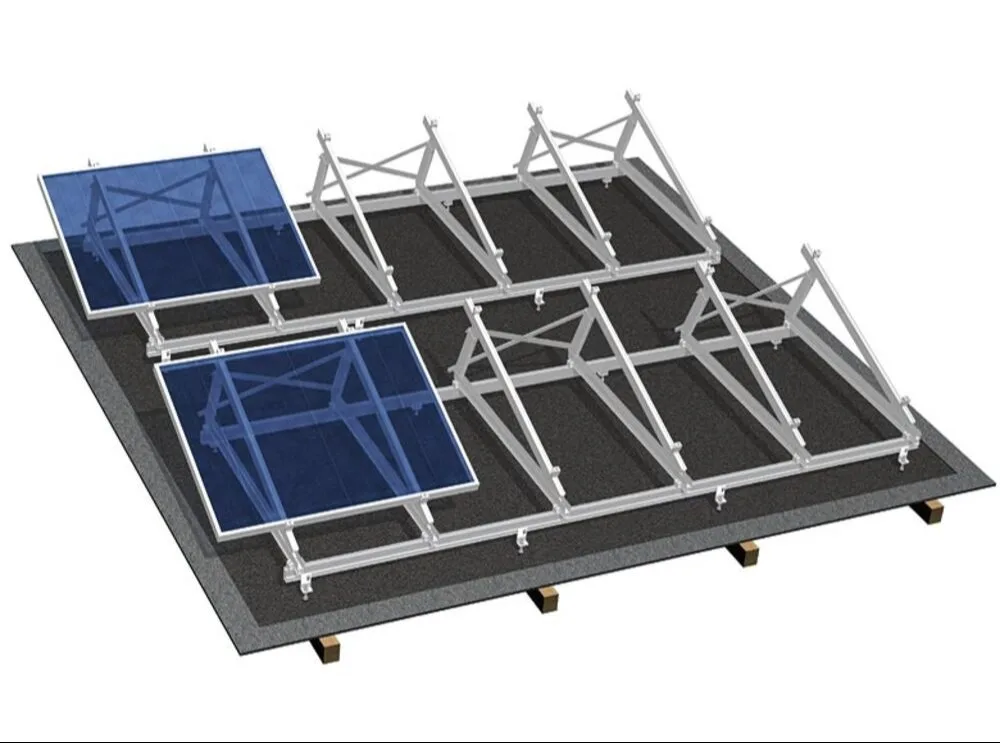
Free-standing/Ballasted: Panels are fixed onto frames and weighted down without penetrating the roof
Attached/Penetration: Panels are anchored to rails attached directly to the roof surface
Ballasted systems avoid compromising the integrity of the waterproof roof membrane. However, attached systems typically withstand higher wind loads.
3. Flat Roof Solar Panel Options
System Type
Description
Considerations
Solar PV
Converts sunlight into electricity
Requires wire connection to building
Solar thermal
Heats water from sunlight
Integration with hot water system
“Structura Metal” gives a proper site evaluations and safety precautions by qualified solar professionals are crucial when installing panels on flat roofs. Key factors like roof strength, panel wind resistance, and placement optimization should be addressed during the planning process.
With smart design and strategic mounting selections tailored to the specific roof, flat spaces can be successfully transformed into the efficient solar hubs. Flat roof solar offers property owners a versatile platform to harness renewable energy.
II. Key Considerations for Flat Roof Solar
Installing a solar system on a flat roof requires careful planning and preparation to ensure optimal performance and safety. Here are some of the most important factors to consider:
A. Roof Structure and Condition
A structural assessment is vital to verify the roof can handle the additional weight of solar panels and mounting systems
The roofing material and age impacts the choice of mounting method
Reinforcing the structure may be necessary for older or weaker roofs
B. Orientation and Panel Tilt
Optimal tilt angle depends on the latitude and climate
Angled mounts typically used to maximize solar gain
Adequate spacing prevents inter-row shading
C. Weather Resistance
Wind resistance varies by mounting type:
System
Withstands
Ballasted
Up to 100 mph
Attached
Over 110 mph
Snow load capacity also factors into structural requirements
D. Accessibility and Maintenance
Walkways facilitate safe access
Sufficient clearance eases system upkeep and repair
Cabling should be neatly managed
Careful flat roof solar design to optimize the energy generation and safeguards the roof’s integrity. Consult closely with qualified solar professionals during the process.
III. Residential Flat Roof Solar Solutions
Homeowners with flat roofs made of materials like concrete, membrane, tar and gravel, or torch down have several good solar mounting options. Residential flat roof solar systems allow households to generate their own clean energy through photovoltaic panels or solar water heating.
A. Solar Panel Mounting Methods
System
Description
Non-penetrating
No roof holes, relies on ballast weight
Penetrating
Attached with roof fasteners
B. Non-Penetrating Ballasted Mounts
Ballast mounts secure panels without penetrating roof
No risk of leaks or voids in roof warranty
Concrete blocks or gravel often used as ballast
This is the fastest and simplest residential flat roof solar installation method. However, snow load capacity and wind resistance is lower than a penetrating system.
C. Concrete and Membrane Roofs
For poured concrete roofs or membrane waterproofing:
Attached penetration mounts may be preferred
Ensure proper flashing & seals around anchors
Proper structural support and weatherproofing is the key for roof health.
We consult a qualified solar pro to determine the optimal mounting solutions for your flat roof type and conditions. Careful design tailored to your roof ensures reliable, efficient solar array performance.
IV. Commercial Flat Roof Solar Solutions
Businesses with ample flat roof space are ideal candidates for large-scale solar arrays. Commercial sites allow for solar installations that can offset a significant portion of the building’s electricity usage.
A. Benefits of Commercial Scale Flat Roof Solar
Cost-saving through reduced utility bills
Enhanced sustainability profile
Increase property value
Easier emergency power integration
B. Types of Systems for Large Commercial Roofs
Expansive fields of angled solar PV panels
Solar thermal arrays for water heating needs
Options for attached and ballasted mounting
C. Specially Designed for Heavy-Duty Applications
Solar mounting systems made for commercial projects feature:
Capability to handle the large-format modern solar panels
Robust structural components
Withstand intense wind, snow etc.
Streamlined installation process
Maximizing sunlight exposure is the key through strategic panel placement and tilt optimization.
V. Local Regulations and Policies
In “Structura Metal” the installation of solar panels on a flat roof is subject to various building codes, regulations, and construction policies depending on your jurisdiction. Navigating the relevant rules is key for smooth project execution.
A. Building Codes
Local statutory codes dictate structural, fire safety, wiring and the other requirements
Qualified solar professionals handle integration of code-compliant components
B. Planning Permissions
Planning permissions needed for:
Conservation or historic areas
Development approvals
Grid connection policies
Streamlined approval processes available in some areas
C. Homeowner Associations
HOA aesthetics rules may apply
Rooftop equipment restrictions to be consider
D. Incentives and Rebates
Many municipalities offer programs like:
Solar feed-in tariffs
Renewable energy rebates
Property tax exemptions
Confirm eligibility criteria before designing system.
Thorough research into local ordinances, utility policies, community rules, and incentive programs is strongly advised prior to installing. This ensures your flat roof solar project proceeds smoothly while conforming to all applicable regulations.
VI. Installation of Solar Systems on Flat Roofs
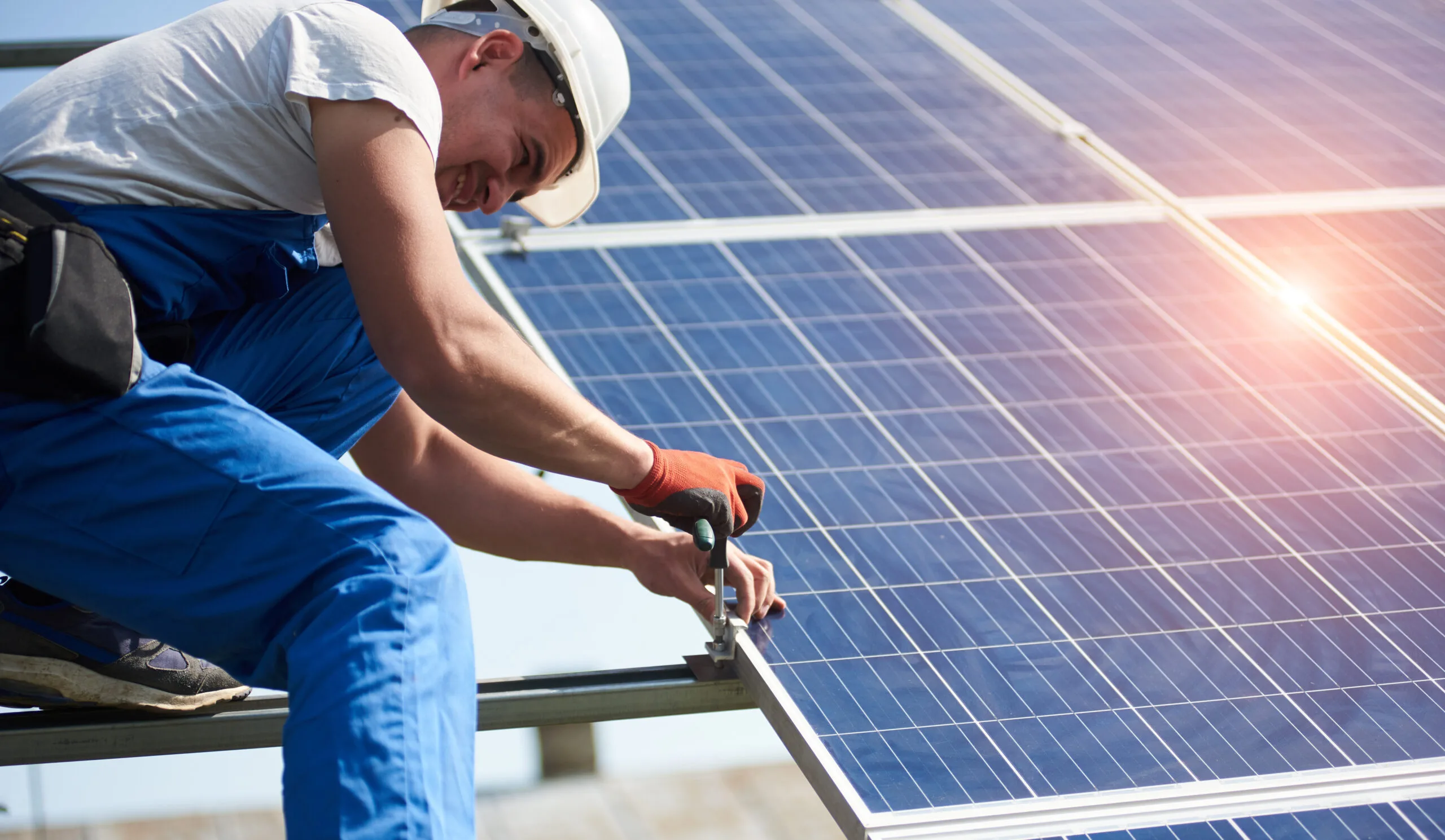
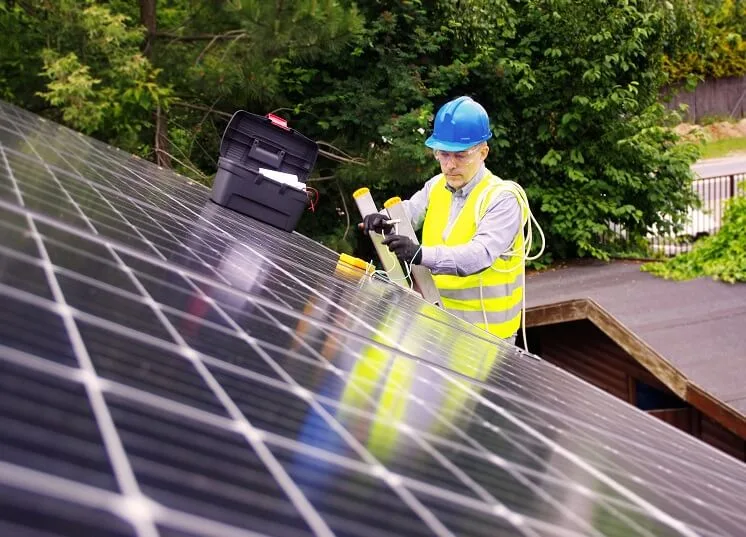
Professional technician installing solar photo voltaic panel to metal platform using screwdriver. Stand-alone solar panel system installation, efficiency and professionalism concept.
Installing the solar panels on a flat roof requires careful planning and execution to ensure optimal performance and safety. There are key considerations when mounting solar systems on flat roofs:
Structural integrity
Waterproofing
Panel orientation
Mounting system
A. Structural Integrity
The existing flat roof structure must be assessed to verify it can handle the additional weight of the solar array and mounting system. An engineer should conduct load calculations to determine:
Number of solar panels the roof can support
Weight of mounting system
Wind and snow load capacity
If needed, the roof can be reinforced to increase its structural capacity for the solar setup.
B. Waterproofing
With ballasted systems, waterproofing is less of a concern since they do not penetrate the roof membrane. However, non-penetrating mounts may still require flashing or seals around the attachment points to prevent the moisture issues. It’s vital not to be compromise the roof’s water resistance.
Non-penetrating: Attached without the roof membranes penetration
Mechanically attached: Secured with the roof membrane penetration
An installer will be determine the ideal mounting based on climate, loads, and roof type. Proper installation is key for a long-lasting solar system.
Residential flat roof solar setups have unique needs versus large commercial projects. Always consult with qualified solar professionals.
VII. Electrical Components for Flat Roof Solar
Properly designing and installing the electrical system is critical for a functional and safeflat roof solar array. Key electrical components include:
Solar panels
DC wiring
Flat roof mounting system
Inverter
AC wiring
A. Solar Panels
Silicon photovoltaic cells generate DC electricity
Connected in series into strings
B. DC Wiring
Connects solar panels into strings
Plug-and-play MC4 connectors
Copper wiring sized for voltage drop
C. Inverter
Converts DC to AC power
Required for grid connection
Properly sized for your system’s total wattage
D. AC Wiring and Breakers
Safely delivers power:
From inverter to electrical panel
Through appropriate conduit
With adequately sized breakers
Considerations for flat roof solar:
Wire management for safety and neatness
Accessibility for maintenance
Protection from weather and pests
Consult an experienced solar installer to ensure proper electrical setup.
IX. Maintenance Needs for Flat Roof Systems
Regular maintenance is essential for the optimal performance and longevity of a flat roof solar system. Key maintenance tasks include:
A. Inspections
Annual check of all components
Check electrical connections are tight
Ensure no damage from weather/pests
B. Panel Cleaning
Dirt and dust reduce efficiency
Clean 1-4 times per year
Use soft brush and mild cleaner
C. Vegetation Management
Trim back nearby trees
Prevent excessive shading
D. Mounting Bolts
Check mounting bolts are tight
Tighten as needed
E. Waterproofing
Inspect water barriers around mounts
Repair flashing if damaged
F. Wiring
Replace cracked wire conduits
Flat roof mounting systems make panels accessible. Best practice is to create walkways between panel rows for easy maintenance.
For commercial roofs, regular maintenance improves system performance over a 20-30 year lifetime. Consider a maintenance contract when installing solar.
X. Cost Savings From Flat Roof Solar
Installing a flat roof solar system represents a significant upfront investment, but the long-term savings can make it financially worthwhile:
Solar panels have a useable lifespan of 25-30 years
Savings from reduced electricity bills continue over system lifetime
Payback period typically 4-8 years
Other cost savings:
State/federal tax credits and solar incentives
Low maintenance costs
Increased property value
ROI is maximized with high system efficiency through:
Optimal flat roof mounting
Proper panel orientation
Quality components
Regular maintenance
For proper guidance Structura Metal provide a solar professional to evaluate potential energy cost savings from a flat roof solar system specific to your property.
Standing seam metal roofs (also known as seam roofs) have increased in popularity for pitched roofs, especially in the educational and leisure sector. Seam roofs are commonly made from steel, aluminium, and zinc. Key benefits include:
Aesthetically pleasing look
Robustness and weatherproof qualities
Cooling effect from reflective coating, reducing energy use by up to 20%
These benefits complement solar PV mounting systems extremely well.
There are several major standing seam manufacturers, producing various seam types:
Straight or round folds
Single or double folded
Seam Type
Description
Straight
Evenly spaced flat seams
Round
Curved seams
Single
One fold
Double
Two folds
The seams are secured to the purlins using clips, allowing the panels to move freely as temperature changes. Solar mounting systemsuse clamps attached directly over the seams without penetrating the roof membrane.
B. Types and Manufacturer
Common standing seam materials:
Steel (painted/unpainted, galvanized, Galvalume)
Aluminum
Zinc
Copper (rarely)
Major seam roof manufacturers:
Kalzip
Zinc
Domitec
GBS
Klip-Lok
There are many profiles and dimensional variances. It’s important to match the manufacturer and panel details to the appropriate seam clamp system.
II. Mounting Methods
There are two main methods to mount solar PV systems onto standing seam metal roofs:
A. Seam Clamps:
Attachment hardware (rails/direct mounting)
Seam clamps
Seam clamps secure onto the raised seams mechanically, without penetrating the roof membrane. This avoids risk of leaks.
1. Securing Method:
The clamps pinch the seam using round point set screws to create a strong mechanical interlock. The clamps grab onto the full beam-like structure of the seam.
2. Location Considerations:
Avoid mounting over panel clips allowing expansion/contraction
Follow manufacturer guidance on seam clamp placement
Consider rails vs direct mounting. Evaluate parts, shipping, labour.
IV. Additional Resources
There are industry associations and manufacturer guides available with further guidance on solar mounting best practices for standing seam metal roofs.
1. Industry Guidelines:
Metal Construction Association – Technical bulletins on:
Seam clamp compatibility
Fastener usage with metal panels
Metallurgy of aluminium, galvanized steel, etc.
Solar Energy Industries Association – PV system siting and mounting considerations
Consult qualified solar integrators, roofers, and structural engineers trained in saddle seam roofing. Get project-specific advice accounting for all variables.
Leverage multiple resources to ensure attachments preserve roof integrity and system longevity.
V. Conclusion
In summary, standing seam metal roofs provide an ideal mounting surface for solar PV systems when proper methods are used.
By following best practices for design and installation, you can achieve an integrated, high-performing system.
B. Role of Professionals:
Work with qualified experts in:
Solar integration
Structural engineering
Metal roofing and attachments
Experts should:
Accurately assess needs
Guide appropriate mounting method selections
Conduct project-specific calculations
Oversee safe, high-quality execution
This ensures roof integrity, system longevity, and code compliance.
C. Ongoing Developments:
As technology improves, expect advancements in:
Efficient panel and inverter components
Cost-effective rail less mounting
Robust attachment clamps
Streamlined design tools
Stay up-to-date on innovations allowing faster, lower-cost PV mounting onseam roofswith maximum ROI.
Adhering to best practices, leveraging professional expertise, and utilizing cutting-edge mounting technology facilitates optimal solar installations on these ideal metal roofing surfaces.
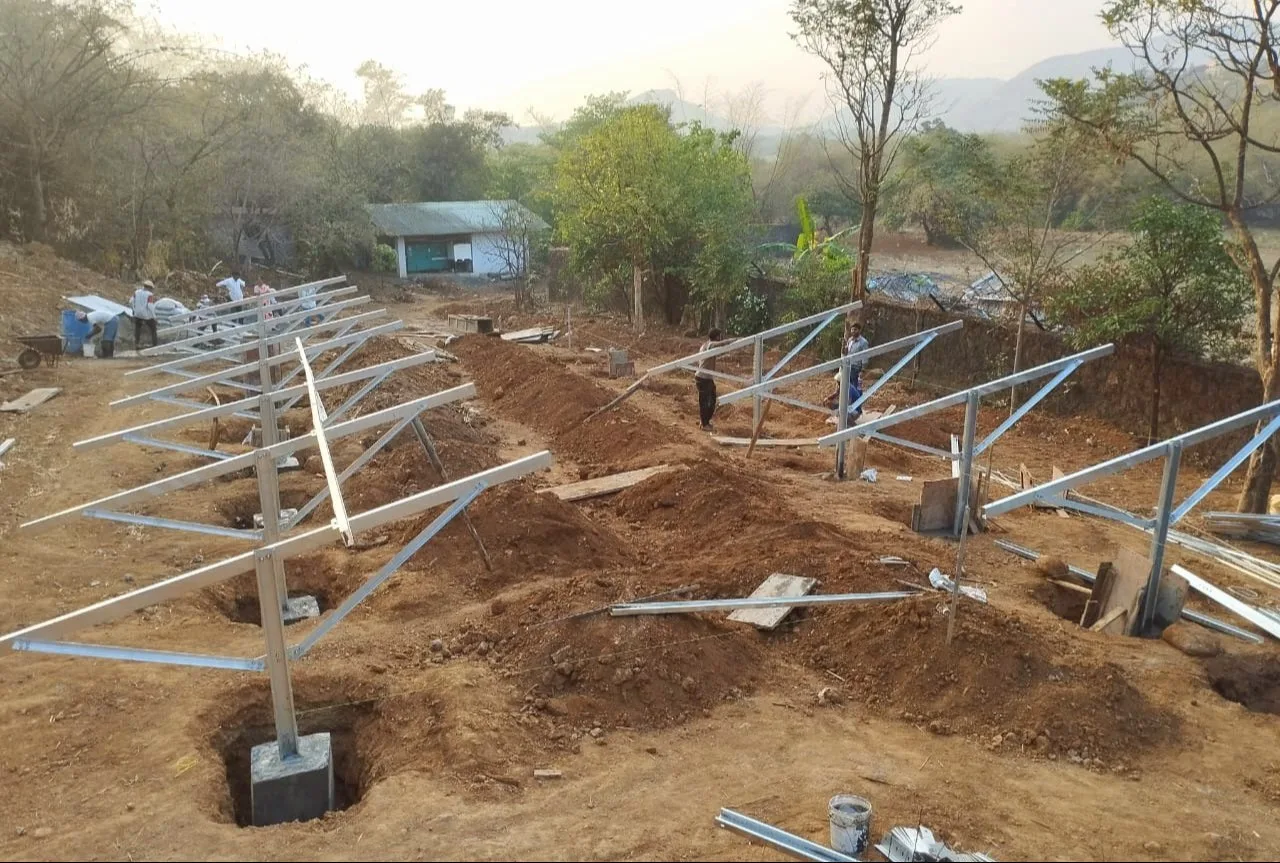
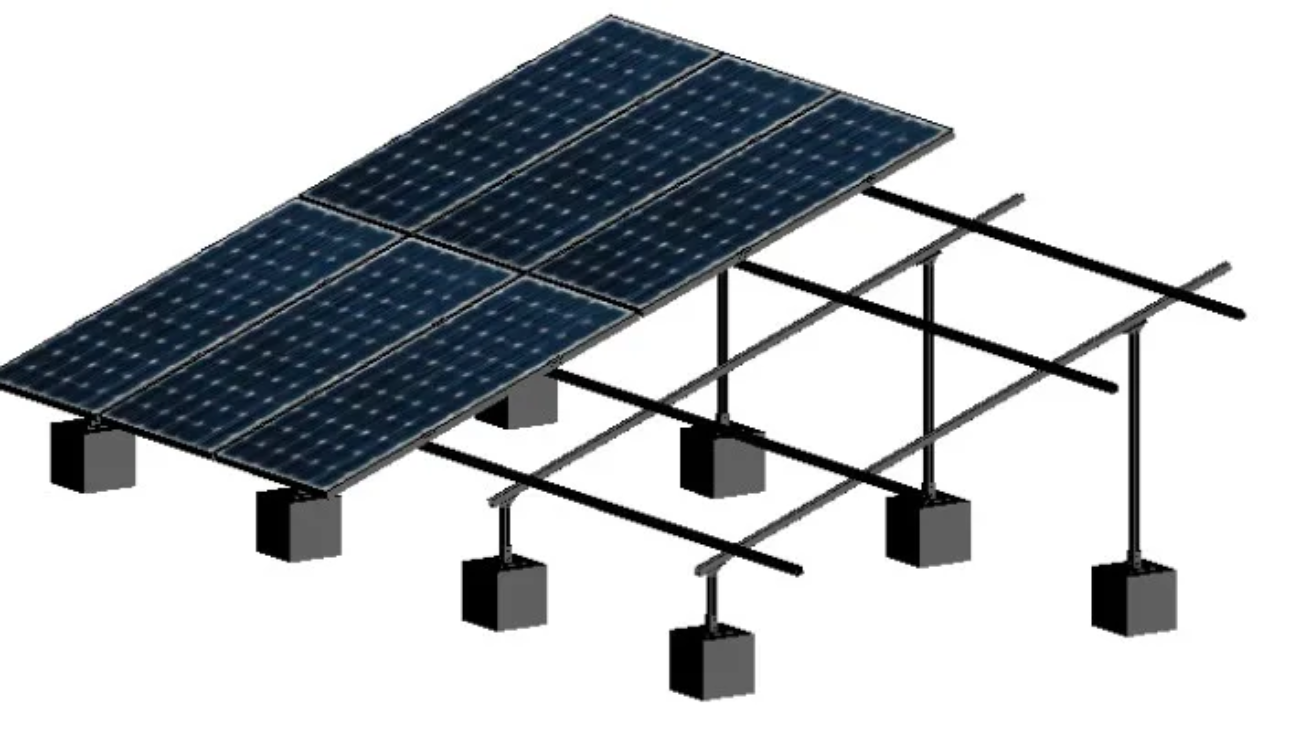
In Structura Metal a ground mounted setup refers to a solar panel system that is installed directly into the ground rather than on a roof. Ground installations have become increasingly popular for both residential and commercial solar projects. There are several key benefits that the ground mounts provides over rooftop solar systems:
More flexibility in panel placement.
Increased energy production.
Easier maintenance.
Avoid roof obstacles and structural issues.
At Structura Metal Ground Mounted Solar offers much more flexibility in where you can place panels to optimize sun exposure. With a rooftop system, you are also having limitations for the shape and directions of the areas available. Ground mounts allow placement in the wide open spaces without blocking the sunlight.
In addition, we also having the open airflow beneath ground mounted panels helps to keep the temperatures lower. This allows for more efficient energy conversion and increased energy production compared to rooftop systems. Studies show ground mounted solar can produce 10-45% more energy than the fixed rooftop setups.
Benefits
Ground Mounted Solar
Rooftop Solar
Flexible placement
✅
❌
Increased production
✅
❌
Lower temperatures
✅
❌
Easy maintenance
✅
❌
Furthermore, a ground mounting system avoids any roof structural issues or the obstacles like vents, chimneys etc. And since panels are more accessible on the ground, overall maintenance is simpler without working from heights or ladders.
With all these advantages, it’s no wonder ground mounting structures are becoming the preferred mounting solution for many solar projects. Keep reading to learn more about the different types of ground mounted options available.
II. Strengths of Ground Mounted Setups
Installing a solar panel system on the ground rather than the roof offers some unique advantages. Here are the main strengths of ground mounted setups:
Orientation and Angle Flexibility – With ground mounts, we are having the panels that can be positioned at the optimal angle and directions to maximize sunlight exposure. You are not limited by the shape or direction of the areas on your roof.
Higher Energy Production – The open airflow underneath helps keep temperatures lower. This allows ground mounted panels to convert sunlight to energy more efficiently, generating 10-45% more power.
Easy Maintenance – Accessing rooftop solar panels typically requires climbing ladders or using special equipment. Ground mounts are closer to the ground, making regular inspection and cleaning much simpler.
No Rooftop Restrictions – Rooftop solar projects may be limited by structural issues, vents/chimneys, or lack of space. Ground mounts avoid all the rooftop restrictions.
Land Restrictions – While rare, some neighbourhoods have rules against installing visible solar panels. Ground mounts may need to be hidden behind the fences or vegetation.
III. Weaknesses of Ground Mounts
While ground mounted solar offers significant advantages, there are some potential downsides to consider as well:
Higher Installation Cost – In general, a ground mounting system has a higher upfront price tag than an equal sized rooftop system. The racking and foundation materials, digging/trenching, and labour make it more expenive.
Land Restrictions – Although rare, some neighbourhoods prohibit visible renewable energy systems or restrict their placement. Ground mounts may need creative vegetation or fencing.
Safety Concerns – Since panels are accessible, a ground mounting structure poses a minor risk for kids or pets walking into them. Proper fencing helps mitigate this.
Damage Risks – Rooftop solar is largely protected from incidental damage. However, ground mounted panels may be exposed to vehicles, animals, weather events, vandalism etc.
Aesthetic Impact – Low profile ground mounts usually blend into landscapes well. But some systems stand out and homeowners may prefer to keep their yard/lawn view unchanged.
Weakness
Risk Level
How to Mitigate
Cost
High
Get multiple installer bids to reduce price
Land rules
Low
Petition for renewable energy exceptions
Safety
Low
Add fencing around solar system
Damage
Low
Add protective barriers as needed
Aesthetics
Low
Use vegetation to hide/blend system
IV. Types of Ground Installations
If you decide to install the ground mounted solar system, you have several options when it comes to the specific type of mounting structure. The three main types of ground installations are:
Traditional ground-mount
Tracking systems
Carports and canopies
Traditional ground-mount systems use to anchors and robust structural racking to fix panels in an optimal position. This is the most common type of ground mounted system.
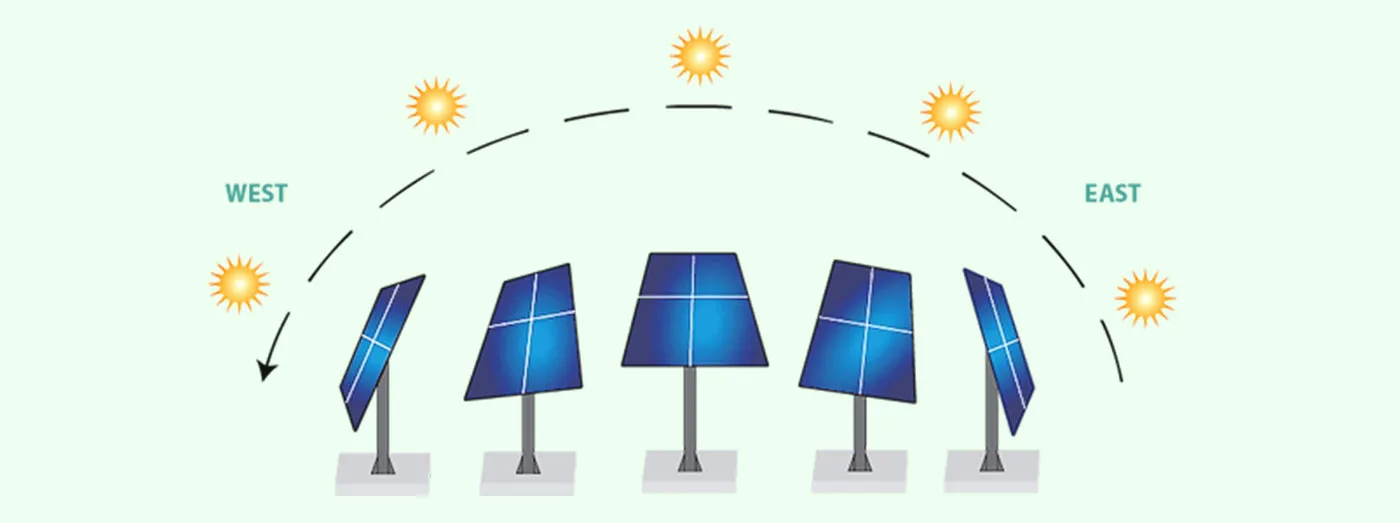
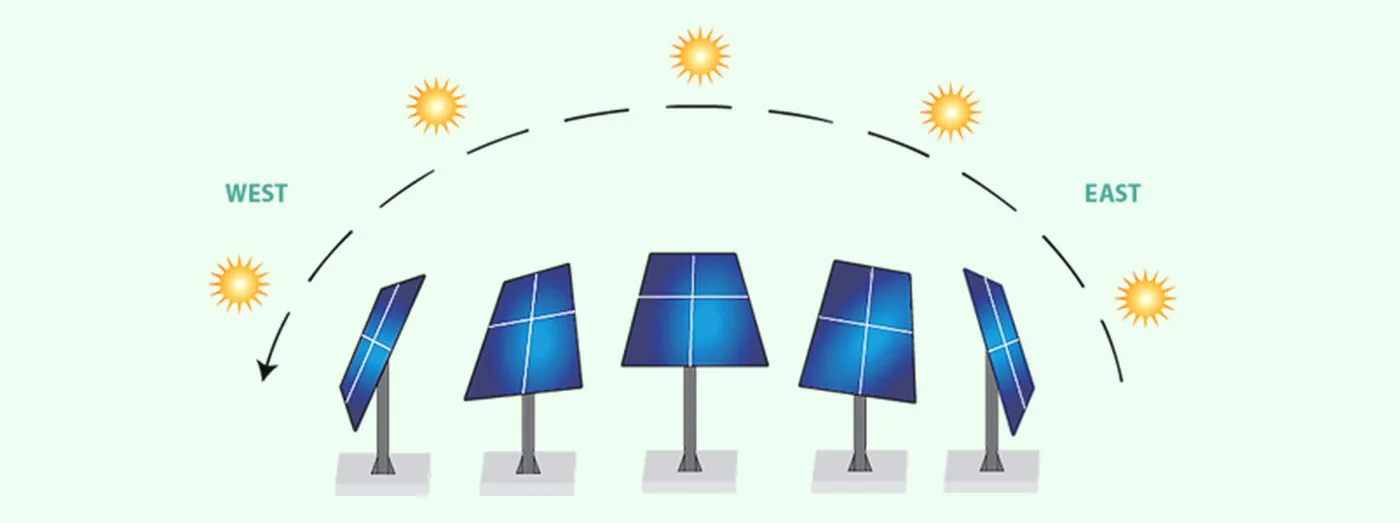
Tracking Systems go by step further by using automated hardware to move panels and follow the sun’s path during the day. This further maximizes energy production but has a higher cost. Single-axis trackers shift panels east-west or north-south to capture more sunlight. More advanced dual-axis trackers can shift in multiple directions to keep panels perpendicular to the sun’s rays.
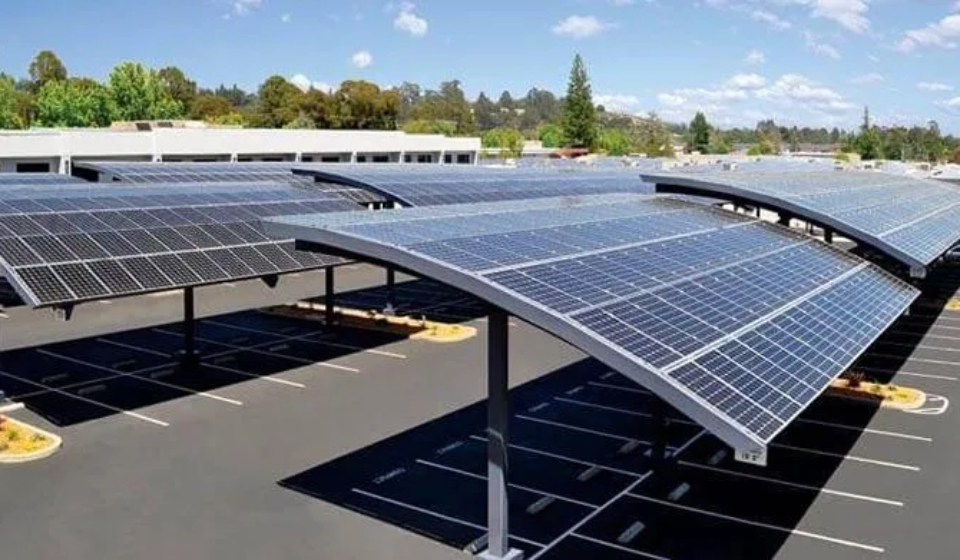
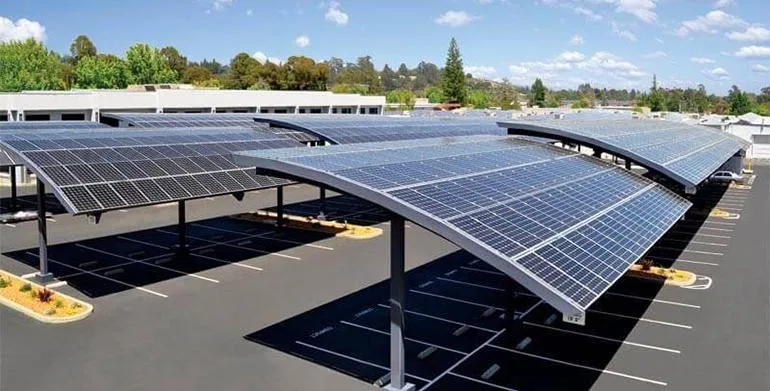
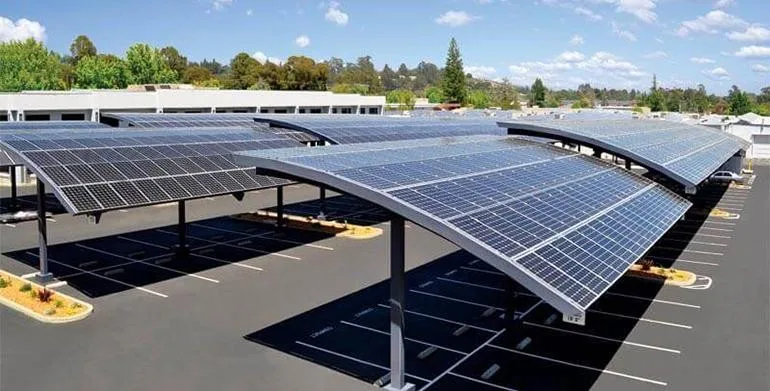
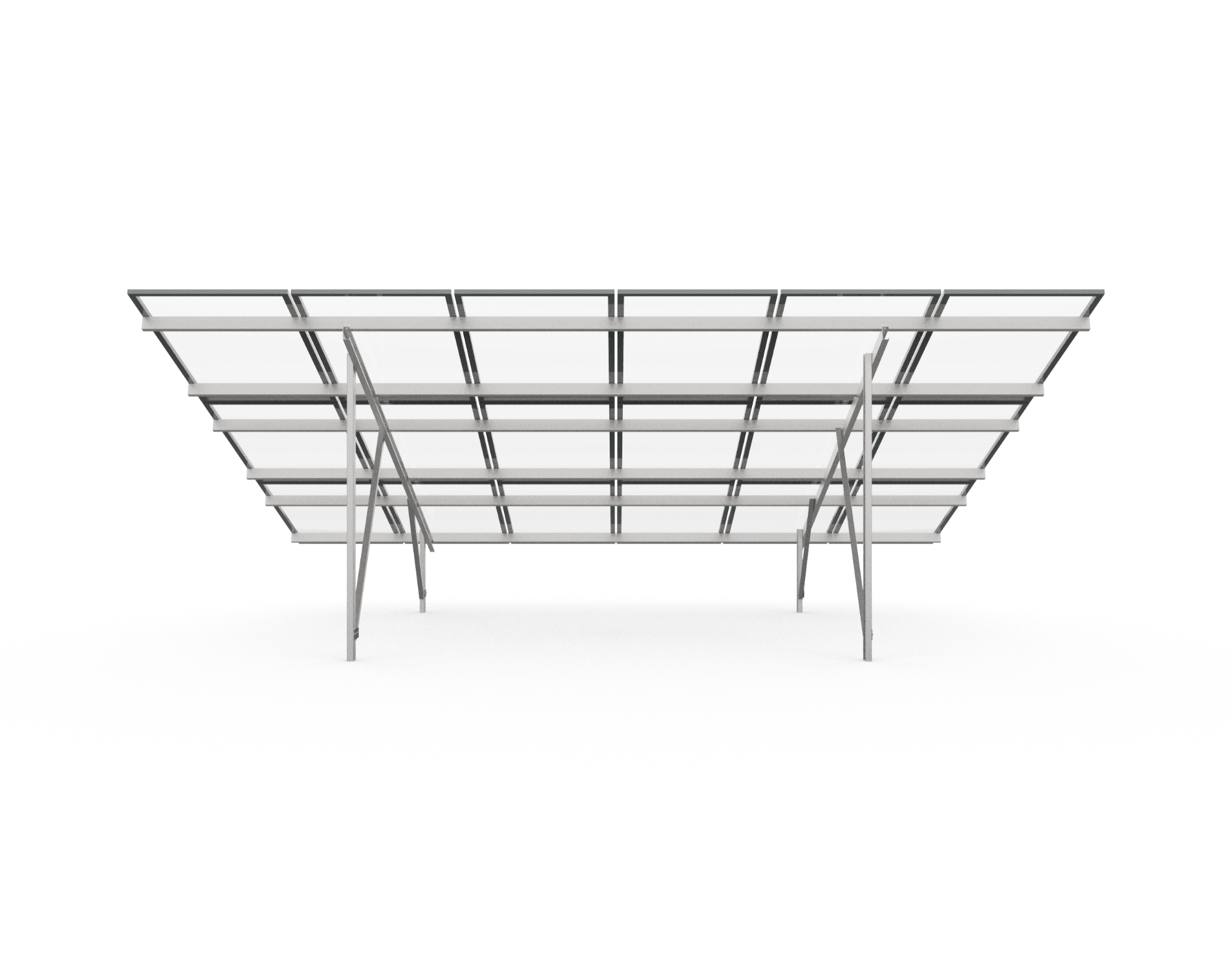
Carports and Canopies utilize very large Ground Mounted Structures as coverage for vehicles in parking lots or other uses. For example, a solar carport can provide shade for cars while generating clean power.
System Type
Cost Level
Maintenance
Ideal For
Traditional
Low
Low
Most installs
Tracking
High
Medium
Large installs
Carports
High
Low
Commercial
Determine the scale of your solar needs and budget to decide which type of ground installation makes the most sense. Tracking systems produce a good amount of extra energy but carry a cost premium over traditional fixed racking.
V. Traditional Ground-Mount Systems
The most common and cost-effective type of ground mounted solar setup is the traditional fixed racking system.
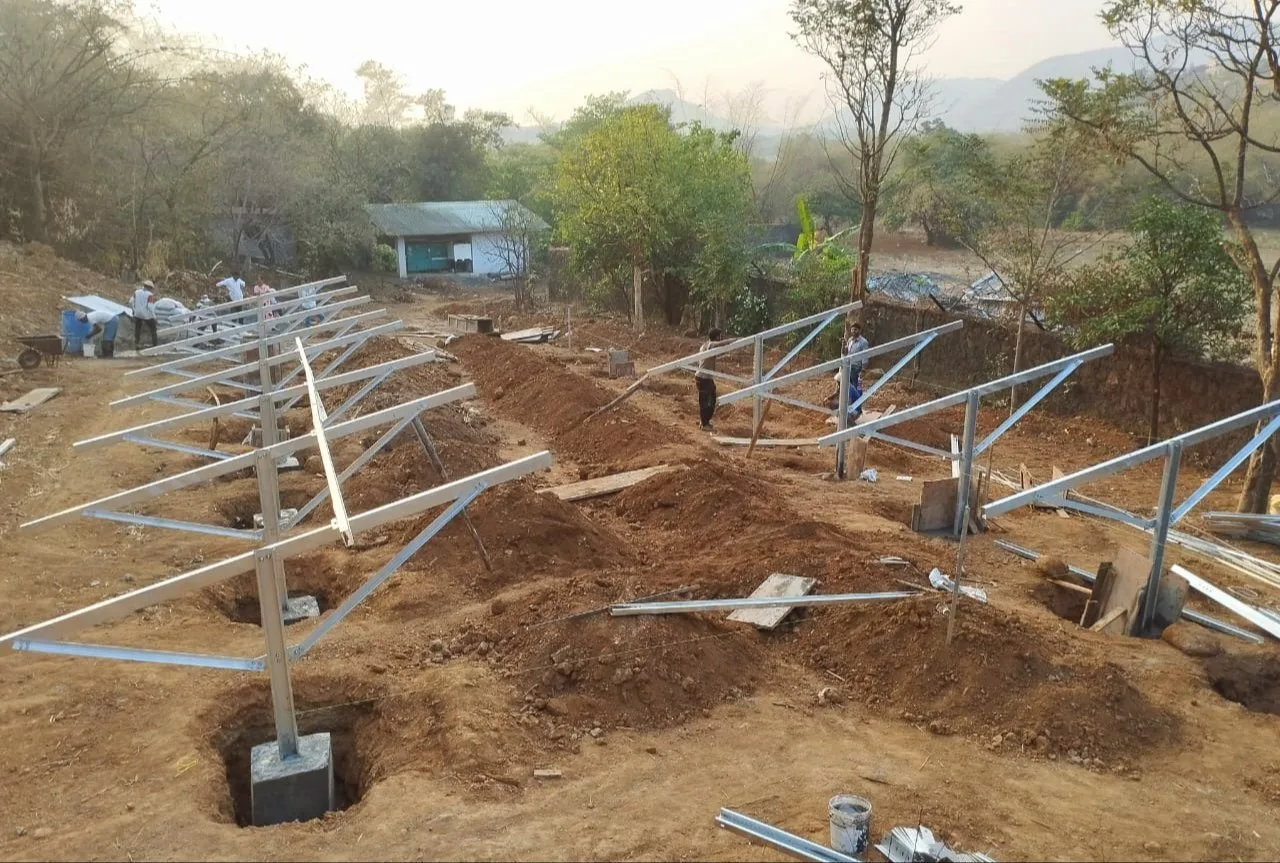
Traditional ground-mount systems work similarly to rooftop mounts. Panels get attached with the strong metal frame and angled to optimize sun exposure. Instead of being installed on singles though, the racking frame mounts directly into the ground with the pier or anchor supports.
Benefits of traditional fixed ground mounting:
Low Cost – Traditional mounts have the lowest hardware and installation the costs per watt over other ground systems. This makes it affordable for most homeowners.
Easy to Install – For most residential sites, traditional fixed mounts can be fully installed in 1-3 days with a small crew minimizing labour expenses.
Low Maintenance – With no moving parts or motors, traditional systems require very little ongoing maintenance besides occasional panel cleaning.
Expandable – Additional panels can be easily added later on to increase your system size. The fixed mounting structure is designed for modular expansions.
The simplicity, affordability, and reliability of fixed position ground mounting structures make them a top choice. The only downside is they lack the sun tracking advantage of more complex systems. But the better return on investment keeps traditional mounts popular for residential installs.
VI. Tracking Systems
Tracking systems take ground mounted solar technology to the next level for maximum sunlight capture and energy production. These systems utilize motors, sensors, and controlers to automatically move solar panels over the course of a day. By keeping panels aligned perpendicular to the sun’s rays, they generate up to 45% more power annually.
There are two main types of solar trackers used with ground mounts:
Single-Axis Trackers: Rotate panels along one axis to follow the sun east to west.
Dual-Axis Trackers: Rotate panels along two axes enabling full 360 degree range of motion to precisely face the sun all day.
Benefits provided by tracker ground mounting:
Greatly increased energy yield per panel
Optimized spacing between rows of panels
Better performance in winter months
Reduced shade impact
The main disadvantages of using solar trackers are higher hardware costs, more complex installation, and increased maintenance requirements. Trackers utilizes motors, controllers, wiring, and gears that may eventually need replacement. Proper installation is also key for reliability.
Overall, the pros of solar tracking capabilities often outweigh the extra costs for larger commercial ground mounting projects. The significantly higher energy production provides better and faster return on investment. But trackers may be excessive for smaller residential ground installs where fixed mounts sufficient.
Carports and canopies utilize very large ground mounting structures that serve dual purposes. They provide shade or shelter, while also hosting solar panels to generate significant amounts of the electricity.
The most iconic example is the solar carport. As the name suggests, solar panels get installed on the roof structure of a carport. This keeps vehicles underneath shaded from the elements, while the panels above soak up the sunlight. The collected energy can then power buildings, electric vehicle charging stations, or get fed back into the grid.
Solar canopies function similarly, by mounting panels on top of a steel structure designed specifically for shade. You often see these utilized in parks, schools, and playgrounds to produce renewable power in addition to shielding what’s underneath.
Benefits of solar carports and canopies:
Large open spaces for mounting many panels.
Dual purpose installations (power + shelter).
High visibility demonstrations of clean energy.
The main barriers to larger carport or canopy projects have traditionally been the high upfront design and material costs. However, as solar panel prices continue to fall, these types of installations are becoming more financially viable. And they serve as impactful sustainability symbols for schools, commercial centres, and other public spaces.
Installing a ground mounted solar array comes at a higher initial price tag than rooftop solar. There are several cost factors that contribute to this:
Structural Materials – Industral grade aluminium and galvanized steel is used to assemble the racking, poles, and foundations. These materials are more heavy duty than typical rooftop mounts.
Excavation And Equipment – Digging holes for foundations, trenching electrical wires, renting heavy machinery, and transporting materials add to project costs.
Labour – Ground mount installations take longer and often require crane equipment to position modules. More man hours equals more labour expense.
However, against these higher upfrontcosts are the long term savings:
Increased Energy Production – The optimal positioning and solar tracking capabilities lead to significantly more clean energy generated.
Accelerated depreciation further reduces tax burden.
Over time, the extra energy and financial incentives make ground mounted systems pay for themselves more rapidly compared to equivalently sized rooftop installs. And protection from weather/debris means savings on roof repairs.
IX. Maintenance of Ground Mounted Solar
A key advantage of ground mounted solar is that regular maintenance is easier than rooftop systems. Accessing panels on the ground avoids the need for ladders or technical rope training. Basic upkeep best practices include:
Inspections
Inspect all wiring, mounts, gear boxes for damage quarterly. Repair any loose connections or corrosion.
Check panel glass for cracks/chips annually which could allow moisture damage.
Cleaning
Clear any accumulated leaves/debris around the mounting structure.
Wash panels with soft brushes and water at least twice per year for maximum solar absorption.
Vegetation trimming
Trim any nearby plants/branches that may overhang and put panels in shade. Sunlight occlusion severely reduces output.
Snow Removal
Use non-abrasive plastic shovels to clear heavy snow off panels after storms.
Tracking & Monitoring
Ensure tracker motors function properly in all seasons.
Monitor production output levels monthly to catch any decreased yields from common culprits like dirty panels, tracking miss collaboration, or wiring issues.
Following this basic preventative maintenance checklist for your ground mounted system improves reliability, extends equipment lifespan, and maximizes solar energy production year after year.
X. Conclusion
Installing solar panels on the ground rather than roofing provides unique advantages. Ground mounted solar gives you flexibility on placement for optimum sunlight exposure for leading to significantly higher energy generation. The ability to incorporte tracking systems takes this productive potential even further.
As solar panel and storage prices continue falling, renewable energy adoption will only accelerate further. Both rooftop and ground mounted solutions each have ideal applications depending on the site constraints and power demands. Consult with qualified solar professionals to map out the best clean energy generation plan tailored for your home or business.
I. Introduction to Solar Mounting Structure Design
Structura Metal provide a solar mounting structure is a crucial component of any photovoltaic (PV) system installation. Furthermore, this structures purpose is to securely anchor the solar panels while distributing weight and allowing us to orient the panels at the optimal angle to maximize solar radiation capture.
When designing solar mounting structures, we must make the following key considerations:
Building Specifications – age, roof type/condition, location.
Climate Conditions – wind, snow loads.
System Size and Components – number of panels, foundations.
Accessibility for installation and maintenance.
Safety standards and certifications.
There are two main categories of solar panel mounting structures are: Rooftop Mounting Structures
Rooftop mounts support themselves using the building itself and are generally a lower-cost solution. Sub-types include:
Rail-Based – panels clipped onto rails bolted into roof
Rail-Less – panels bolted directly into roof
Shared-Rail – rails are shared between panels
These can be used on both sloped and flat rooftops.
Ground-Based Mounting Structures
Ground mounts require foundations but allow more flexibility. Types include:
Pole Mounts – structure with vertical pole anchored in concrete
Foundation Mounts – vertical posts fixed in excavated foundations
Tracking Mounts – structures with 1 or 2 axis tracking
Mount Type
Pros
Cons
Rooftop
Lower cost <br> Use existing structure
Limited panels <br> Roof condition dependent
Ground
More panels <br> Flexible layout
Higher cost <br> Site prep required
The mounting structure are also relies on the components like rails, brackets, anchors, and foundations to secure the panels.
II. Rooftop Mounting Structures
Rooftop solar mounting structures attach directly to the roof surface, which helps to distributes weight and reduces costs by utilizing the existing structural support. The main types of rooftop mounts are:
Rail-Based Mounting – Solar panels mount onto the rails that bolt into the roof. This is one of the most common rooftop solutions.
Rail-Less Mounting – Panels bolt directly to the roof without rails. This reduces materials but requires more skill to install.
Shared-Rail Mounting – Solar panels share common rails to reduce rail usage.
Rooftop mounts work for both sloped roof tilted designs and flat roof systems like commercial buildings.
Ballasted Footing Mounts made of concretes blocks help anchor flat roof structures without roof penetration. For pitched roofs, rail-based mounts orient panels at slopes matching the existing roof, while rail-less systems mount the panels in flexible tilted angles.
Type
Description
Considerations
Rail-Based
Panels clip onto roof-bolted rails
Most common <br> Easy to install
Rail-Less
Direct panel roof mounting
Lower cost <br> Requires skill
Shared-Rail
Panels share common rails
Reduces rails <br> Optimizes installation
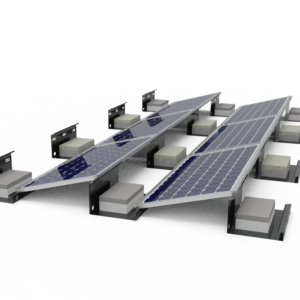
Ballasted
Concrete block anchors
No penetration <br> For flat roofs
Proper Mounting Structure Design distributes panel weight, resists wind/weather elements, and orients panels properly on the roof.
III. Ground-Based Mounting Structures
Ground-mounted solar structures are anchored into the ground itself, providing more flexibility than rooftop solutions. Key types of ground mounts include:
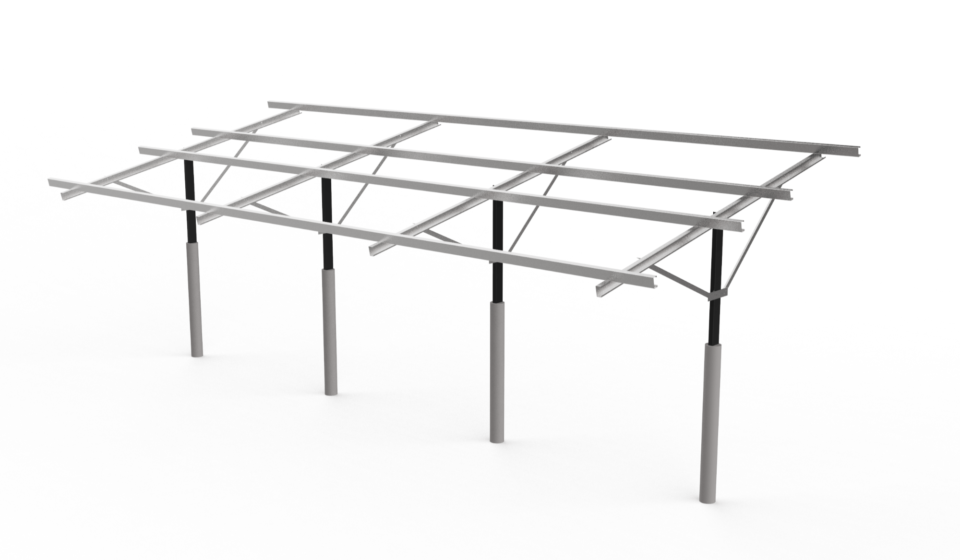
Pole Mounts – A simple steel pole and concrete anchor drilled into the ground can support smaller solar panel installations.
Foundation Mounts – Vertical posts or pipes are fixed in concrete foundations requiring excavation and soil analysis.
Tracking Mounts – Structures with the integrated 1 or 2 axis tracking capability to optimize solar radiation capture.
Multi-pole Mounting utilizes multiple vertical pipe supports to extending in a horizontal line to allow the scaling of larger installations.
The Smart Flower is a compact new solution resembling an opening flower with the integrated tracking solar “petals” for high efficiency generation.
Type
Pros
Cons
Pole Mounts
Lower cost <br> Simple install
Small systems <br> Soil dependent
Foundation Mounts
Larger systems <br> Adjustable tilt
High cost <br> Site prep required
Tracking Mounts
Increased energy yield <br> Automated sun tracking
With ground mounting, factors like soil conditions, wind loads, and frost line depth inform needed foundation specifications. Integrated cable trays and wire runs should also be incorporated into the structural design.
IV. Mounting Structure Components
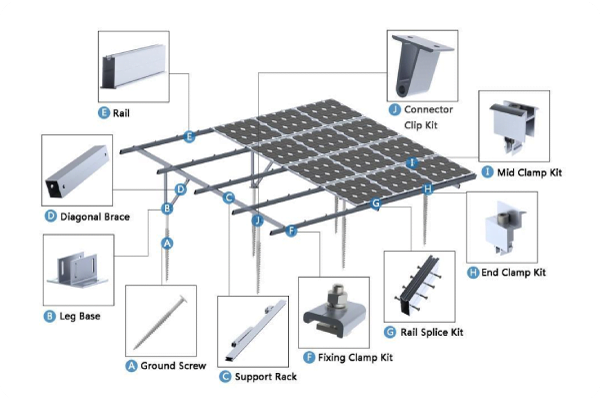
In addition to the main structure frames, solar mounting systems rely on components like rails, brackets, clamps, and anchors to secure panels and transmit loads.
Rails & Strut Channels – Horizontal rail structures and strut channels, often aluminium or galvanized steel, provide intermediate support and panel mounting points.
Brackets – Adjustable bracket structures attah to rails to angle panels at the optimal tilt.
Clamps – End and mid-clamps tightly affix panels along their edges and prevent slippage.
Anchors & Foundations – Ground screws, anchor bolts, concrete piers and more keep the mounting frame fixed in place.
Wiring trays and cable management components are also integrated into the composite mounting unit.
Component
Composition
Purpose
Rails
Aluminium, steel
Panel support & mounting points
Brackets
Stainless steel
Secure and tilt panels
Clamps
Aluminium
Grip panel edges
Anchors
Galvanized steel
Fix structure to roof or ground
Proper specification and structural analysis ensures components can withstand anticipated wind, snow loads and thermal stresses across the system’s life.
Regular re-torquring of bolts and monitoring of components for issues like corrosion is key for longevity.
V. Structural Considerations
Careful analysis of building specifications and site conditions informs the customized structural design of solar mounting systems. Key factors include:
Building Age & Type – The roofing substrata must have sufficient integrity to withstand panel loading. Older or weaker structures may have lower weight tolerances.
Roof Accessibility – Installers will require safe access routes to the roof location that can accommodate components and tools.
System Layout – Allowances must be made for positioning of all structural elements, panels, inverters and related components.
Shading – Nearby structures or roof elements that could cast shadows on panels should be considered.
Weather Loads – Snow, wind and rainfall levels determine design wind and snow load requirements.
Soil Conditions – For ground mounts, soils must be evaluated for suitability to anchor foundation components.
Consideration
Factor
Effect
Building Type
Material strength <br> Roof pitch
Weight limits <br> Mounting options
Accessibility
Pathways <br> Safety
Installation <br> Maintenance
Shading
Nearby structures <br> Roof elements
Solar interruption
Analysis software models these parameters to tailor optimized, code-compliant mounting structural specifications.
VI. Analysis and Reporting
Detailed structural analysis and reporting ensure solar mounting systems meet safety and performance standards throughout their 25+ year lifetimes.
Software Modeling like STAAD analysis the building specs, layouts, component ratings and environmental factors to engineer code-compliant mounting specifications.
Structural Reports document all structural design elements, recommended hardware specifications, layouts, and electrical component integration guidance.
Installation Manuals provide step-by-step mounting and wiring instructions for field implementation.
Deliverable
Contents
Value
Structural Report
Specifications <br> Layouts <br> Hardware details
Customized design basis
Installation Manual
Mounting instructions <br> Electrical layouts
Correct field implementation
Through reporting and guidelines empower the proper system installation and inform ongoing maintenance requirements like bolt re-torquing for maximum safety and energy production.
Solar panelmounting structuresplay a critical role in ensuring solar systems operate efficiently and safely for decades. This guide covers key types of solar mounting structures, components, materials and considerations.
Why Mounting Structures Matters
Proper mounting enables solar installation across locations like residential rooftops, warehouses and solar farms. It secures panels at the best angle to maximize solar absorptions and energy output based on factors like sun exposures and climate. Mounts protect panels from weather like wind, rain and snow over 20-25 year lifecycles. Flimsy structures risk system failures or safety issues over time.
I. Types of Solar Mounting Structures
There are several main types of solar mounting structures used to install solar panels. Selecting the right mounting solution is crucial, as it impacts the overall efficiency, durability, and generation capacity of the system. The structure must also be stable enough to withstand wind, rain, hail, snow, and even moderate earthquakes.
The 5 primary solar mounting structure types are:
RCC Roof Mounts
Ground Mounts
Solar Carports
Shed Mounts
Tracking Structures
RCC Roof Mounts
RCCstands for Reinforced Cement Concrete. These mounting structures are used to install solar panels onto concrete rooftops.
Benefits:
Reduce DC losses from long cable runs to inverter
Utilize unused roof space for clean energy generation
Protect roof from weather exposure
Common in residential and commercial installs
Drawbacks:
Require roof penetration which can lead to leaks if not properly sealed
Need proper roof orientation and shadow free area
Difficult to scale system size due to roof space limitations
RCC mounts are ideal when there is adequate roof space available. They can also be paired with solar trackers.
Ground Mounts
Ground mounts place solar panels directly on the ground rather than the roof. This is a good option when:
Insufficient roof space
Excessive shade from trees
Benefits:
Accommodate larger system sizes
Enable easier tracking system installation
Avoid house modifications
Drawbacks:
Higher installation costs
Need large shadow-free land area
Risk of vandalism and debris/snow accumulation
Ground mounts should only be installed in secure, debris-free locations.
Solar Carports
Carport structures elevate solar panels on poles to create a covered parking area underneath.
Benefits:
Provide shade for vehicles
Utilize parking area for clean energy generation
Can incorporate EV charging stations
Drawbacks:
Higher installation costs
Require significant shadow-free land
Shed Mounts
Shed mounts fasten solar panels onto shed rooftops or sheet metal roofing. They are often used by commercial and industrial facilities.
Benefits:
Low installation costs
Easy maintenance
Leverage unused roof space
Drawbacks:
Prone to overheating, reducing system efficiency
Require shadow-free roof area
In-Roof solutions can solve overheating issues by replacing sheet roofing entirely.
Tracking Structures
Tracking structures automatically pivot solar panels to follow the sun’s path for maximized exposure. The two types are:
One-axis track east to west movement
Two-axis track seasonal movement for concentrator systems
Benefits:
Boost efficiency during peak sunlight hours
Enhance limited space utilization
Avoid panel shading
Drawbacks:
High installation costs
Complex installation/maintenance
Risk of breakdown
While trackers improve efficiency substantially, their higher costs and complexity limit adoption.
II. Fixed Tilt Solar Mounts
Fixed tilt solar mounts are the simplest and most cost-effective type of solar mounting structure. As the name suggests, these mounts hold solar panels at a constant angle throughout the year, optimized for the latitude to capture maximal sunlight.
Benefits
Cost-Effective
Inexpensive materials and simple installation lower overall system costs
Easy Maintenance
Does not require seasonal adjustments, reducing maintenance needs
Constant Angle
Tilt angle optimized for location’s latitude ensures efficient sunlight capture
While fixed tilt mounts maximize productivity in regions with consistent solar resource, they are less ideal for areas with variable sunlight.
Type
Description
Residential
Well-suited for home installations
Commercial Rooftops
Commonly used to mount solar panels on flat warehouse and office roofs
Solar Farms
Can be used but tracking systems may improve performance
Key Considerations
Area must receive consistent annual solar exposure
Lifetime productivity partially depends on tilt angle accuracy
Not suitable for regions with diverse terrain that creates variability
Overall, fixed tilt solar mounting provides a reliable, low-cost mounting solution for residential and commercial rooftop solar installations in locations with steady sunlight availability. Their simplicity makes them a popular choice when roof space is sufficient.
III. Solar Tracking Systems
Solar tracking systems automatically pivot solar panels to follow the sun’s path across the sky, adjusting the orientation to maximize sunlight exposure. There are two main types of solar trackers:
Single-Axis Trackers: Rotate along one axis, typically east-west to track daily movement
Dual-Axis Trackers: Rotate along two axes to track both daily and seasonal sun positions
Type
Description
Single-Axis
Increases output up to 30% over fixed tilt
Dual-Axis
Maximizes energy production but higher complexity and costs
Solar tracking enables substantial generation improvements compared to fixed mounting, especially in areas with high direct sunlight. Although trackers require more investment upfront, the energy yield enhancements often provide an attractive return on investment. Overall, tracking systems are most cost-effective for large-scale installations.
IV. Mounted Roof Racks
Mounted roof racks are solar mounting structures installed directly onto roof surfaces. These racks:
Prevent DC Losses: Minimize wiring distances between solar panels and inverters
Require Roof Penetration: Attach to roof rafters using lag bolts that penetrate roof
Potential downsides include roof leaks if improperly sealed and limitations on system expansion. Overall, mounted roof racks provide a convenient mounting solution for residential and commercial rooftop solar.
V. Ground-Mounted Racks
Ground-mounted racks refer to solar mounting structures installed directly into the ground rather than on rooftops. Key features:
Adjustable tilt angles to optimize orientation
Enable expansive solar farms on open land
Secure locations reduce risk of damage/theft
Benefits include:
No rooftop limitations on system size
Easy to clean around arrays
Flexible panel positioning
However, ground-mounted arrays have higher wind loads, require more space, and installation costs can be higher than rooftop systems. Overall, their flexibility makes ground mounts ideal for large-scale installations.
Tracking-system mounted racks automatically orient solar panels to follow the sun’s path for maximum exposure. The key benefits include:
Solar Tracking – More energy generation than fixed mounts
Solar Water Pumping – Optimal for pumping applications
Mitigate shading losses
Utilize limited space more efficiently
However, trackers have higher complexity, installation costs, and risk of breakdowns. They are most practical for large-scale systems where the boost in energy production offsets the extra expenses. When sized appropriately, tracked solar mounts maximize solar utilization.
VIII. Components
Solar mounting structures consist of various components including:
Brackets: Made of stainless steel or aluminum to mount panels
Clamps: Attach to solar panel joints
Channels: Interconnect components and carry weight
Screws: Secure structure and panels; more screws increase mounting efficiency
Having high-quality and durable components is vital for structural integrity. Proper installation of these parts enables optimal sunlight capture.
IX. Installation Methods
There are three main solar panel installation methods:
Rooftop: Panels mounted on concrete roofs or slabs
Ground: Structures built on open land or fields
Pole: Panels attached to top or sides of poles
Proper installation is key for maximizing sunlight exposure and energy generation. It also impacts system efficiency, durability, and maintenance needs. The method chosen depends on space requirements, orientation needs, and structural considerations.
X. Materials
Common solar mounting structure materials:
Aluminium: Corrosion-resistant, lightweight
Steel: Very durable but expensive
Wood: Cheap but weaker and prone to failure
Plastic: Affordable but suboptimal lifetime
The right material is crucial for structural integrity and preventing system failures under pressure (e.g. snow, hail). It must withstand the installation environment and last the system lifetime of 20-25 years. Aluminium is commonly used for its strength, lightweight nature, and compatibility with solar module frames.
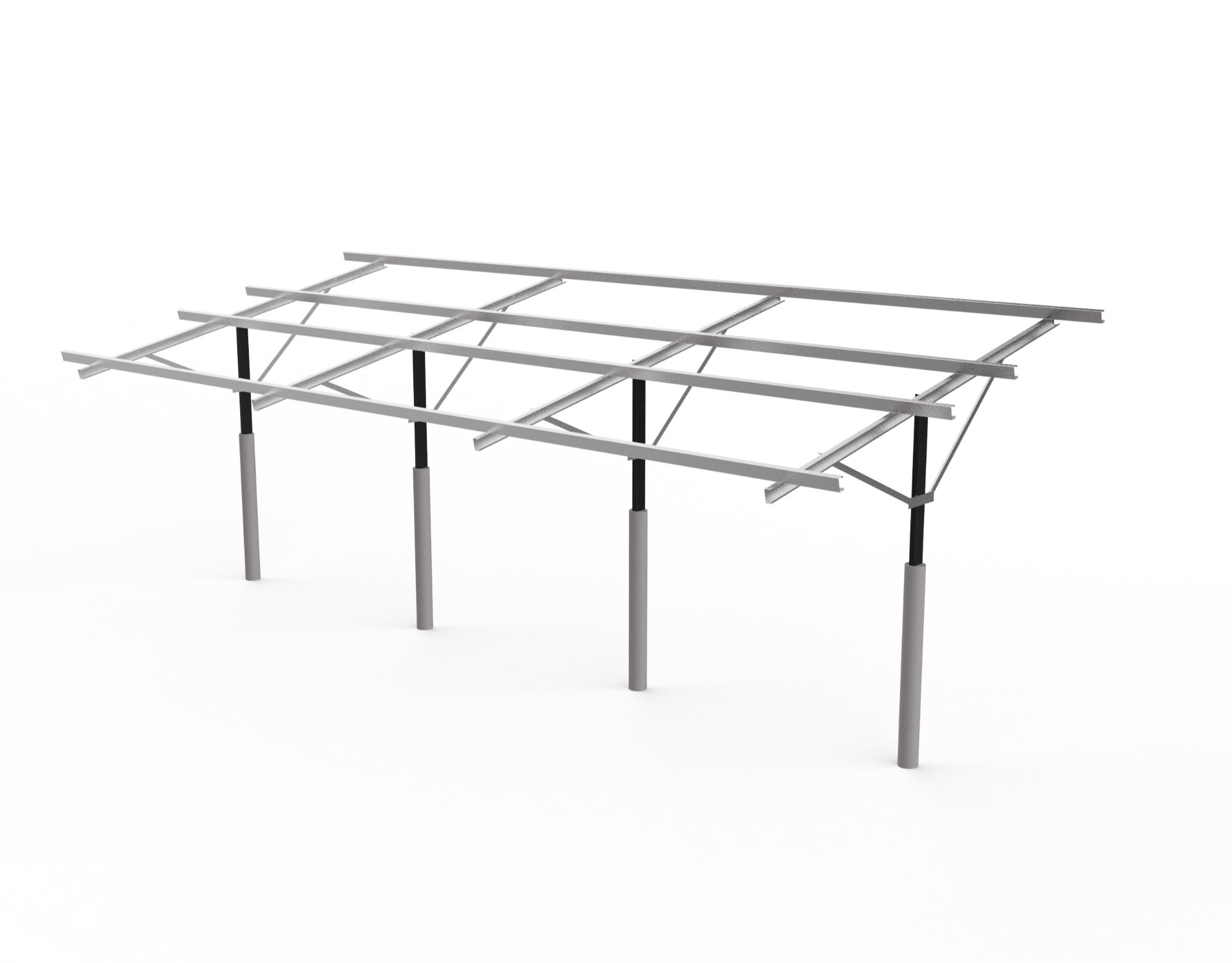
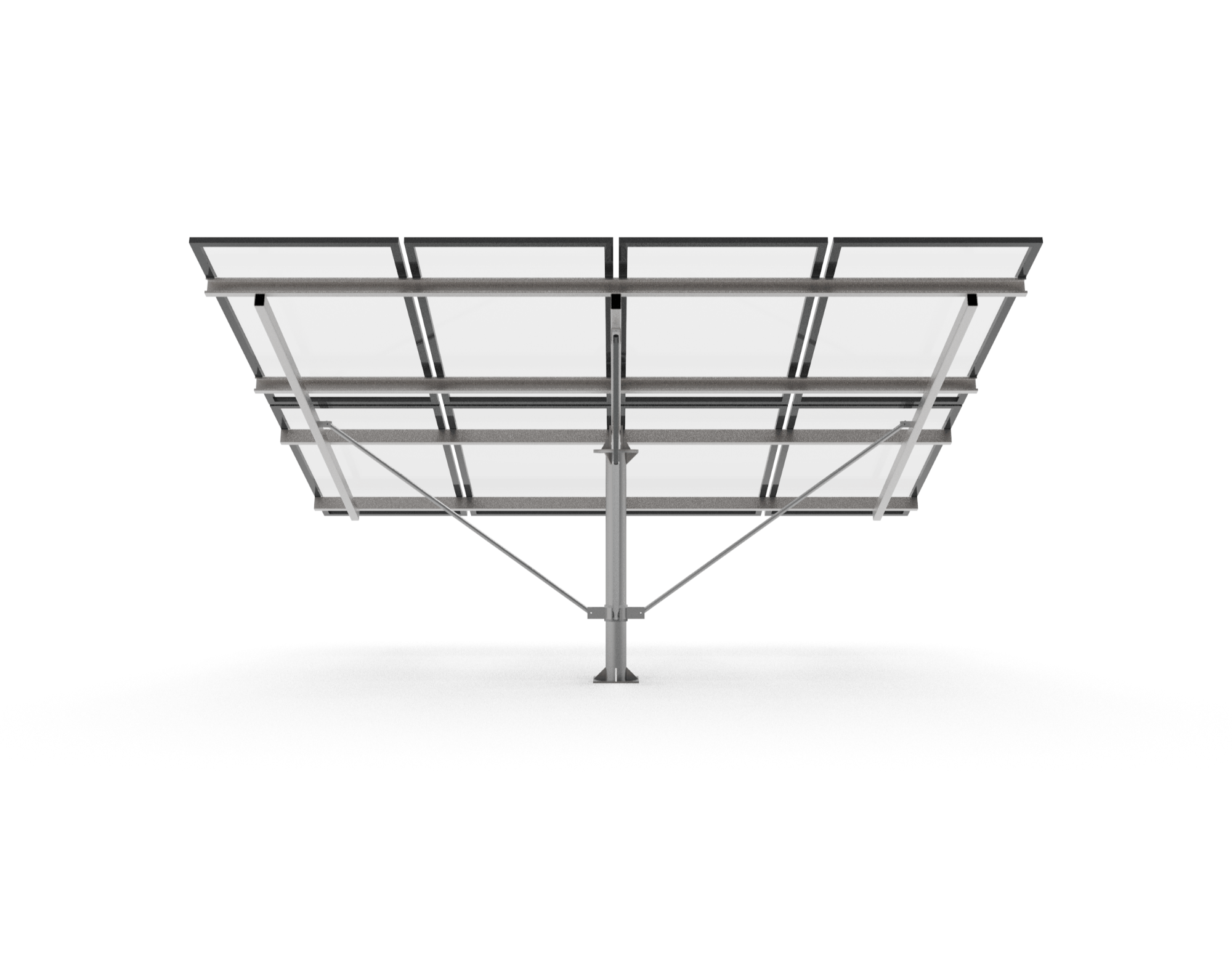
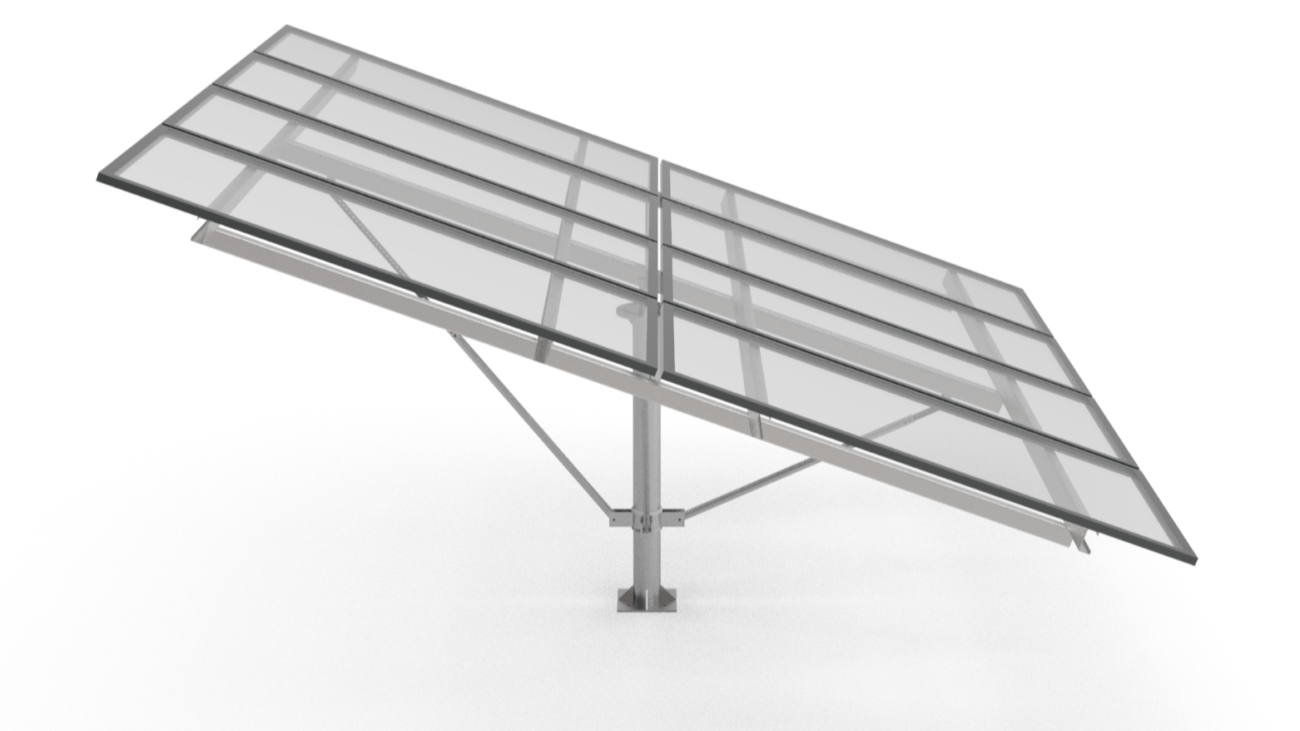
There are several main types of pole mounts used in solar installations, including top of pole mounts, side of pole mounts, and adjustable tilt pole mounts. The type of pole mount system chosen depends on factors like the number of solar panels, wind and snow loads, and site terrain.
Top of Pole Mounts
Top of pole mounts are installed on top of a vertical pole and angle the solar panels upwards towards the sun. They can accommodate anywhere from 1-60 solar panels or more, depending on the specific mounting system.
Some key benefits of top of pole mounts include:
Increased solar exposure
Ability to rotate panels to maximize energy production
Waist-level installation for ease of construction
Can be used in commercial and residential settings
Side of Pole Mounts
Side of pole mounts attach solar panels to the side of a vertical pole. They generally hold 1-3 solar panels.
Side of pole systems are commonly used for smaller solar installations like:
Traffic signals
Security cameras
Solar lighting
Off-grid cabins
They can withstand wind speeds up to 90 mph. Like top of pole mounts, side of pole mounts use 2-4.5″ Schedule 40 vertical pipes.
Adjustable Tilt Mounts
Adjustable tilt pole mounts allows for seasonal tilt adjustments to optimize solar exposure. For example, theMT Solar adjustable mount uses a hand crank to tilt panels from 0-90 degrees.
Adjustable tilt mounts are more expensive than fixed mounts but can maximize energy production. They provide an alternative to full solar tracking systems.
The type of pole mount selected depends on factors like location, number of panels, and budget. Consult with an installer to determine the best system for your solar project.
II. Residential Ground Mount Systems
Residential ground mount systems are solar panel installations mounted on frames fixed into the ground rather than the roof. They allow homeowners to install solar when roof space is limited. There are two main types of residential ground mounts:
Low-Profile Ground Mounts
Low-profile ground mounts sit close to the ground and are the most affordable ground-based option. Key features include:
Shallow concrete footings (30″)
Quick and easy installation
Standard SCH 40 pipe materials
Spans up to 8fts.
System
Key Features
Prosolar GroundTrac System
Integrated grounding, low parts count
IronRidges
Meets residential wind and snow load requirements
Low-profile ground mounts only require basic DIY skills for installation. They provide a cost-effective way to reap the benefits of solar with limited roof space.
Multiple Pole Mounts
Multiple pole mounts elevate solar panels higher off the ground with multiple vertical poles. This allows space for:
Livestock or crops to graze underneath
Adjustability – manually tilt pole height each season
Greater wind/snow clearance
MT Solar offers adjustable multiple pole mounts able to tilt 85 degrees. Systems are easier to install at waist height before lifting into final position.
Benefits of multiple pole mounts include:
Deeper solar panel clearance
Manual seasonal adjustability
Solar exposure maximization
Multiple pole mount systems have a higher upfront cost but provide flexibility and customization options. They are ideal for rural properties or farms.
When deciding on a residential ground mount system, homeowners must consider their property size, local zoning laws, and installation costs. Consulting a solar provider is recommended to determine the best solution.
III .Ramming Pole Mounting Systems
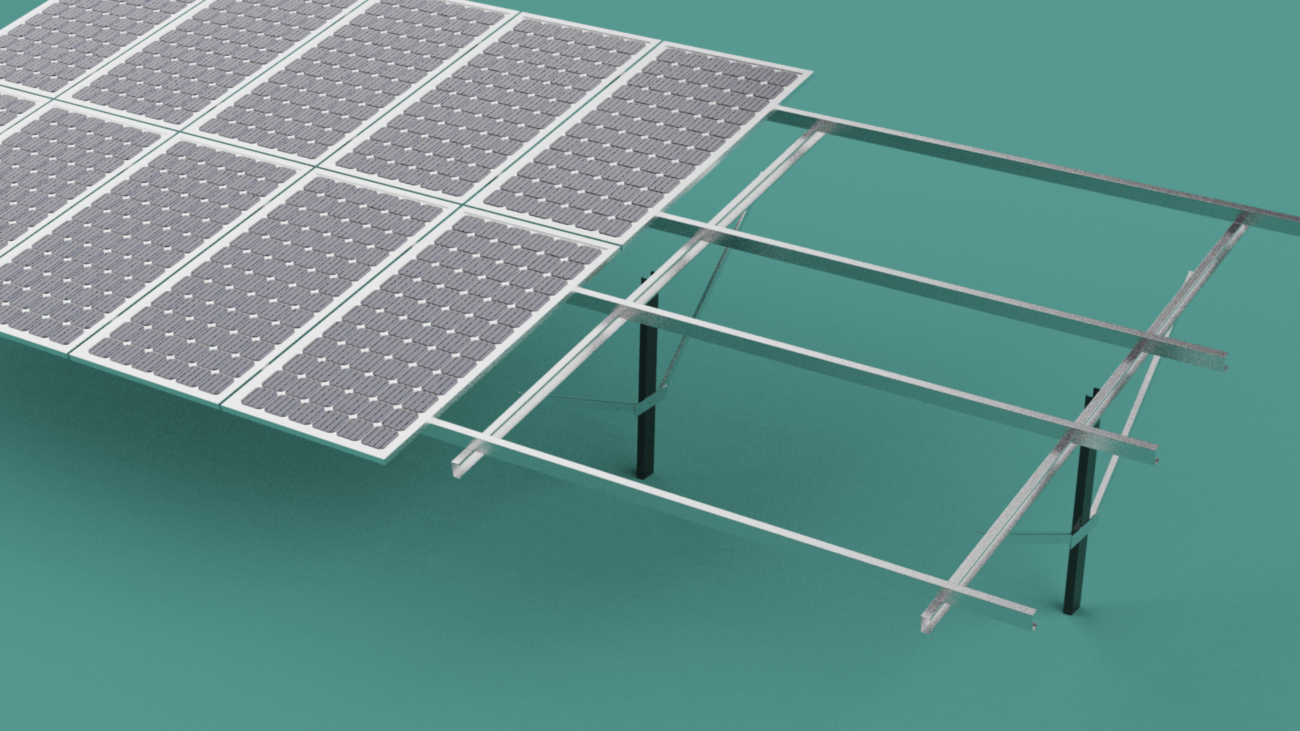
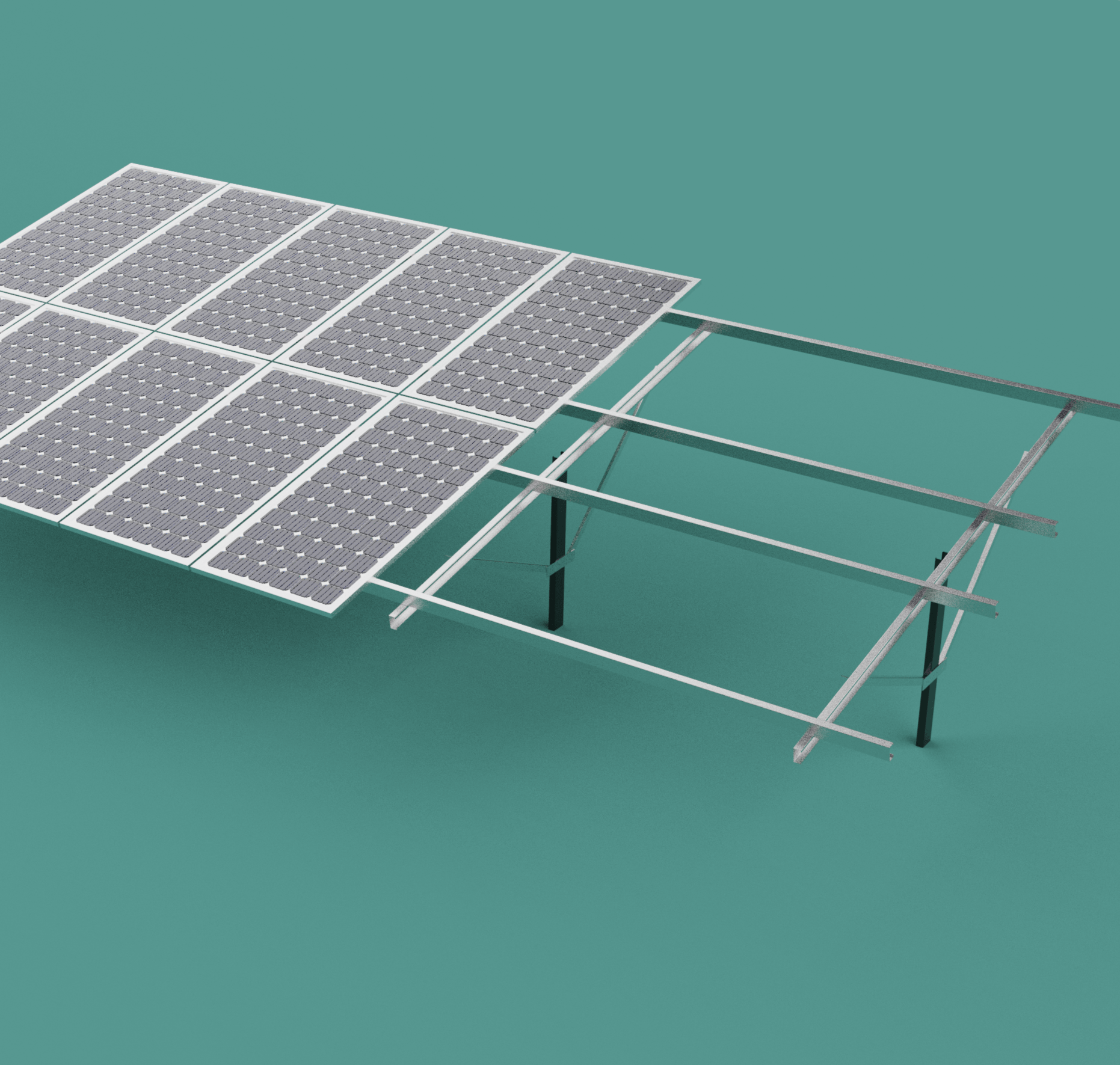
Ramming pole mounting systems are a type of solar panel mount designed for areas with low rock content. Vertical poles are driven into the ground using a pile driver, avoiding complex concrete foundations.
There are two types of ramming pole mounts:
Single Pillar Mounts
Single pillar systems have poles driven 1.5-2 meters into the ground, with a single vertical mount pole.
Key features:
Easy insertion into soils.
Adaptable to varying geological conditions.
Environmentally friendly installation.
Cost-effective for sites with favourable soil conditions.
Spec
Details
Tilt
Per client needs
Wind Rating
100km/hr
Snow Rating
0.5kN/m^2
Double Pillar Mounts
Double pillar mounts add rear pole support for stability. Systems interlock with flanged or non-flanged ramming poles.
Benefits include:
Extra structural reinforcement.
Ability to mount more/larger panels.
Options for steel or aluminium brackets.
Ramming pole systems deliver an affordable, low-impact mounting solution ideal for rural or agricultural sites. Soil conditions should be assessed before installing.
IV. Benefits of Pole Mounting
Pole mounting offers several key advantages over roof mounts and ground mount solar systems. Main benefits of pole mounting include:
Increased Sunlight Exposure
Mounts elevate panels higher, with no shading obstructions.
Allows inclusion of sun trackers to follow sunlight.
Panels can be manually adjusted for seasonal differences.
Improves airflow and panel efficiency.
Ease of Installation
Poles quickly driven or embedded into ground.
Wiring and infrastructure kept underground.
No need to penetrate building roof membranes.
Adjustable mounts convenient for maintenance.
More Installation Freedom
Suitable for oddly shaped lots limiting ground mounts.
Alternate option if roof cannot bear panel weight.
Rural sites have space for large pole mount arrays.
Creative positioning options unavailable on rooftops.
Cost Comparisons
While requiring more hardware, pole mounts yield higher efficiency gains long-term. Lifetime savings offset increased initial investment.
Potential downsides primarily include aesthetic concerns and land usage regulations that restrict pole mount visibility or placement.
With proper site planning and selection, pole mounting solves issues posed by insufficient roof space or shadows. It unleashes the potential for bigger, better solar with sites allowing array visibility.
V. Potential Drawbacks of Pole Mounts
While pole mounts provide increased solar potential, there are some potential drawbacks to be consider:
Aesthetic Concerns
Large, elevated panel arrays viewed as eyesores.
Community or municipality restrictions limiting pole visibility.
Not feasible in dense urban locations lacking open space.
Increased Land Use
Pole mounts require dedicated open ground space.
Competes with farmland or livestock grazing areas.
Not practical for smaller residential properties.
Upfront Costs
More pole and wiring materials required.
Labour and equipment rentals add expenses.
Overall system price estimated 10-20% higher.
Structural Considerations
Heavy wind/snow loading requirements.
Hurricane/seismic standards may increase costs.
Loose soil conditions cannot accommodate poles.
Pole mounting makes the most sense when improved solar exposure outweighs drawbacks like appearance, land usage, zoning issues or costs.
Proper site analysis, pole sizing, and community engagement help mitigate negatives. Engineers tailor mount strength and embedment depth to satisfy structural needs.
Pole mounts excel in rural, agricultural and large commercial settings where improved production returns the added investment. Their application selects sites allowing increased visibility.
VI. Applications for Pole Mounts
Pole mounts work well for certain solar applications with space for visibility. Common examples include:
Pole mounted solar supports infrastructure demands with tailored visibility levels. Farms can isolate arrays daily operations. Campuses highlight sustainability commitments for constituents. Pole mounts ultimately target sites synergizing improved sunlight access with energy resilience and community benefit.
VII. Installation Considerations
Properly installing pole mount solar systems requires assessing:
Structural Requirements
Wind, snow, seismic ratings to withstand elements.
Engineer pole sizing, depth, and reinforcement.
Attachment methods resisting uplift forces.
Site Conditions
Sun orientation and exposure to maximize production.
Survey shading from buildings/trees.
Geotechnical study if loose soil or steep slopes.
Equipment Needs
Cranes, drills, pile drivers to position poles.
Conduit for underground wiring runs.
Adjustable mounts may require generators.
Permitting and Zoning
Local ordinance setbacks from property lines.
Visibility restrictions in neighbourhoods.
ADA access and fire code considerations.
Optional Enhancements
Integrate pole mounts with trackers.
Allow space for future solar expansion.
Plan arrays not to disturb livestock or farming.
Thorough planning and engineering on the frontend streamlines physical pole mount installation. Sites support easier construction and access for maintenance. Drawings should detail buried electrical lines and infrastructure. Establishing relationships with city officials and neighbours smooth approval processes before starting work.
VIII. System Sizing and Design
Properly sizing a pole mount system involves:
Energy Load Calculations
Estimate site’s annual electricity consumption.
Add planned consumption increases.
Account for future electrification goals.
Equipment Selection
Choose panel wattages and quantities.
Determine inverter sizes.
Optimize system design for efficiency.
Structural Specifications
Local wind, snow, seismic conditions.
Soil tests detailing composition.
Panel and hardware corrosion resistance.
Positioning and Layout
Maximizes unshaded solar exposure.
Allow access for maintenance and cleaning.
Optimize spacing and tilt angles.
Pole mount layouts balance generation capacity, equipment capabilities, and site limitations.
Factor
Design Impact
Site area
Number of possible pole mounts
Soil quality
Pole foundation sizing
Wind loads
Structural reinforcement needs
Refinements like sun trackers require factoring additional power, controls, and loads.
Proper pole mount design considers present and future energy needs, infrastructure restrictions, and mounting goals. This holistic approach delivers the ideal customized solar installation.
IX. Integration Options
Pole mounts allow integrating supplementary technologies like:
Trackers
Actively move panels to follow sunlight.
Increase energy production up to 30%.
Require rigids poles sustaining tracker/panel movement.
Typically powered by separate solar PV system.
Hybrid Rooftop Solar
Pole mounts expand capacity beyond rooftops.
Combines sites’ generation for resilience.
Enable incremental solar adoption over time.
Independent pole operation if roof equipment fails
Storage Batteries
Store excess solar energy for night time use.
Important for off-grid or backup power needs.
Adds consideration for battery cabinet dimensions.
Increased system costs, but enhances self-supply.
EV Charging Stations
Solar power emissions-free transportation.
Mount charging stalls under pole arrays.
Highlights sustainability commitment.
Reduces grid impact from EV adoption demands.
Pole mounted solar affordably meets growth through phased buildouts. The independent infrastructure allows customizing improvements over time, avoiding full roof replacements. Strategic options like trackers, storage and EV charging reduces environmental impacts even further.
X. Comparison to Ground Mounts
Pole mounting differs from ground mounts in four key ways:
Pole mounts elevate panels higher off the ground for improved solar exposure.
Less land area required for poles versus extensive ground mounting racks.
Pole mounts sustain higher wind loads with smaller foundation footprints.
Adjustability possible by tilting pole mounts to optimize angles.
The ideal residential or commercial solar installation leverages the strengths of both mounting approaches. A solar provider can advise the best system design and mounting method for your property.